Laura: Wheat, and barley and chickpeas…oh my!
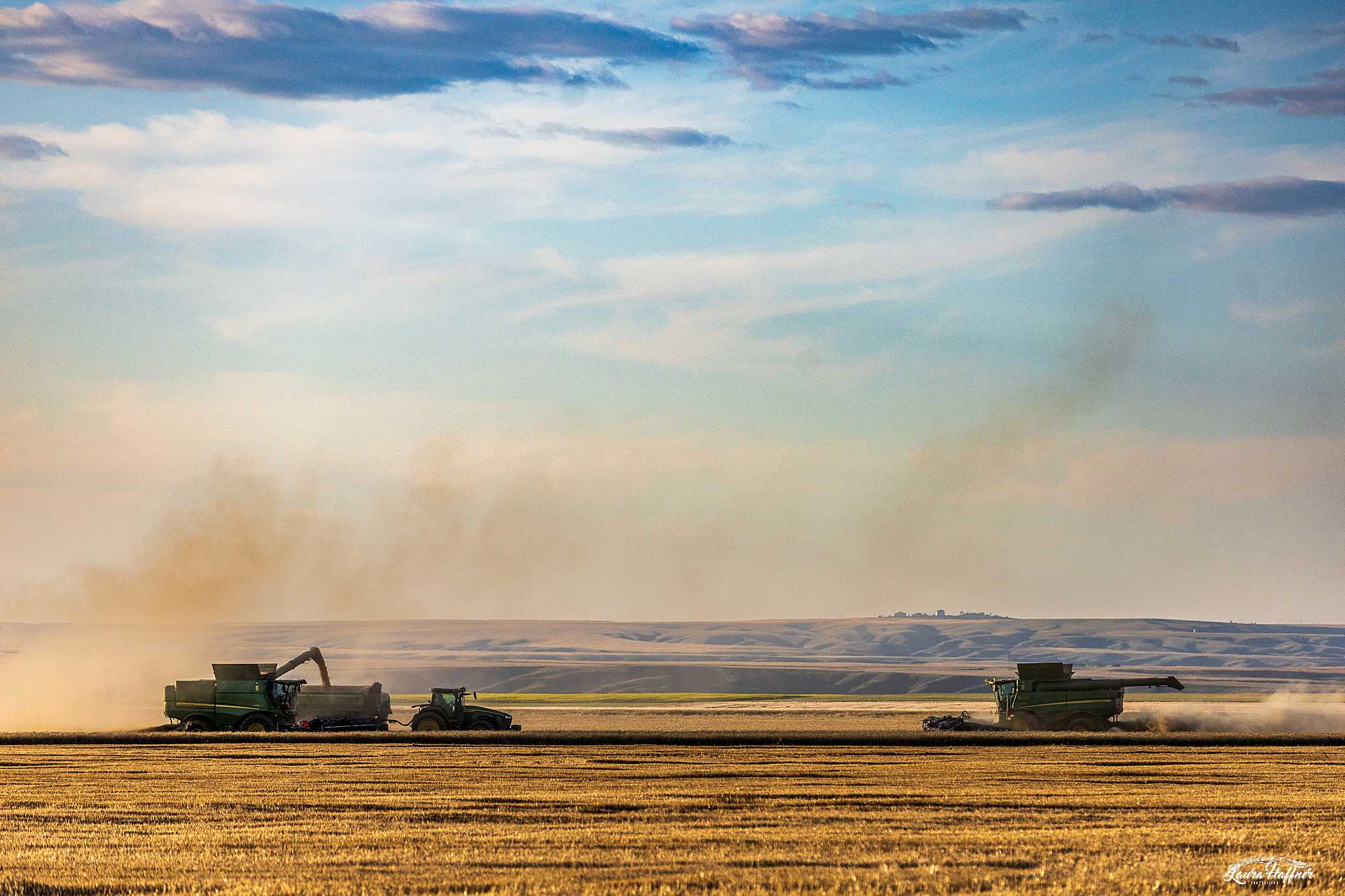
Cascade County, Montana: “Mom!!! Stop, they have to catch up to their mom!”
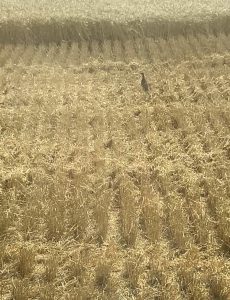
That was Lady A’s response to seeing pheasant chicks running in front of the header. Of course I was happy to oblige. The kids and I, and most of the crew for that matter, are animal lovers. Showing mercy to the animals, who make themselves home out here, is part of being good stewards of the land. So, we slowed the machine and made sure the chicks were able to scramble out of the way. Luckily there was plenty of cover for them at the end of the pass.
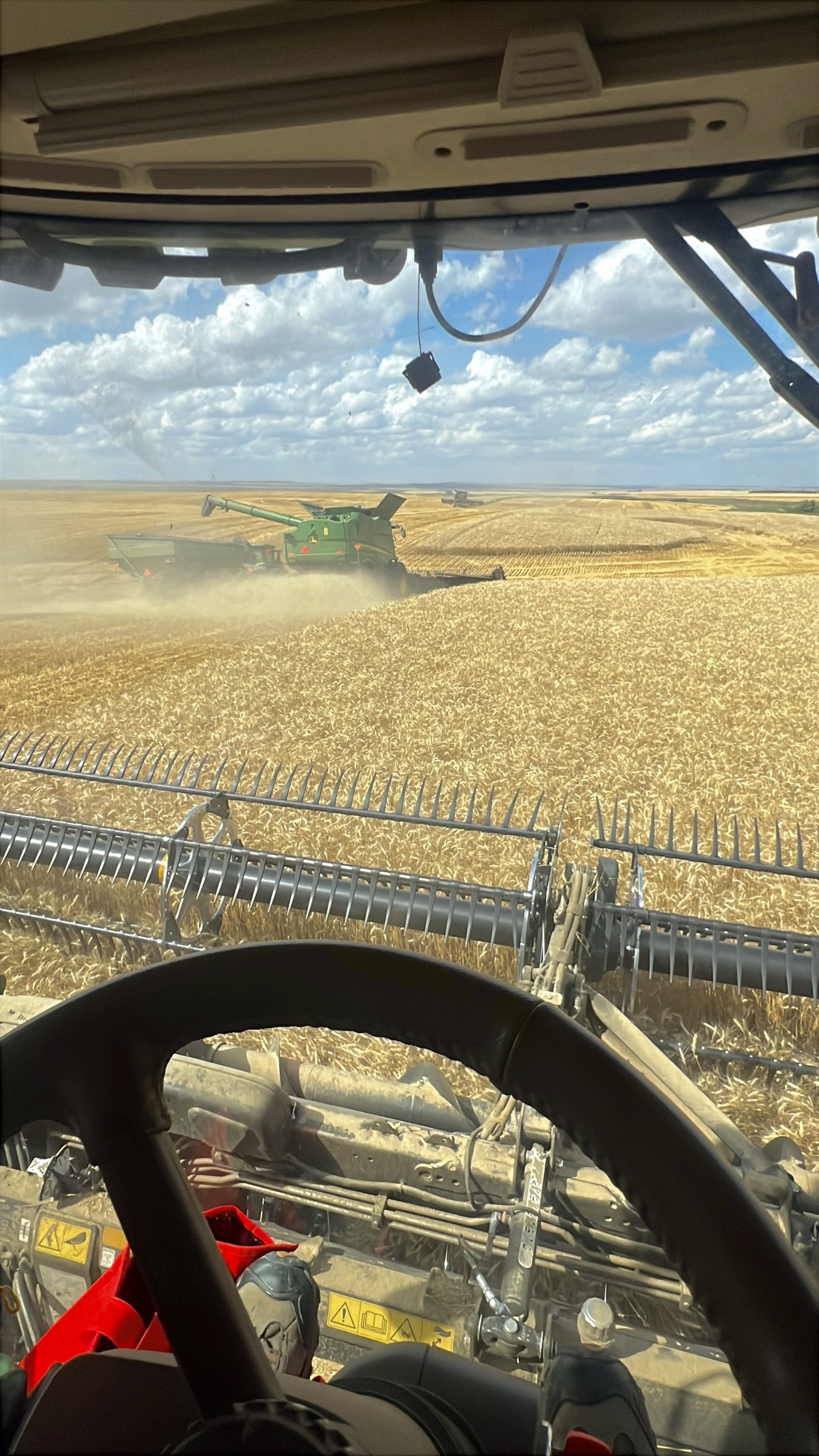
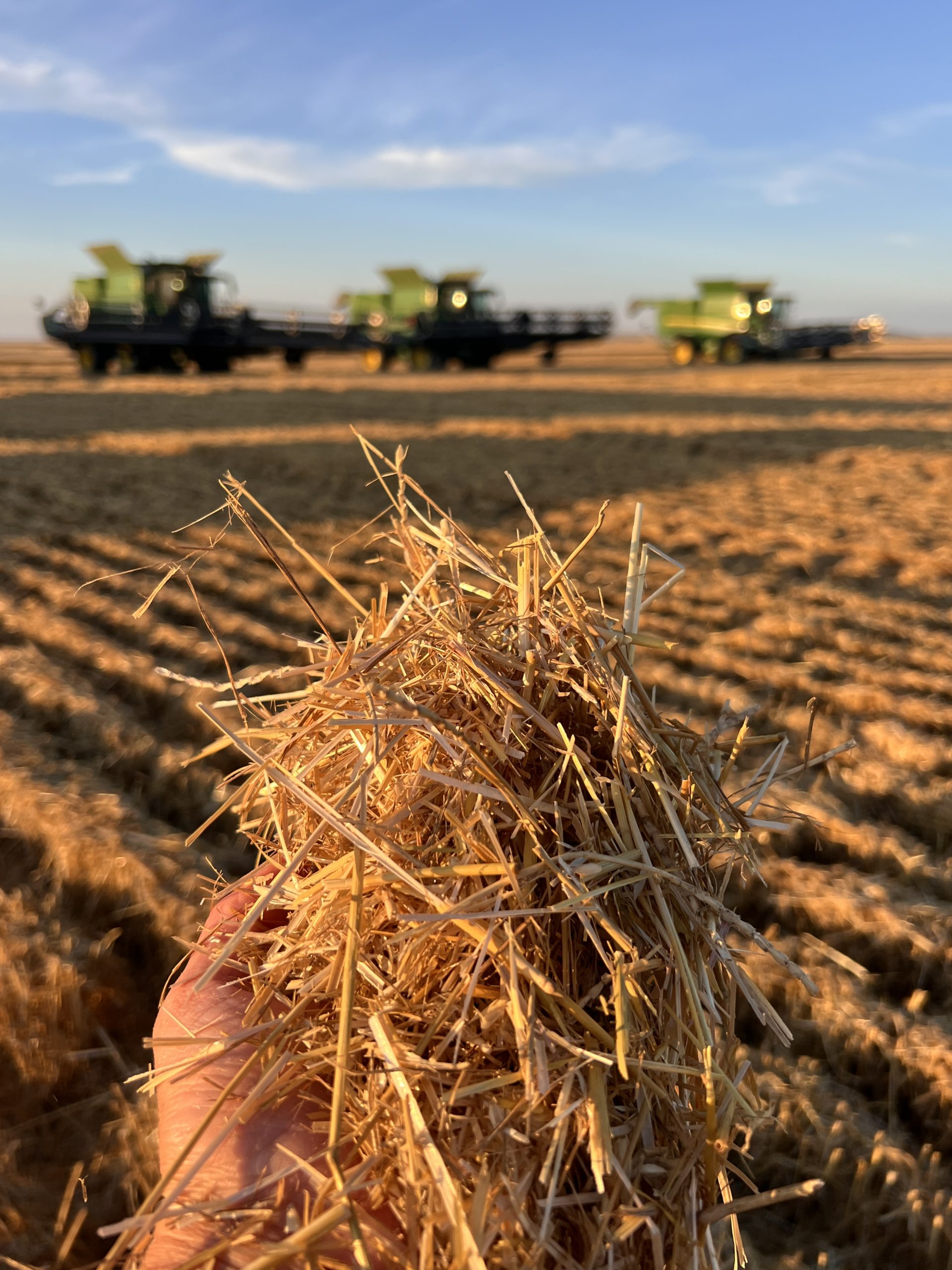
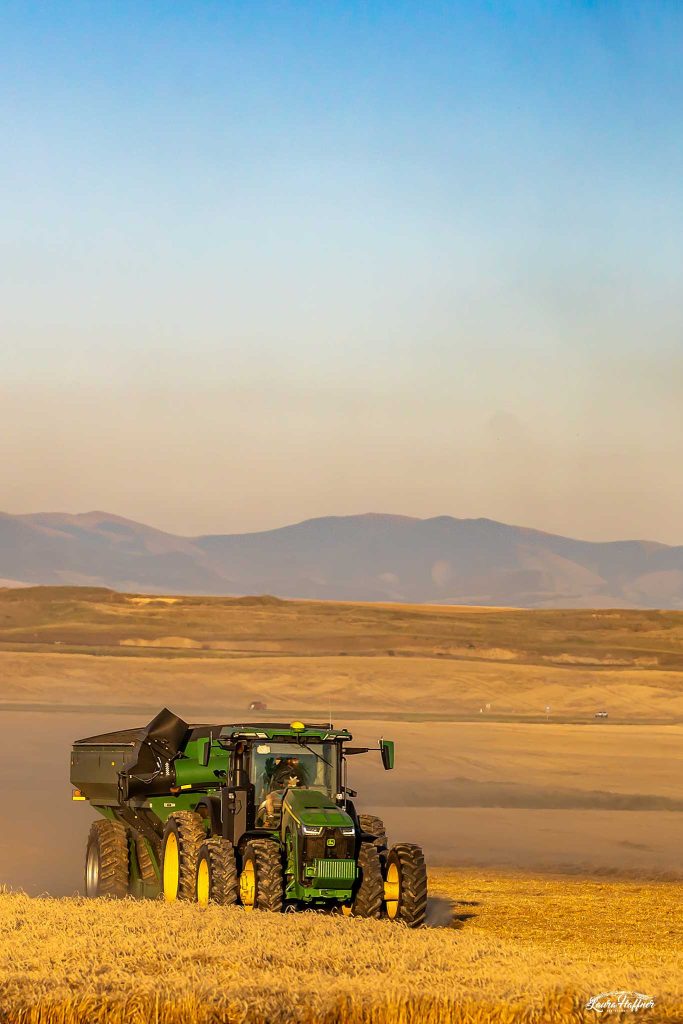
That afternoon, I had the opportunity to hop in the combine cab and fill in for one of our team members. The straw was so thick that I could barely travel over 2 miles per hour. No wonder the hen found this patch ideal cover for her chicks! The yield monitor was over 100 bushels per acre more often than not. The grain cart drivers had their work cut out for them and the trucks were on a continuous loop between the bin and the field. It was such a treat to be out in such an incredible crop of winter wheat.
The crew located with our family has finished wheat and is on to other crops including barley, canola, and chickpeas aka garbanzo beans. Sometimes crops like go to specialty markets which can provide additional value to the farm versus more common crops like wheat. Unfortunately, these crops weren’t immune to the market challenges due to issues within trade and tariffs.
Low market prices and high inputs have created real challenges for farmers. One thing we don’t always talk about is the impact this has on Main Street. Off-the-farm agriculture jobs are strained and qualified, hard-working people have lost or are worried about their jobs. Communities, already running on tight margins, are feeling the pinch. Our own crew isn’t immune as we, and most like us, have experienced similar stress with high input cost and volatile weather.
In my travels with harvest and in other sectors of agriculture, I have seen and visited with people who are feeling the real stress of the current environment in which so much of it is out of their control. This isn’t just a couple of bad days. This is months, years, and in some cases a lifetime of challenges taking its toll.
A common theme that pops up is isolation in the struggle. So many people feel it’s only them or that it’s almost shameful to have struggles.
It’s important to know we’re not alone and everyone fights battles sometimes. There are family, friends, or even professional who want to walk along side of us and offer us a hand up. For immediate support, calling 988 provides free and confidential help. We are worth it and need to be here for those who love us.
For readers looking to support their favorite agriculturalists, we have to do our part to help end this stigma. Many organizations are putting on free seminars, speakers and workshops across the Midwest. If you’ve missed something in your area, consider taking a free, online course offered by Michigan State found here. Refusing to engage in harmful gossip, sending a caring text or making a call to ask how someone is, being a proactive listener, watching for changes in behavior, and offering empathy, not sympathy can all be actions that will make a difference today.
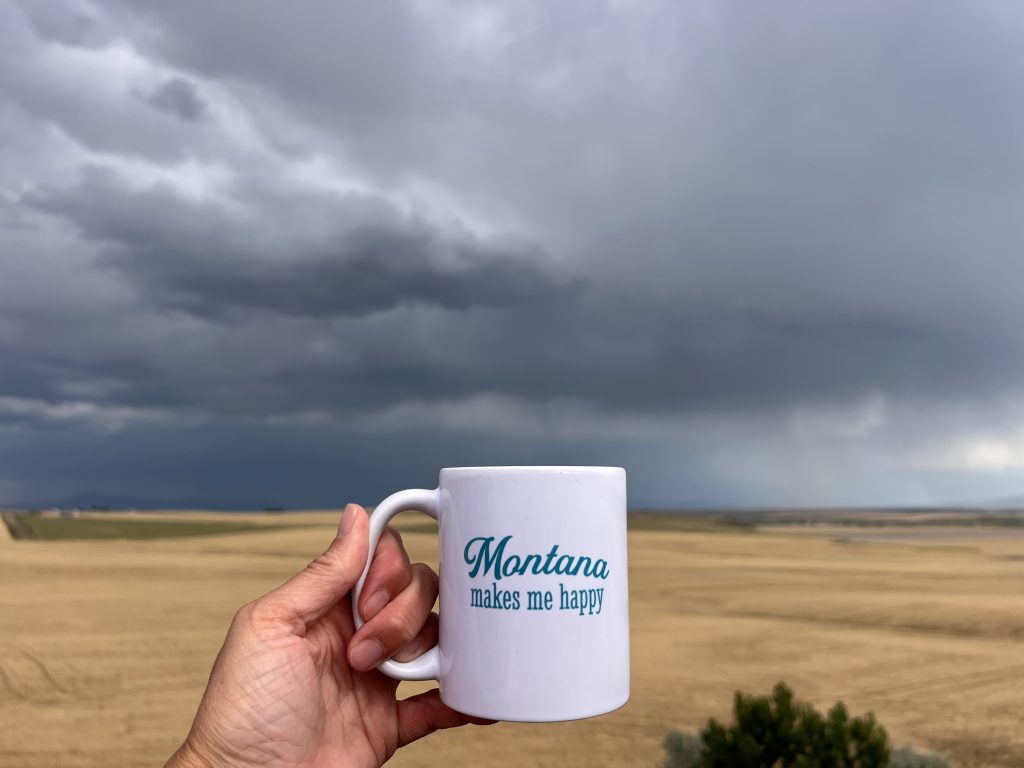
Having a physically AND mentally healthy rural America is crucial for the success of our communities and families. We can all do our part to make this difficult world a better place during these stormy times.