
Corn prices and conserving water on TAP
Most experts are projecting a large corn crop coming down the pike and that will continue to hold down the price per bushel, according to one expert.
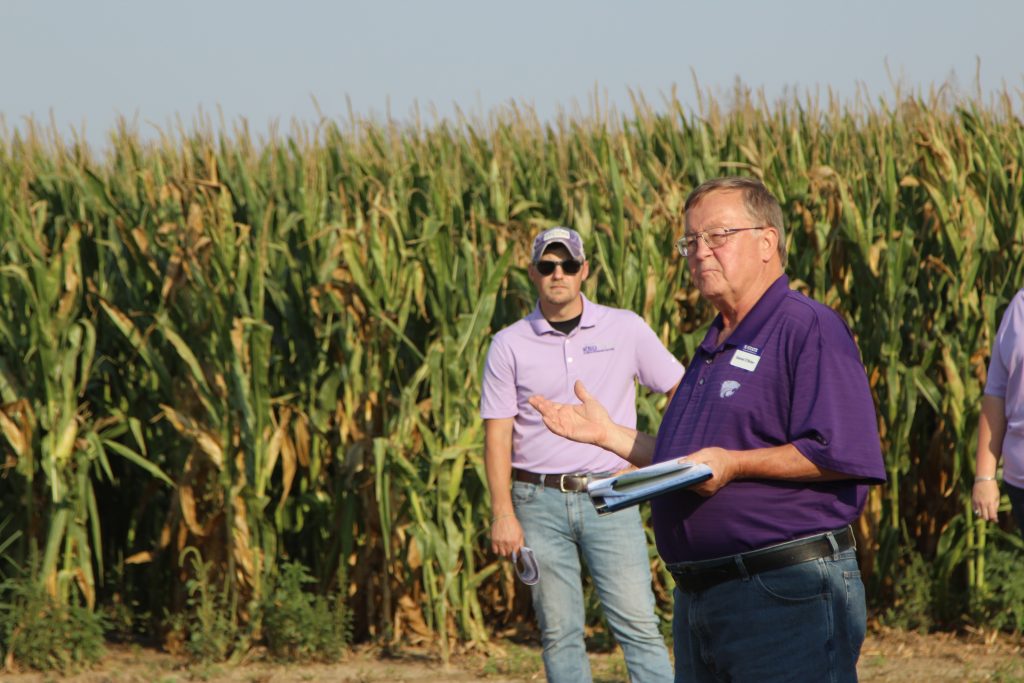
Daniel O’Brien, a professor in agricultural economics from Kansas State University based in Colby, said on Sept. 4, that the past few months most reporting services are sticking to record United States corn yields of about 182 to 188 bushels per acre along with continued strong U.S. corn export prospects.
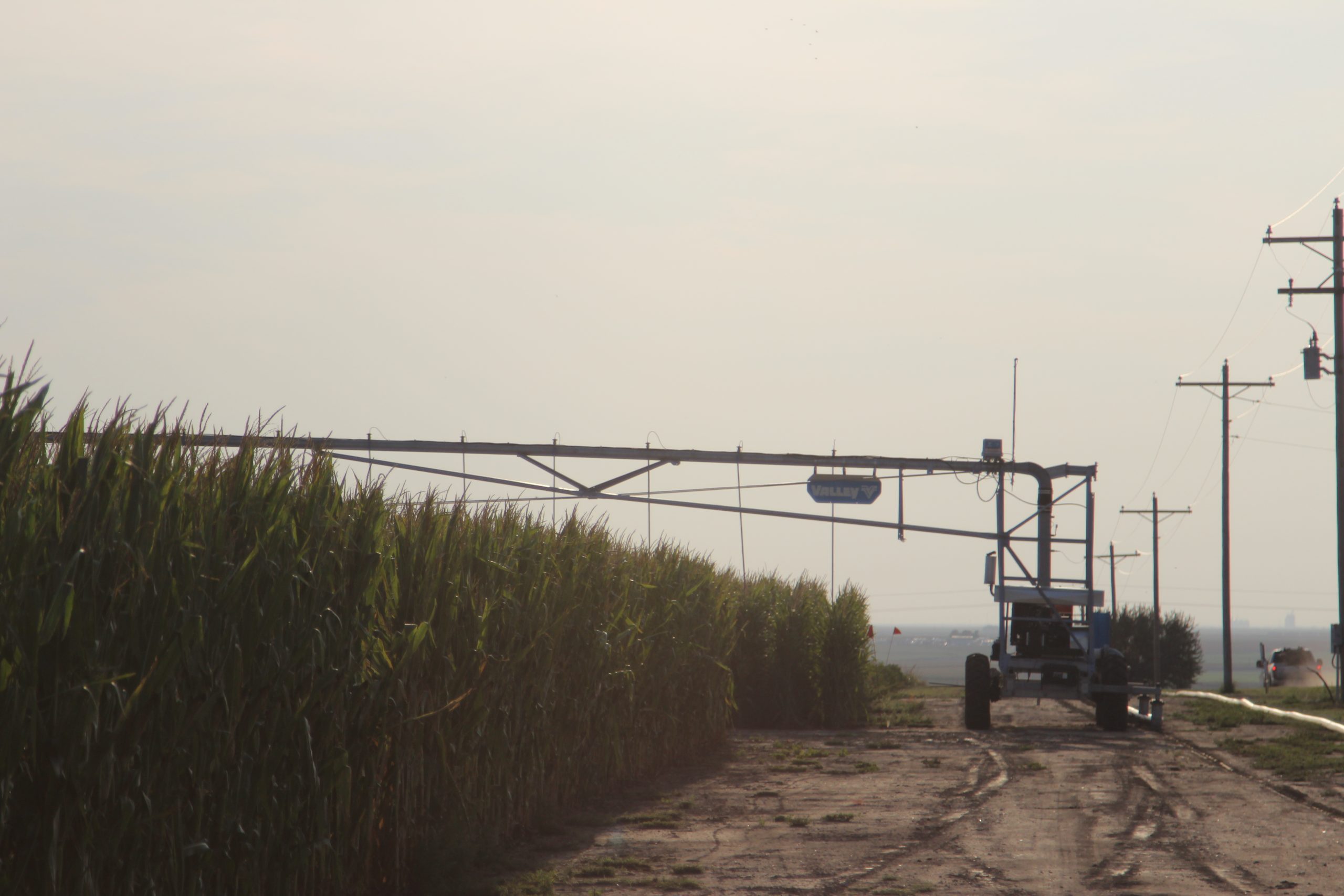
O’Brien provided a market overview during the KSU-Testing Ag Performance Solutions Agronomy Twilight Tour north of Garden City, which allowed visitors to see corn hybrids in a field setting.
Many U.S. Department of Agriculture and independent U.S. corn yield projections are based on what expectations are from Iowa and Illinois in the heart of the U.S. Corn Belt.
“We have strong prospects for increasing corn supply-demand balances this marketing year,” he said. “The big question with are dealing with right now is, just how huge will this corn crop be?”
Farmers, analysts and traders will be watching the Sept. 12 U.S. Department of Agriculture’s Crop Production report—knowing that most of the survey information was gathered by in the days around Sept. 1, he said. Unless there is a major surprise, he expects it to show many acres will be harvested in all the prime corn-growing areas of the country, which includes the High Plains. The resulting large crop situation is likely to hold down U.S. corn prices going into this fall.
One caveat could be that a reduction in the USDA estimates of final corn yield, which O’Brien estimated would be approximately four bushels per acre—down from the USDA August estimate of 188.8 bushels per acre. Even at projections of 184 to 185 bushels per acre, for example, U.S. corn market supply-demand could “tighten up.”
Other corn market uncertainties such as foreign geopolitical reactions could also bring about volatility in U.S. and Kansas corn prices, which have been hovering near or just above $4 a bushel mark in southwest Kansas during August-early September. If U.S. crop projections decline appreciably due to lower yields as discussed above, Kansas corn prices could increase as much as 40+ cents a bushel from current price levels. With several uncertainties in play, there is a reasonable to have the view that that “all is not completely lost yet in terms of U.S. corn price prospects.”
O’Brien said a farmer’s corn marketing and profitability management in later 2025 is also about keeping an eye on production costs, and knowing the level of crop input costs relative to local corn market sales opportunities. In light of prospects for lower prices, producers will be keeping an eye on yields to help boost yields and revenues enough to “outpace” higher crop production costs. because large yields can help offset higher costs.
If a farmer owns his land with a $4.15 a bushel price with higher yields, he can at least provide him an opportunity to cover break-even costs, he said as one example.
In terms of grain marketing strategies, O’Brien indicated that “I would be of the mindset to protect yourself from prices dropping lower into fall harvest.”
Such marketing and financial management strategies could include deploying market option tools and having an up-to-date crop insurance plan. Producers who are located in proximity to an ethanol plant or livestock feeders might be able to secure a strong basis bid and associated local cash price premium, he said. The profitability prospects of other major High Plains cash crops including wheat and sorghum have also been impacted by low commodity prices. In recent months U.S. wheat has been able to successfully find export market sales opportunities. That said, western Kansas wheat prices have remained below $5 per bushel — despite what can be described as trends to “tight” global wheat stocks.
After his presentation, he said that low price scenarios are a familiar story for many producers in the High Plains during years of average or larger crop size in the U.S. and Kansas. They also remember the introduction of ethanol in 2006 which led to a run up corn prices in 2007-08 before the Great Recession. Many of them also remember when prices rose during the 2011 going into drought year in 2012, and then eventually fell sharply approaching the post-drought year of 2013. However, when large crops returned in fall 2023 through 2019 there was a period of relatively lower but still seasonal volatile prices.
However, a Black Sea Region war between Russia and Ukraine provided a strong boost to grain market prices—as world food market anticipated both sanctions on Russia wheat exports and sharp cuts in Ukraine production and exports—exposing market uncertainty with a spike higher in all commodity prices in February 2022. O’Brien said it is a reminder that market turbulence from wars and politics can occur at unexpected times that can ultimately have either positive or negative impacts on the financial health of Kansas and U.S. grain producers.
From a longer term perspective, U.S. corn and soybean producers have been able to develop biofuel markets—supporting domestic grain consumption while supporting cash grain prices, O’Brien said.
On the other hand, U.S. grain sorghum producers’ significant export demand niche with China was hit hard by geopolitical trade and tariff issues implemented during the first Trump term and now again during the most recent round of U.S. versus China trade contentions.
Seed meeting needs
During the agronomy tour, producers have an opportunity to see hybrids from various seed partners. Moderators for the tour, Daran Rudnick, director of sustainable irrigation and KSU TAPS, and Renee Tuttle, associate director of KSU-TAPS, spoke about the interest growers have in drought resistance and seed genetics for irrigation and dryland production.
Seed company representatives spoke about how their corn product fit into that scenario. Seed partners at the Garden City tour included Axis Seed, Brevant Seeds, Channel, DeKALB, Golden Harvest, Hoegemeyer, and Pioneer.
Other speakers also discussed how technology can be used to more efficiently apply and conserve water.
K-State update
Brian Olson, a professor and head of K-State’s Western Kansas Research Extension Centers, told those in attendance that Dan Moser will continue to serve as an interim dean. K-State will re-open its national search for a new dean.
Recently retired Dean Ernie Minton is continuing a commitment to helping with the university’s $210 million Ag Innovation Initiative. About 90% of the monies have been raised as Minton wants to help raise the remaining monies.
Olson also provided an update on activities at other research stations in western Kansas. He praised the Kansas Water Institute and the KSU TAPS project as an important partner in helping growers with expertise and research on how to efficiently use water.
Another KSU-TAPS presentation was set for Sept. 8 in Colby with an emphasis on corn and grain sorghum.
Dave Bergmeier can be reached at 620-227-1822 or [email protected].



