
Fall armyworms are marching across the High Plains
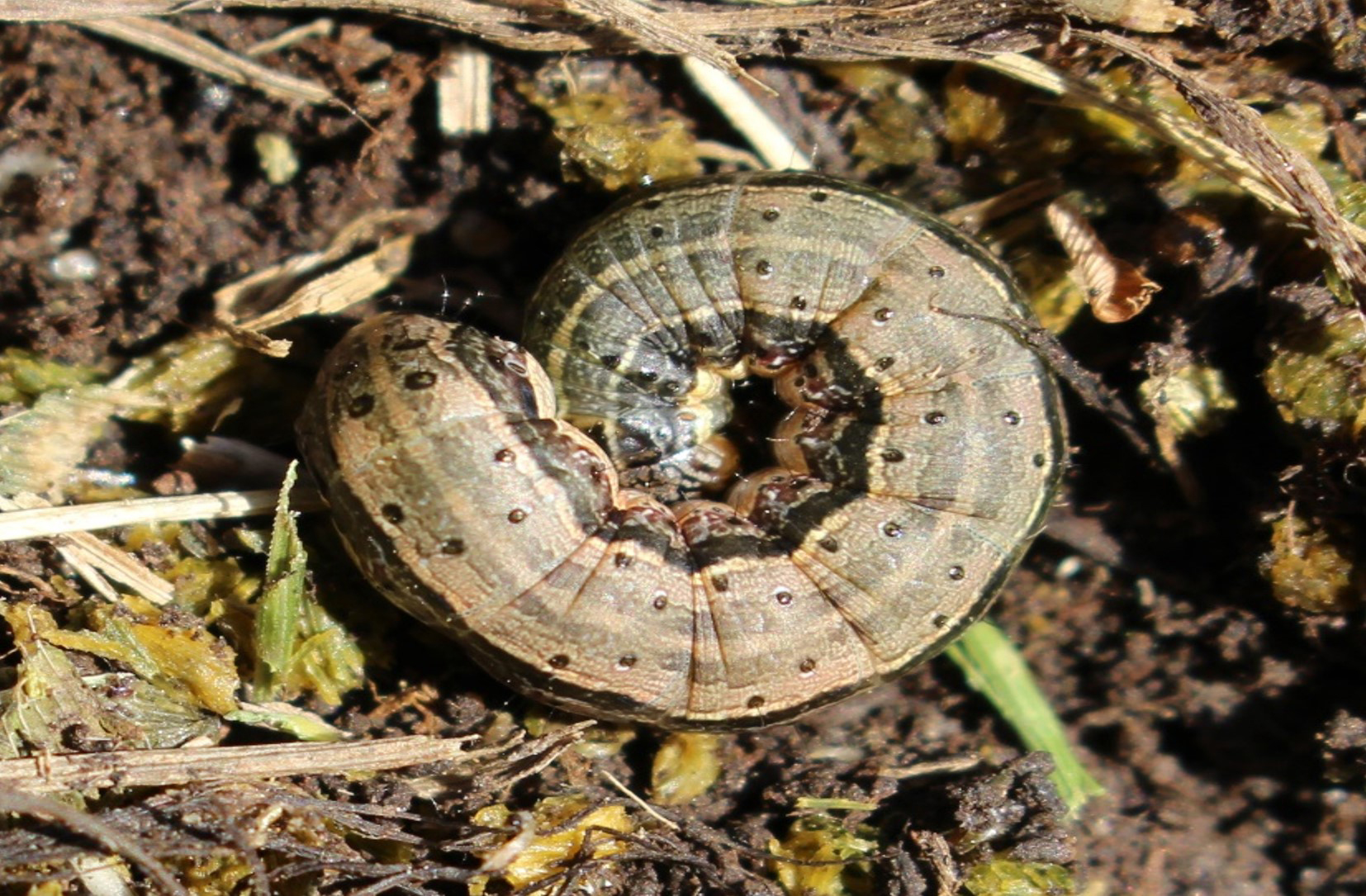
Fall armyworm larvae and adult moths have been reported across the High Plains in various summer crops and pastures and can cause substantial damage to plants. Unlike true armyworms, fall armyworms show up in the mid-to-late summer and early fall. One of the main differences in appearance is that fall armyworms have dark stripes and a light-colored Y-shaped marking on their heads.
The unseasonable weather experienced across parts of the High Plains is a major reason for this insect outbreak in 2025.
“The wet and cooler weather we have been experiencing has provided ideal conditions for egg and larval development,” said Ashleigh Faris, integrated pest management coordinator and field crops Extension entomologist at Oklahoma State University. “When it is hotter, eggs can desiccate or dry out more easily but that’s not the case with the current weather patterns.”
Faris said fall armyworms have been found lately across Oklahoma in corn, peanuts, soybeans, and sorghum. Raymond Cloyd, Extension specialist in horticultural entomology and plant protection at Kansas State University, said he has had reports across Kansas as well. He said most of the phone calls he has received so far about fall armyworms have been in brome grass pastures, rye and turf grasses.
Life cycle, damage and scouting
“Fall armyworms over-winter in Florida and Texas, and then the adults get caught on the jet stream, the wind currents, and then they get deposited in Kansas and other portions of the Midwest. The females lay eggs, and then the larvae emerge as caterpillars,” Cloyd explained.
Fall armyworms do not tolerate cold weather in the High Plains, which is why the first killing freeze is the end of their yearly damage to crops. Even though they are only in the region for a short period of time in the fall until the first hard freeze, these insects can inflict significant losses if left untreated.

The damage inflicted by fall armyworms is dependent on the crop and its growth stage, according to Faris. “Armyworms have this name because of their ability to march across a field and cause severe damage in just a few days, if not caught early,” she said. “Younger plants are more susceptible to damage due to the crop being small, so less mass to lose.”
For grasses, Cloyd said the instar or development stage of the armyworm plays a significant role in the amount of damage done. He said the later instars—four, five, and six—are known for their substantial damage to turf grass in particular.
Both Faris and Cloyd agreed early scouting is the best option to prevent plant injury and producers need to know when to apply treatment to kill fall armyworms. Like many insects, early morning and evening are the best times to scout for fall armyworms. Faris said they often hide in lower canopies or within whorls of the crop when the sun is out.
“Since they will move from pasture and weedy areas into crops it is best to begin scouting edges of field borders a couple weeks before planting and then continue scouting regularly at these edges once the crop is planted through the stages that can be economically damaged,” she said.
Other than spotting armyworms in a crop, Faris said one of the main signs of fall armyworm damage is windowpaning of leaves, where the small larvae will scrape the leaf material and leave behind a transparent section of the leaf.
“Another sign of larger larvae being present is frass, usually yellow to brown in color, on the leaves,” she said. “These larger larvae will feed by eating the leaf, not just scraping it.”
Cloyd said if there are high populations of fall armyworms in grass, they will denude or defoliate the turf grass and worm fecal material will be present. Grass usually turns brown once the worms start feeding. He said sometimes caterpillars can be found in the soil under turf grass, in the thatch layer or just above the soil surface.
“Timely and consistent scouting is the best way to manage this pest,” Faris said. “You don’t know what is in your field if you are not actively scouting it.”
Treatment and control
While scouting is the only way to know if fall armyworms are present, timely treatment is also equally important.
“The best way to manage fall armyworms is to catch them while the larvae are small, meaning less than an inch in length,” Faris said. “The larger larvae are more difficult to manage even with chemical control. This way the insecticide can offer the most effective control in preventing a population from building and causing damage to your crop.”

However, not every crop that is infested with fall armyworms is treated the same. Faris said it is crucial to consider the type of crop and its maturity to know how best to treat it.
“The grower needs to consider the growth stage that their crop is in and determine if the crop is entering or is at a stage that can be economically damaged by fall armyworms,” Faris said. “For example, soybeans can handle a heavy amount of defoliation, so spraying for armyworms may not be necessary. Crops that are earlier in their growth stages are more susceptible to economic damage, and in severe infestations or infestations that are caught late, there can be stand loss.”
Faris recommends producers planting late summer or early fall crops, like winter wheat, to use an insecticide seed treatment that allows them to get a healthy stand by providing protection against fall armyworms for the first few weeks. Once the stand emerges, fields should be scouted regularly.
“It appears that 2025 has been a ‘wormier’ year than usual, so it will be very important that our wheat producers keep an eye out for fall armyworms,” Faris said. “In Oklahoma, the fall armyworm economic threshold for seedling wheat is typically two to three larvae per linear foot of row, especially in water-stressed or small wheat plants. For older, more vigorous wheat, the threshold increases to three to four larvae per linear foot of row when active feeding and obvious windowpaning and defoliation are observed.”
As far as treatment, Faris recommends selecting an insecticide that is labeled for both the crop and fall armyworm, and to always follow the label rate.
“Pyrethroids may be a cost friendly option; however, they are not always effective against fall armyworms, especially the larger ones,” Faris said. “Chlorantraniliprole is an option that how shown good efficacy against fall armyworms.”
Fall armyworms have several natural enemies that can provide some biological control. These include lady beetles, big eyed bugs, parasitoids, and ground beetles.
“When selecting a chemical control option be sure to select one that is soft on beneficials so that they can stick around,” she said.
Lacey Vilhauer can be reached at 620-227-1871 or [email protected].
PHOTO: Fall armyworm. (Photo courtesy Raymond Cloyd.)



