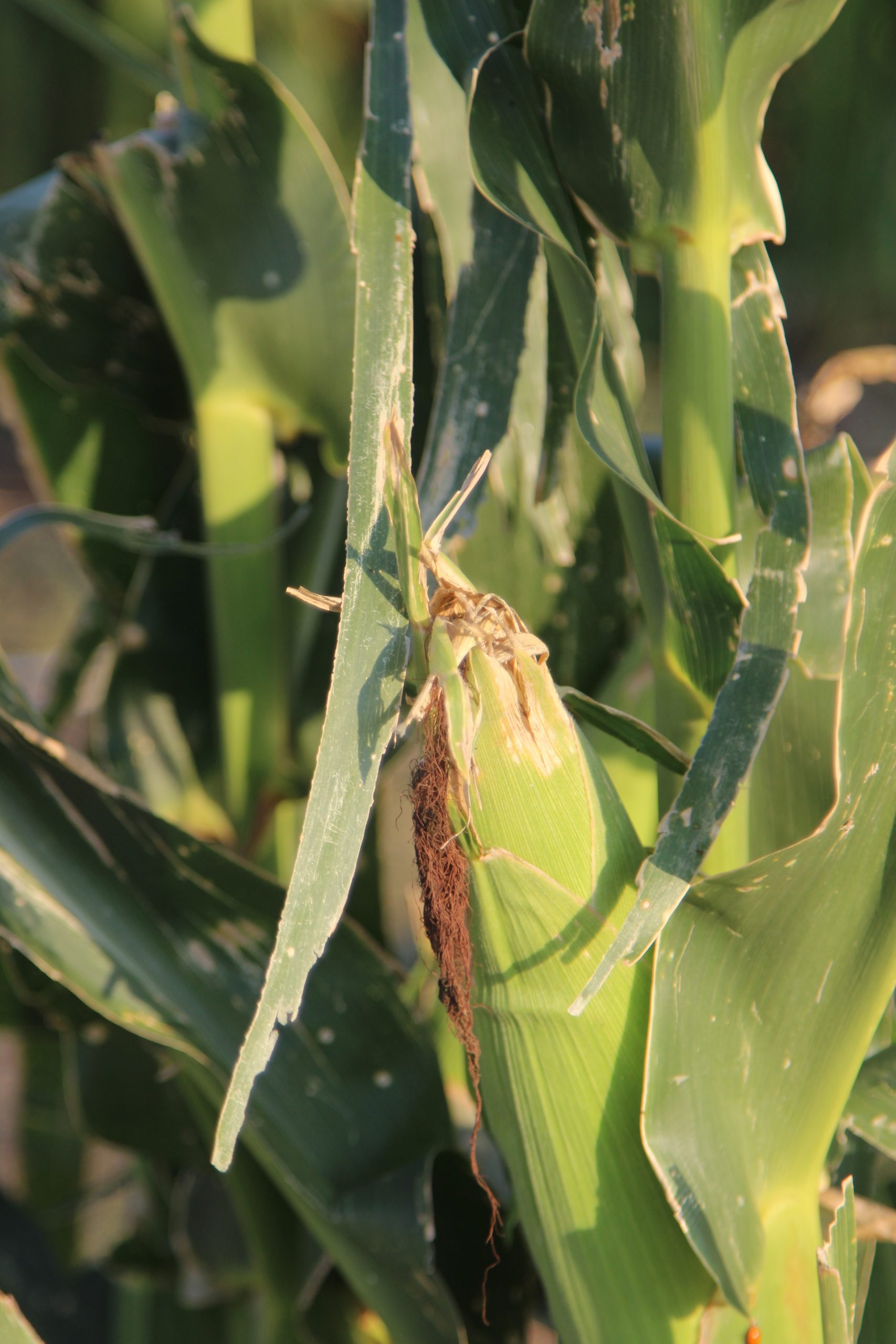
The Sept. 12 World Agricultural Supply and Demand Estimates was one of the most eagerly awaited reports of the year, and it lived up to its potential. The most-watched news concerned the corn crop.
The U.S. Department of Agriculture raised its United States corn production estimate to a record 16.814 billion bushels, largely due to a 1.3 million-acre increase in harvested acres. The projected harvested area for corn was 90 million acres, which USDA said would be the highest harvested acreage since 1933. The planted area was forecast at 98.7 million acres, which would be the most since 1936.
Corn production for 2025-26 was forecast at 16.8 billion bushels, up 72 million from last month as a 2.1-bushel reduction in yield to 186.7 bushels per acre was more than offset by a 1.3 million-acre increase in harvested area.
The average U.S. corn yield was still up by 7.4 bushels compared to 2024. The National Agricultural Statistics Service forecasts recorded high yields in Georgia, Idaho, Illinois, Indiana, Iowa, Minnesota, South Carolina, South Dakota, Virginia, and Wisconsin.
The acreage news drove markets down at first. But they rebounded as the export numbers began to sink in. Corn exports were increased by 100 million bushels to a record 3 billion bushels for the 2025-26 marketing year, while domestic use remained unchanged. According to Farm Progress, December corn plunged 8 cents in the seconds after the WASDE dropped, while November soybeans almost doubled that loss. Three minutes later, though, futures rebounded and were higher.
Many buyers took advantage of the low corn prices. CBOT December 2025 corn futures settled on Sept. 12 at $4.30 a bushel, up 10.25 cents on the day, and gaining 12 cents for the week.
This month’s 2025-26 U.S. corn outlook was for greater supplies, larger exports and a slight reduction in ending stocks. Projected beginning stocks for 2025-26 were 20 million bushels higher than the last report, based on a lower use forecast for 2024-25, with reductions in imports and corn used for ethanol partially offset by an increase in exports.
With rising supply more than offset by greater use, ending stocks are down 7 million bushels to 2.1 billion. The season-average corn price received by producers remained unchanged at $3.90 per bushel.
As of Aug. 31, 69% of this year’s corn crop was reported in good to excellent condition, 4 percentage points above the same time last year.
Analysts react
Analysts are still digesting the corn news.
“What’s interesting is that the trade discussion the past few weeks has been about the shrinking [corn] crop in the East,” said Guy Allen, senior economist in the Agricultural Grains Program at Kansas State University. “The report added 14 million bushels for Indiana, Ohio and Michigan and another 22 million bushels for Illinois, due to acreage changes that offset lower yields. The main western states went up a combined 24.4 million bushels with Nebraska up nearly 36 million bushels. Domestic demand was left unchanged at a 585 million bushels increase year-over-year, but exports were raised 100 million bushels to a record 2.975 billion bushels. How they got there still has me scratching my head.”
The month’s 2025-26 foreign coarse grain outlook was for lower production, slightly smaller trade and larger stocks relative to last month. Foreign corn production is forecast down with declines for the EU, Serbia, Russia, and Moldova partially offset by increases for India, Zambia and Canada. EU corn production was lowered reflecting reductions for Romania, Hungary, Bulgaria, and France partially offset by an increase for Poland. Russia production was cut as poor yield prospects for the Southern and North Caucasus districts more than offset favorable conditions in the Central district.
Foreign barley production was higher with increases for Australia, Kazakhstan and Ukraine partly offset by a decline for Russia.
Soymeal leads soy export story
The soybean story was different. On Sept. 5, President Donald Trump signed an executive order implementing the U.S.–Japan Trade Agreement, which includes provisions for Japan to make $8 billion in annual purchases from the U.S., including food and agricultural products.
In Marketing Year 2023-2024, Japan imported $1.31 billion of U.S. soy products, making the country U.S. soy’s sixth largest trading partner by volume, according to USDA.
The 2025-26 outlook for U.S. soybeans included higher production, higher crush, lower exports, and higher ending stocks compared to last month. Soybean production was projected at 4.3 billion bushels, up slightly with a higher harvested area offset by a lower yield. Harvested area was raised by 0.2 million acres from the August forecast. The soybean yield of 53.5 bushels per acre was down “marginally” from last month. The crush forecast was raised by 15 million bushels, driven by stronger soymeal exports.
The soybean export forecast was reduced 20 million bushels on increased competition, particularly from Russia, Canada and Argentina. Ending stocks were projected at 300 million bushels, up 10 million bushels from last month.
The U.S. season-average soybean price was forecast at $10 per bushel, down $0.10 from last month. Soymeal and soybean oil prices remained unchanged at $280 per short ton and 53 cents per pound, respectively.
Foreign 2025-26 oilseed production was increased by 1.1 million tons mainly on higher rapeseed, sunflower seed and cottonseed production that was partly offset by lower soybean production. Foreign rapeseed production was raised 1.4 million tons on larger production for Canada, Australia, Kazakhstan, Russia, and Moldova. Global sunflower seed production was raised 0.2 million tons on higher production for Russia and Kazakhstan that was mostly offset by lower production for Ukraine and the European Union.
The global soybean supply and demand forecasts included lower beginning stocks, lower production, lower crush, higher exports, and reduced ending stocks. Beginning stocks were reduced mainly on an upward revision to exports for Argentina in the prior marketing year. Global soybean production was lowered 0.5 million tons to 425.9 million on lower production for India, the EU and Serbia that was partly offset by higher production for Russia and the U.S.
Soybean meal trade was raised with higher exports for the U.S. and Ukraine, but lower exports from India. Soymeal imports were raised for the EU but lowered for Egypt, Turkey and Thailand.
Soybean exports for 2025-26 were increased, with higher exports for Argentina, Russia, and Canada, mostly offset by lower exports for the U.S. and Ukraine. Imports were raised for Turkey, Brazil, Egypt, the EU, and Serbia.
Global soybean ending stocks are reduced 0.9 million tons to 124 million tons on lower stocks for Argentina, Bolivia, and Canada, partly offset by higher stocks for the U.S. and Brazil.
David Murray can be reached at [email protected].