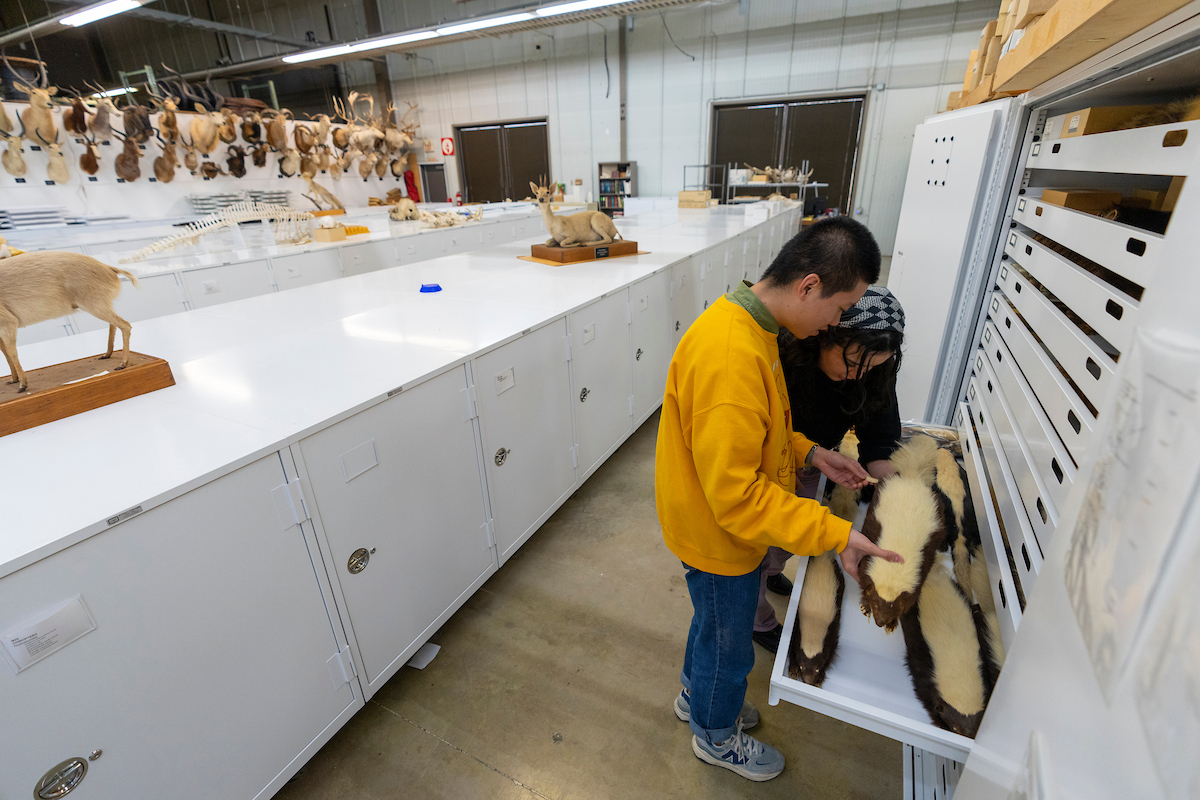
The Department of Ecology and Conservation Biology within the Texas A&M College of Agriculture and Life Sciences is helping lead a national effort to transform how scientists access and use biodiversity data by digitizing tens of thousands of mammal specimens from its Biodiversity Research and Teaching Collections.
The work is part of the Ranges Digitization Network, a consortium of 23 natural history collections across the U.S. dedicated to digitizing, standardizing and sharing trait data for terrestrial mammals.
The consortium members house millions of specimens that represent the diversity of animal life across time and space. Over the past three decades, digitization has revolutionized access to natural history collections, allowing researchers to connect data globally and gain new insights into ecology, evolution and conservation.