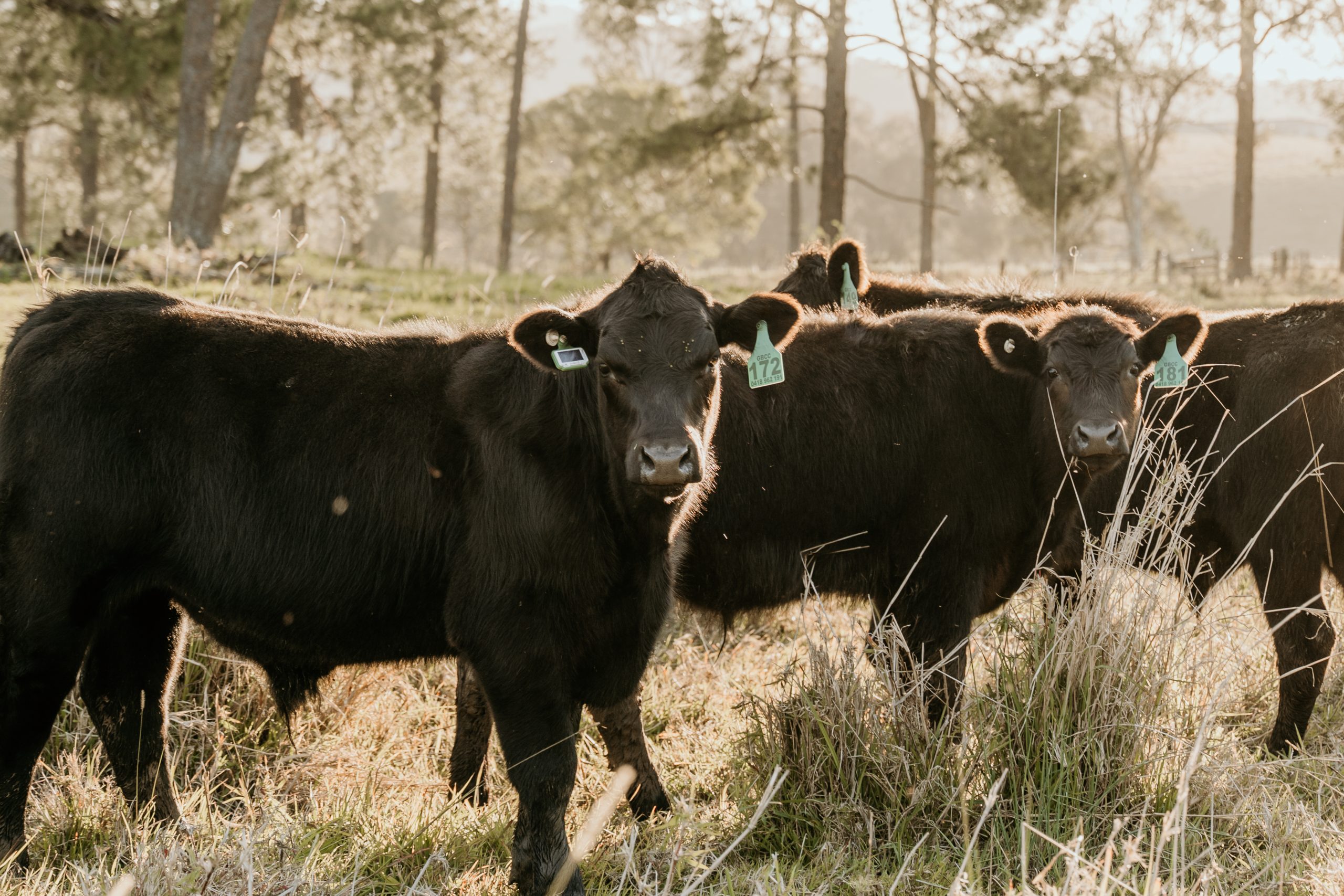
Each animal in a cattle herd is a difference-maker in an operation’s profit, but how to get to that level of efficiency has not been easy to attain.
Enter CERES TAG—a company with a satellite livestock monitoring system that helps ranchers by providing constant connectivity for the accurate tracking of animal health, location and behavior.
National Sales Manager Shane White said assisting ranchers to make decisions on individual animals and their efficiency within the operation has always been the focus of CERES TAG.
“The best way we could do that is to make them more profitable with better data that helps them to make better decisions,” White said. “If we can’t deliver data that helps them to make better decisions on an individual animal, we’ll never make the whole group more profitable.”
Major breed organizations have compiled a tremendous amount of genetic analysis and genetic selection, but a rancher also needs to know how to improve each animal’s phenotype, he said. Unlocking the phenotypes offers an opportunity to generate an even higher return on that investment.
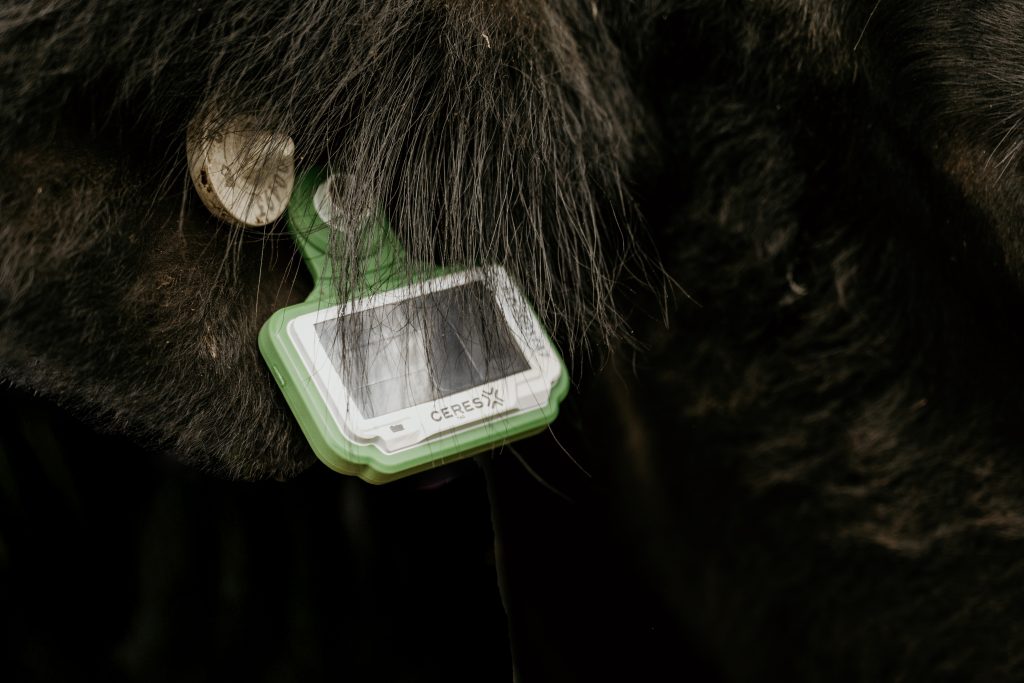
CERES TAG has seven distribution partners to help ranchers with setup and answer questions. The first step a rancher will take is to register the tag, put the tag in the sun because it is powered by solar energy, activate the tag, and put the tag on the animal. Once activated, CERES TAG collects data that measures feed intake of individual cattle and compares it to weaned calf weight.
White said ranchers can identify cattle that are efficient with feed, and that can translate into increased stocking rates as outcomes, as an example.
The tags are designed to be on a three-year time frame. “We want to make sure to match the life cycle of the average animal,” he said.
It also works well with bull producers and seedstock operations because CERES TAG captures feed efficiency instead of relying on assumptions and that data can be shared with buyers.
Data provides an accurate picture of how animals are turning forages into gain, he said. Some animals are more efficient than others, and CERES TAG tracks that difference-making information.
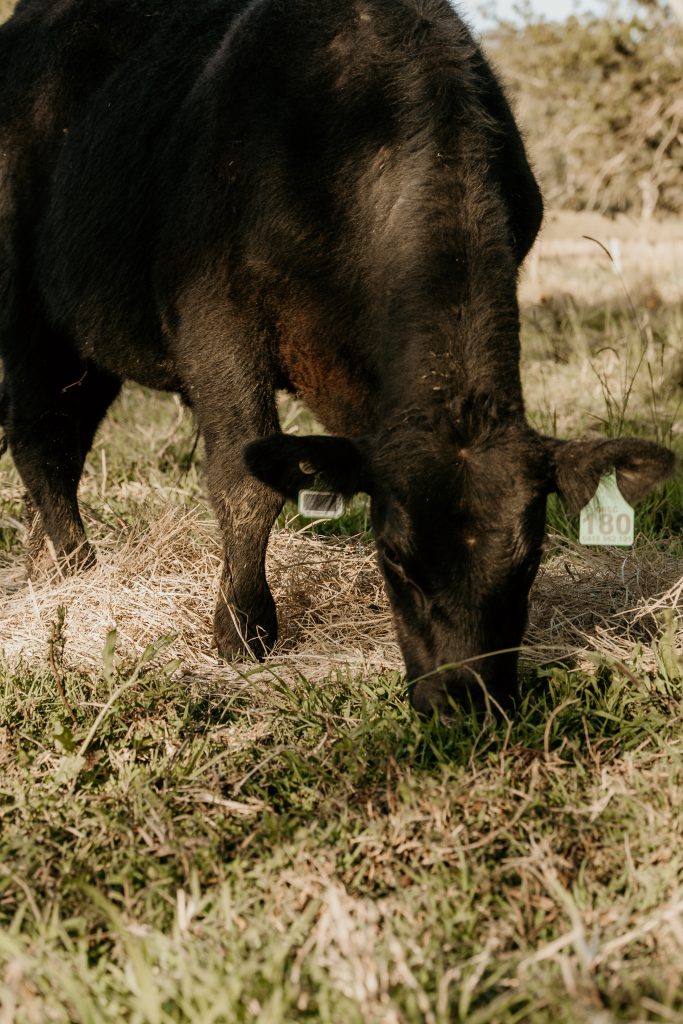
The company notes Pasture Feed Intake, which measures the volume of dry matter ingested by an animal over a period of time. By electronically automating the data to the chosen software platform, it helps the producer to more efficiently manage each animal. It also provides insight into pasture and range conditions.
By understanding the data, White said a producer can ask with confidence, “How much forage intake does it take to produce a weaned calf or what does it take to produce my yearling bull?”
A seedstock operator can really dial into his true cost of production and say so with great confidence when making comparisons.
While there are many considerations that go into management decisions, one consistent theme White has heard from CERES TAG customers with their cows is that the data collected has allowed them to increase their stocking rate by 5 to 25%.
“Our producers have been able to increase their stocking rate, because they can cull females that don’t do a good job of producing economically relevant output compared to their intake and replace them with females that do,” White said.
Practical
The three-year time frame works well, and research partners can provide updated algorithms that help ensure ranchers have the latest in technology. White said the rancher can put the tag on as soon as the animal is born, although he often recommends waiting until after the calf is weaned because that is when the animal becomes responsible for its own intake.
In practical terms, the information provides an important baseline.
CERES TAG system allows ranchers to monitor the well-being and the productivity of the animal without having to lay eyes on them, White said, and that provides peace of mind when a rancher may have an expansive operation with many high priorities. The system also can automatically alert a rancher if the animal is showing no activity or high activity from an outside influence.
“If an animal hasn’t shown a sign of life for 60 minutes, it will send in an automatic notification,” White said. “If they’re being chased by a thief, a predator, a wildfire, or anything that’s making them run above a standard deviation beyond their normal dynamic 7-day movement pattern, it will trigger an automatic alert and will continue to trigger every 10 minutes until the animal returns back to a resting state.”
The alert system is critical, he said, because that gives a rancher time to react and notify ranch hands, law enforcement or conservation officers, so they know what’s going on. It can help with an indicator of a fire, and the rancher knows where his cattle are located.
CERES TAG’s innovation offers versatility in the data process.
“If a rancher registers 100 tags, he won’t get 100 data packets every day at 6 a.m. He actually gets 100 data packets scattered out between 6 a.m. to noon so they offset themselves,” White said. “There’s one animal in the set giving us data almost every minute at that point, and even if he only registers 10, he still gets those data packets scattered out across those six hours.”
Real numbers mean real profits
With a nation’s cowherd at such a low number, at an estimated 28 million, it is imperative that ranchers need to be efficient, he said, and that means maximizing resources is a must.
Feedyards are continuing to pay ranchers premiums for high quality animals, which to White also means ranchers who are wanting to retain their females need to be able to have the best information possible.
“It was one thing when they were worth $1,200 to $1,500, and we decided to keep one that may or maybe didn’t work out, but when they’re worth $3,000, we better make sure they work out right,” White said.
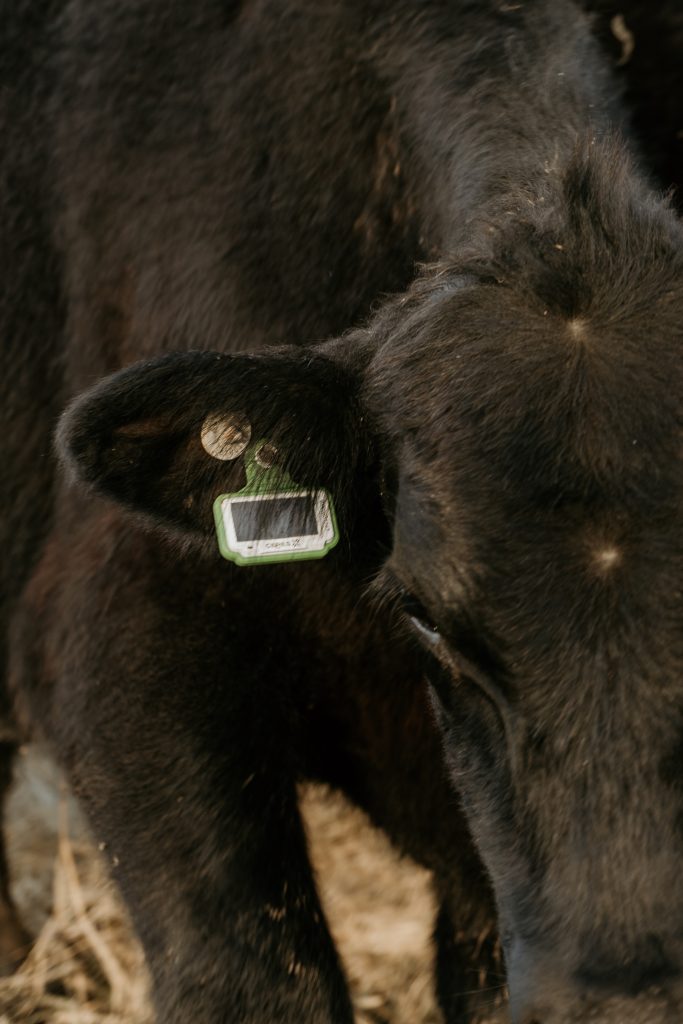
Another example of how CERES TAG works is that by measuring individual performance a rancher can eliminate outliers. He told of an assumption oft-repeated that every 1,300-pound cow converts feed at the same rate, which can be a costly oversight.
“You may have 1,100-pound cows in your herd eating 35 pounds of dry matter intake a day and at the same time you have 1,400-pound cows in your herd eating 25 pounds of dry matter intake every day,” White said, adding that’s why it is important to look at the data from weaning weights before making the culling decision. “You may be selecting that 1,100-pound cow thinking, ‘no, she matches my environment better,’ when the truth is her grazing efficiency actually doesn’t match your environment and she’s costing you money because she already has a lower weaning weight calf.
“Because she’s a lower body weight cow, and she’s not as feed efficient as the big cow is, we can stop using these assumptions of ‘little cows match here, big cows match here or that every animal that weighs the same eats the same.’”
White credited company founders David and Melita Smith for their vision because they are driven to solve problems that ranchers face every day.
“They’ve done exactly what they said they would do. They said they would connect people with animals worldwide via direct to satellite connectivity and that they would give real-time animal behavior monitoring and that allowed for better decision making,” White said.
Ultimately, the Smiths believed that CERES TAG could provide a return on investment because of the information it generated, White said. “It really is our founders who deserves a tremendous amount of credit for delivering exactly what they said they would.”
For more information about CERES-TAG, visit www.cerestag.com.
Dave Bergmeier can be reached at 620-227-1822 or [email protected].