
Defenses for sorghum against fall army worms explained
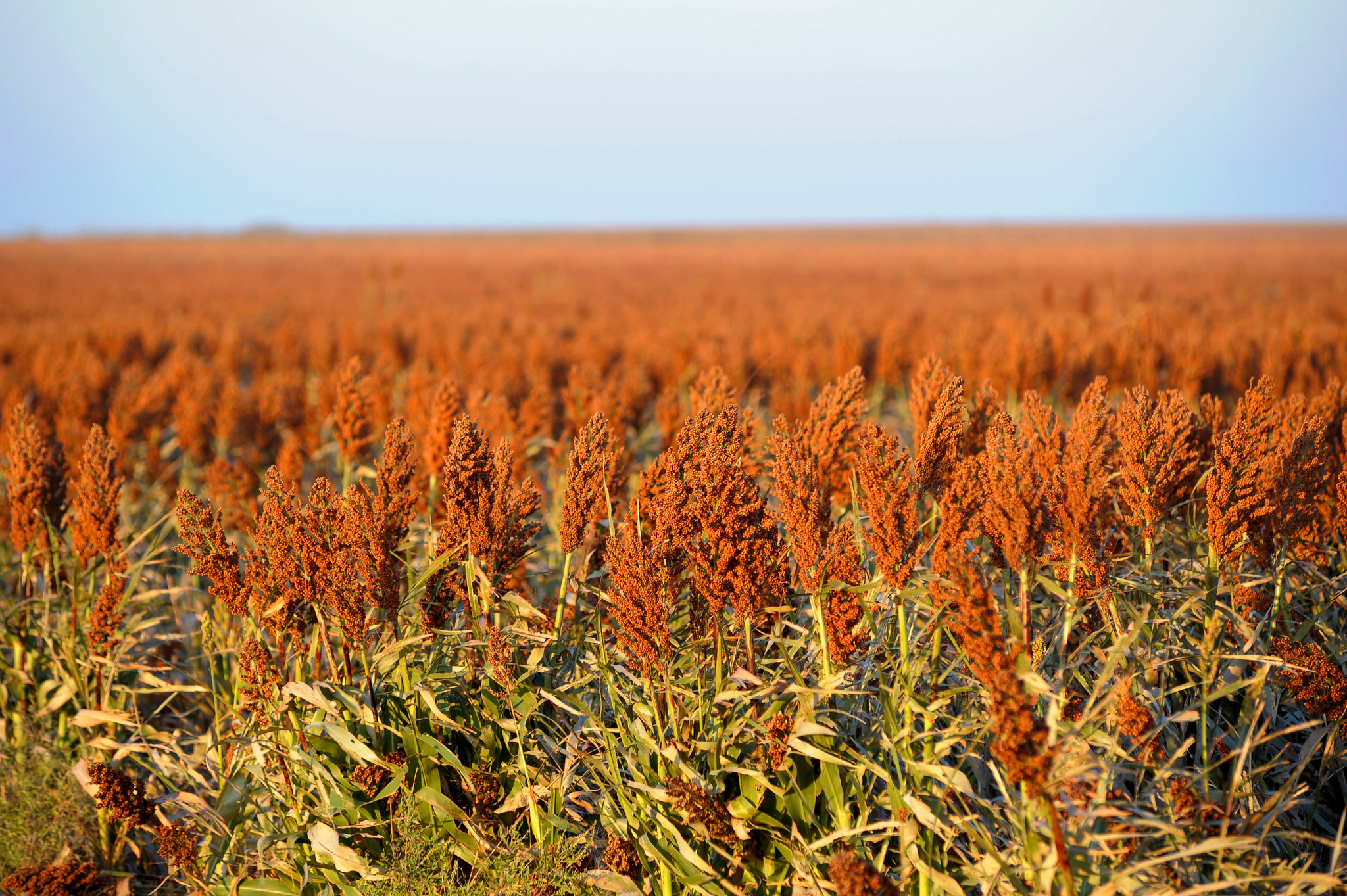
Fall army worms are a destructive bunch. Farmers in the High Plains have had more than their fair share of insect pests in their sorghum this year. One researcher discussed how important it is to know what you’re looking at during a recent webinar.
Joe Louis, Eberhard Harold W. Professor of Agricultural Entomology, department of entomology and department of biochemistry at the University of Nebraska-Lincoln, was the featured speaker on the September Center for Sorghum Improvement’s seminar. Louis discussed defenses against fall army worms in sorghum.
Fall army worms are often included in the “chewing group of insects,” according to Louis, and includes many of those above ground and below ground chewing pests farmers don’t like to see coming.

“Some below ground root feeding herbivores, the caterpillars, they have really strong mandibles present in their mouth part, which allows them to feed on the host plant,” he said.
Louis said in his lab in Lincoln, he works on plant-insect interaction, looking at different kinds of insects and feeding types—above ground, chewing insects, aphids and others—as well as root feeders (especially the maize and corn root worm.)
“We also do look at the insect bioassays, both in the greenhouse and in the field,” Louis said. “Looking at how these insects perform on these different plant varieties or genotypes and we also have a system where you could monitor the feeding behavior of the insects using this technique, known as the electrical penetration graph technique.”
A closer look
Researchers can put insects directly on the plant and know exactly where they feed on the plant in real time. They’ve also investigated to see if there are any other defense mechanisms being activated in other tissues other than the sap.
In the lab researchers look through the visible, fluorescent, and hyper sectoral cameras and see how the plants are responding to insect feeding.
“We also are using these interdisciplinary approaches to understanding how the plant responds to these insects’ feedings,” he said. “For example, we use the transcriptomics to understand the discovery novel genes or signaling networks that contribute to the plant defense.”
Louis is also able to look at the metabolites that contribute to plant defenses or resistance to insects. They also study the insect side.
“When the insects feed, they release the oral secretions or saliva or the digestive waste product, which are the frass,” he said.
Multiple objectives
By using different techniques to study and investigate in the lab, they’re able to achieve several objectives.
“We are trying to connect the plant responses, which is the phenotype, to the transcriptomics data, which is a genotype, so that we can develop improved pest resistant or tolerant crops,” he said.
Sorghum is a versatile crop that can be used for grain, forages or biomass, and new research has shown how its grain can positively influence the human gut microbiome.
Insect movement
Another project they’re working on at UNL looks at insect movement on plants and sorghum interactions. Louis is particularly interested in the secretions that come from the insect’s mouth.
“For example, from the mouth region, they release the oral secretions, or the saliva and from the other end of the caterpillar they release those digestive waste products, which are known as the frass,” he said. “And what happens is that the plants can perceive those secretions coming from the insect, and they activate different kind of defenses, one being the direct defense, which include the production of the chemicals that the negatively affects the herbivore.”
One example is phytohormones and the other is secondary metabolites.
“They are all good examples of direct defense, and the other one is indirect defenses, where the plant produces these molecules and that could attract or recruit those natural enemies,” he said.
Louis said a few years ago, their research has shown that in sorghum the secondary metabolite flavonoids or complex polyphenols are critical for providing resistance to fall army worms.
“What we have published in 2022 was that when fall army worm starts feeding on sorghum, they redirect the metabolite synthesize toward the flavonoid pathway after full army infestation,” he said. “So many of those flavonoid compounds were highly produced or accumulated in those resistant sorghum lines.”
Other university researchers have shown that sorghum and maize flavonoids are highly detrimental for the growth and survival of fall army worms.
Louis said when the army worms feed on the plants, they deposit a “ton of frass” on the plants. Through their various research methods, they collected the frass from the sorghum plants. From there they mixed the frass with a buffer and applied it back to their test subject plants. They then studied the damage from the insects and wounds left behind. The plants were putting up some defenses Louis found.
“What we did was we looked at the amount of flavonoids after frass application and looked at temporarily how they are being activated,” he said. “And what we found was that within one hour of frass application, we saw an increase in the flavonoids, but at later time points and we did not see any statistically different accumulation difference.”
They did notice a trend in certain levels and found several key ones were significantly higher after frass accumulation.
“Once you apply those onto the plant, and then look at the full army worm weight, and you could see that after eight hours of full army worm frass application and 48 hours of full army worm frass application, and then you introduce that night (defense) larvae you could see a significant decrease in the weight of these the caterpillars.”
To Louis, this shows that flavonoids are a key compound that is recognized in the plaque in the sorghum plant, and they are activating defenses against insects.
“So overall, what the significance of what we are doing is that we are trying to understand what are those resistant mechanisms, or novel mechanisms against insect pests,” he said. “We are using sorghum as a model to understand all these different insects, the different defense mechanism against this insect pest. The information we get could be used for designing more resistant crops or varieties and will also help us to reduce the application of the chemicals on agricultural crops.”
Kylene Scott can be reached at 620-227-1804 or [email protected].



