Neighborhoods across the country will be teeming with families walking door-to-door in search of treats on Halloween night. Kali Gilbert and Meaghanne Thompson, both health and wellness agents with Alabama Extension at Auburn University, said following simple tricks can ensure a safe and healthy holiday.
“Halloween brings together imagination, community and activity,” Gilbert said. “Families get outside, meet neighbors and let kids show off their creativity with costumes and decorations. It’s also a great time to teach safety — walking together, checking treats and setting expectations — while still having a blast.”
Gilbert and Thompson’s top tips cover trick-or-treating safety and healthy options for moderating candy consumption.
Trick-or-Treating Safety
Whether homemade or store-bought, Halloween safety considerations start with costumes.
“Masks can block vision, so face paint is usually safer,” Gilbert said. “Remember to test face paint ahead of time to avoid skin reactions. If a mask is a must, make sure it has wide eye openings and good airflow.”
Gilbert also advised choosing flame-resistant fabrics and avoiding long costumes that could easily become a tripping hazard.
With sunset occurring before 6 p.m. on Halloween, Thompson stressed the importance of incorporating costume elements that improve visibility.
“You can find reflectors, flashlights or glow-in-the-dark necklaces for low-cost at dollar stores,” Thompson said. “Carry a few backups with you just in case. Strollers or carts are handy for toting extra candy or costume pieces that children are tired of wearing, but remember to add lights or reflectors to those as well.”
Additional safety tips include the following:
- Dress in layers for changing weather.
- Label costumes with a parent’s phone number, just in case a child gets lost.
- Hold hands when walking between houses. On sidewalks or streets, children should be on the house side with adults on the street side.
- Match the trick-or-treating route to each child’s age and energy.
- Toddlers may only make it one block.
- Younger, school-aged children can usually handle 20 to 40 minutes.
- Older children can go farther with boundaries and check-in times.
- Ensure children always walk with an adult or in a supervised group. Use location-sharing smartphone apps for preteens.
Inspecting Treats and Providing Options
Once trick or treating ends, the temptation to taste-test each and every treat begins. However, exercising patience is paramount.
“Parents should inspect candy first to make sure no seals are broken and nothing looks out-of-place,” Thompson said. “I have a daughter with a food allergy, so that adds an additional concern. We have to double-check everything to ensure that it is safe for her.”
Residents participating in Halloween can help families like the Thompsons by choosing different handouts in place of candy. Thanks to the Teal Pumpkin Project, placing a teal pumpkin or sign near a front door now serves as a signal that the home provides safe options for those with food allergies.
“Try giving out pretzels, fruit leather, nut-free granola bars or popcorn,” Gilbert said “Options like stickers, glow sticks, pencils, temporary tattoos or small toys are fun and allergy friendly. These nonfood treats can help kids with allergies or diabetes feel included.”
Moderating Candy Consumption
For those who do hand out candy, consider selecting smaller portions and checking food labels.
“When you take in too much sugar, your energy level will be high for a little while, but that is followed by the post sugar crash, which is not good for anybody,” Thompson said. “So, look for candies that have 5% or less daily value of sugar, sodium or saturated fat. That percent daily value is a general recommendation based on a 2,000 calorie per day diet.”
After adults have inspected the evening’s loot for safety, children should still be encouraged to consume candy in moderation.
“Even before trick or treating, provide a good dinner so kids aren’t hungry as they collect all the treats,” Gilbert said. “Let them enjoy a few pieces that night, then store the rest in sealed containers. Create a treat schedule where children get to enjoy a couple pieces after dinner each day. Pair candy with water to help balance out the sugar.”
Storing candy in an out-of-sight location lessens temptations to overindulge. Plus, participating in fun, Halloween-themed exercises can help work off additional calories.
“Have a dance-off, compete in broomstick limbo, create silly monster walks or enjoy flashlight scavenger hunts,” Gilbert suggested.
Gilbert also said that before settling in for an All Hallows’ Eve slumber, children need to brush their teeth.
“When sugar stays on teeth overnight, it combines with bacteria in the mouth to create acids that erode tooth enamel,” Gilbert said. “Brushing before sleep removes these sugars and bacteria, helping prevent cavities and promoting lifelong oral health.”
Focus On Fun
While these tips for restraint and safety can help ensure a happy holiday, don’t forget to focus on having fun.
“Halloween is a one-day event,” Thompson said. “Special occasions like this aren’t going to make or break your child’s health. However, small changes do add up, and that kind of mindset can help all year long.”
Alabama Extension provides numerous health and wellness resources. Discover more of the expertise Alabama Extension has to offer by visiting aces.edu.
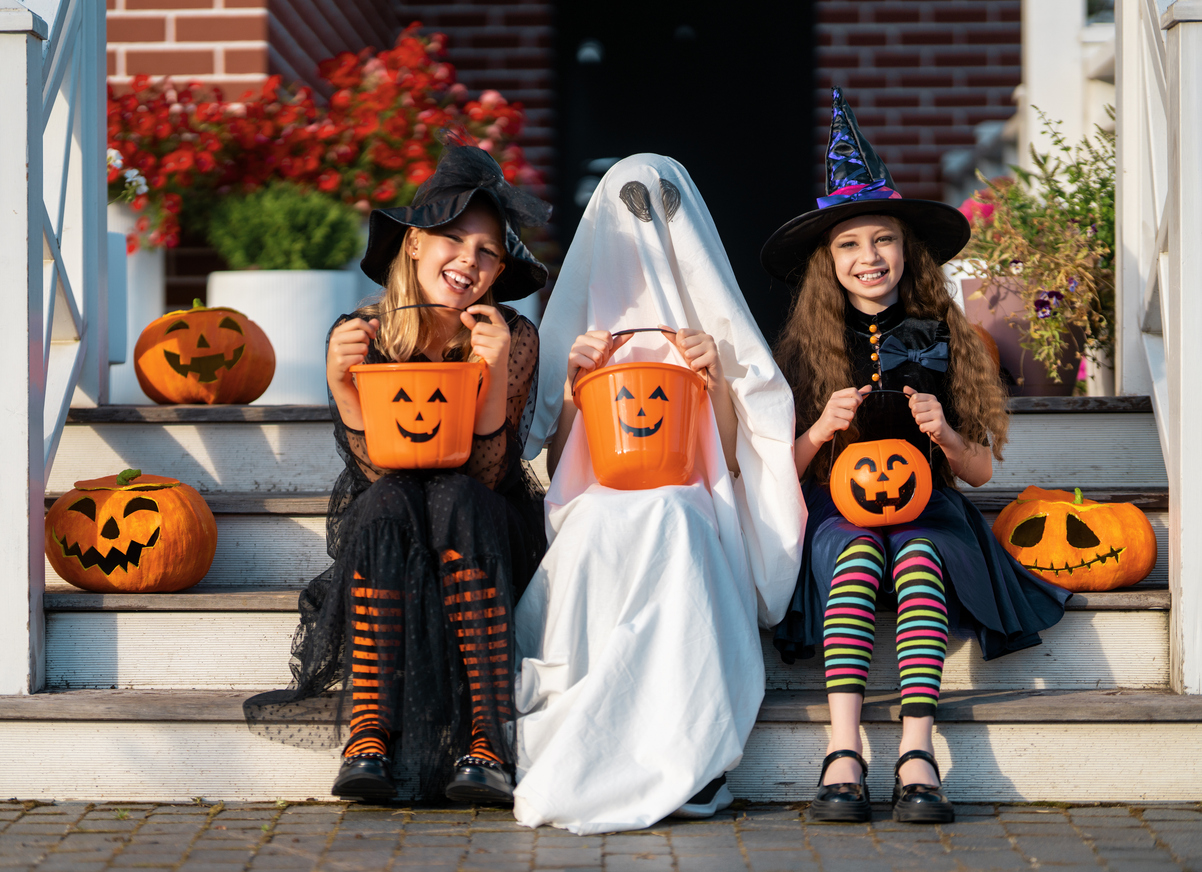
PHOTO: Happy children celebrating Halloween trick-or-treating. (iStock │ #2235668242 – Choreograph)