So much has been said about the increased importing of beef from Argentina to decrease the price of beef in the retail case.

I think a good number of people have done an excellent job comparing the nutrient dense beef cost compared to other food items that can’t hold a candle to the value beef is even at $7 per pound for ground beef. I have been as upset as anyone else about the opening up ships to haul Argentinian beef into our country, but it was Steve Stratford who said calmly, “there is not one more pound of beef in the market around the world as a result of this announcement.” He is correct and I suggest we shift the discussion right away.
So the truth is that beef demand has been increasing. Some of it driven by the carnivore craze that is taking place, but in searching some information for this discussion, I found some very troubling data. I thought we are over the hump on all of the negative messages that exist with beef consumption and nothing could be further from the truth.
The number of “new” studies that seem to be regurgitating the same old rhetoric about fat and weight gain have not died. In fact some cancer centers seem to be trying to take on the narrative in attempt to remove beef from our diet period. Quite honestly the movement seems to be strong that moving people away from animal products is still afoot.
With correct searching you can still find a tremendous amount of research that indicates that all animal derived products are great for gut health, cardiovascular and mental health. In fact, I have identified two that I wanted to share here.
In 2023, this analysis showed that the more rigorous the study, the more positive and consistent the relation between meat consumption and better mental health. The current body of evidence precludes causal and temporal inferences.
Meat and mental health: A meta-analysis of meat consumption, depression, and anxiety – PubMed
In 2020, this report indicated the majority of studies— especially the higher quality studies—showed that those who avoided meat consumption had significantly higher rates or risk of depression, anxiety, and/or self-harm behaviors. There was mixed evidence for temporal relations, but the study design had a lack of rigor precluded for inferences of causal relations. The study does not support meat avoidance as a strategy to benefit psychological health.
While I do not see the logic in anyway shape or form to encourage another country to increase beef imports into the United States, I take issue with the premise that drought is the sole reason that the cow herd here is at a historical low.
If you follow what is happening around the world the inventory of beef cattle if troubling. We need to increase the discussion about rebuilding beef cow numbers and explain how essential beef consumption is to human and planet health.
Editor’s note: The views expressed here are the author’s own and do not represent the views of High Plains Journal. Trent Loos is a sixth-generation United States farmer, host of the daily radio show “Loos Tales” and founder of Faces of Agriculture, a non-profit organization putting the human element back into the production of food. Get more information at www.LoosTales.com, or email Trent at [email protected].
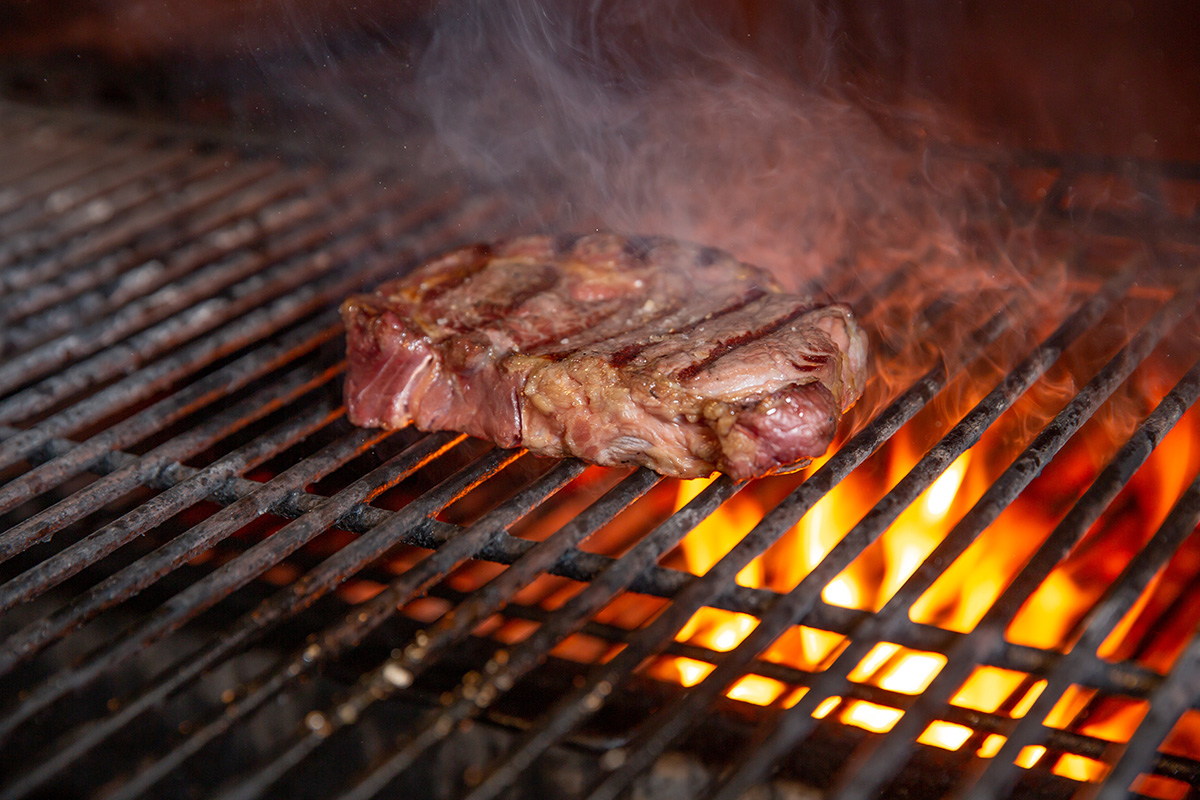
PHOTO: Beef on a grill. (Adobe Stock │ #251550619 – Volodymyr Shcherbak)