Enhanced biosecurity training helps beef cattle producers secure operations
Agents and veterinarians learn to develop ranch protocols in Texas A&M AgriLife training
As Texas livestock producers keep a watchful eye on emerging pests and other challenges like New World screwworm, farm biosecurity is at the forefront.
To help producers become better prepared for threats, the Texas A&M AgriLife Extension Service provides enhanced biosecurity training through a program developed by the National Cattlemen’s Beef Association, NCBA.
“If we are going to continue to have a secure beef supply, we have to look at emerging diseases,” said Tom Hairgrove, DVM, Ph.D., AgriLife Extension cattle veterinary specialist in the Department of Animal Science, Bryan-College Station. “This program was originally designed for the threat of foot-and-mouth disease but can be adapted to other emerging diseases and threats such as New World screwworm.
“To deal with emerging threats, many producers need to be looking at how they operate, how people access the ranch and how they exit,” Hairgrove said.
NCBA, through the Beef Quality Assurance, BQA, program, has focused on improving biosecurity tools and awareness for cattle producers. This effort has progressed to include preparing for industry disease threats like foot-and-mouth disease, FMD. The Secure Beef Supply Plan for Continuity of Business was developed for FMD preparedness and provides biosecurity safeguards and contingency planning steps for ranchers and ways to prepare before a disease outbreak occurs. NCBA received a grant from the U.S. Department of Agriculture’s National Animal Disease Preparedness and Response Program to improve the Secure Beef Supply plan through educational tools and outreach.
Spearheading the project were beef producers, veterinarians, transporters and other industry representatives who identified preparedness gaps in foot-and-mouth disease preparedness and educational tools, leading to the development of current training material. Sector specific resources were developed in written and video forms. In addition, a network of trainers was built through train-the-trainer workshops across the country to extend the reach of this project.
“The major goal of this grant project was to develop and deliver educational tools around Secure Beef Supply to stakeholders across the cattle industry,” said Julia Herman, DVM, MS, DACVPM, beef cattle specialist veterinarian with NCBA. “Furthering this collaboration and preparedness across our industry is a valuable way to reinforce contingency planning, biosecurity and disease prevention, improve animal health and welfare, and focus on continuity of business during and after an outbreak.”
Earlier this year, NCBA and Texas A&M AgriLife began conducting train-the-trainer efforts with AgriLife Extension agents across the state. Seventy agents attended these trainings with the expectation that they conduct at least three additional trainings each, making producers aware of the program and encouraging adoption of the Secure Beef Supply plans.
Veterinarians also took the training at the Texas A&M Beef Cattle Short Course so they would be able to work with clientele in developing Secure Beef Supply protocols for individual ranches and implementing in the event of an outbreak.
Developing a plan
Hairgrove said ranchers must begin with the basics. A simple audit of operations should document entry and exit points, and where cattle are purchased and marketed, as well as cattle inventory and location. If a stop movement order is issued, knowing inventory and location will be key particularly if animals are already in transit.
Once this assessment is made, then the rancher can identify weaknesses and implement measures to strengthen the operation regarding biosecurity. To start biosecurity planning, Herman points producers and veterinarians to the BQA Daily Biosecurity Plan for Disease Prevention as a starting point. This is an intermediate step before moving to an enhanced biosecurity plan like Secure Beef Supply that will be needed in the event of foreign animal disease outbreak.
Other preventative planning includes financial risk management, cattle health management, traffic in and out of the ranch, training personnel and other factors.
“This type of preventative plan applies to any disease,” he said. “If you have a good biosecurity plan, you are going to be prepared for anything that might come your way.”
AgriLife Extension is evaluating future training opportunities. Contact a county agent in your area for information.
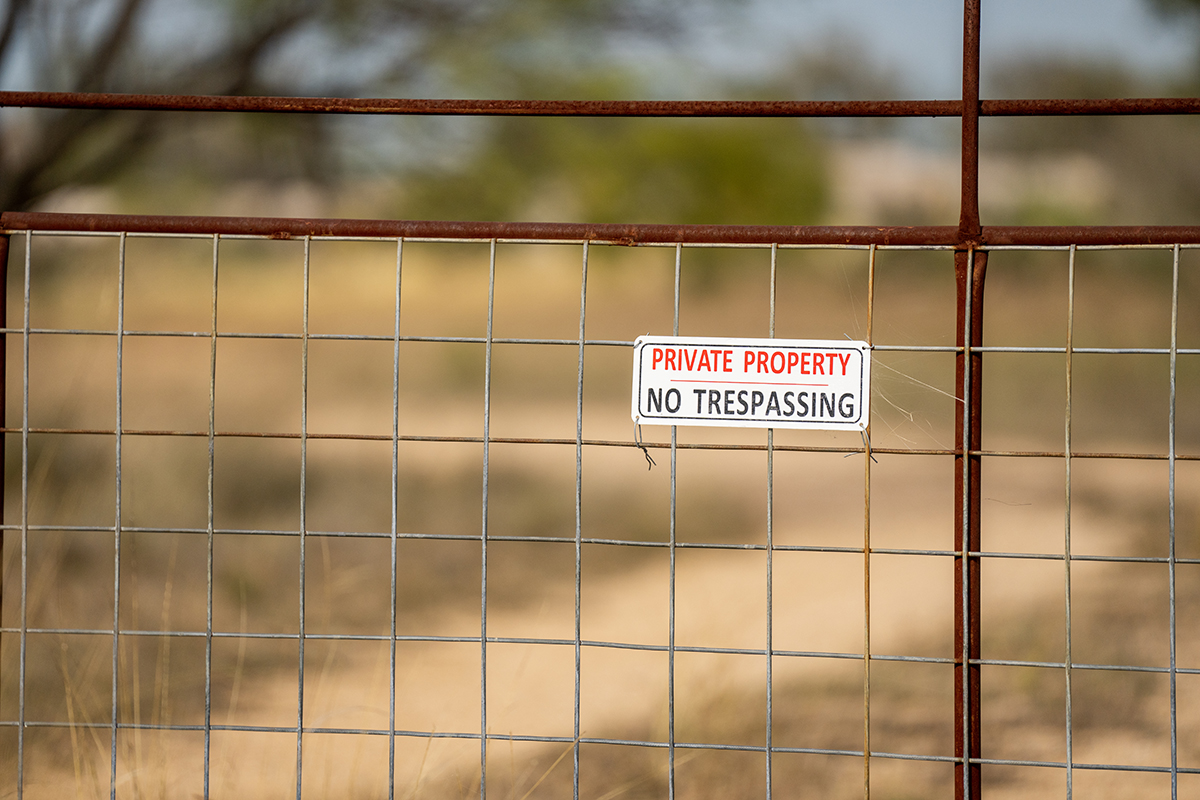
TOP PHOTO: Private property signs cover a gate on some land in West Texas on Monday, Dec 05, 2022. (Sam Craft/Texas A&M AgriLife Marketing and Communications)