At the 107th American Farm Bureau Federation Convention in Anaheim, California, U.S. Secretary of Agriculture Brooke Rollins announced expanded enrollment for 2026 Dairy Margin Coverage program.
She also announced on Jan. 13 new Section 32 commodity purchases that will result in more healthy, United States-grown food in the hands of Americans.
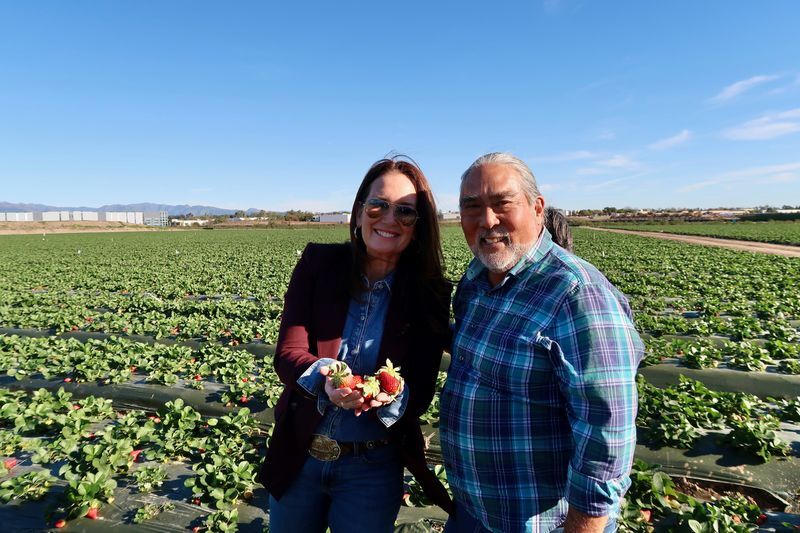
Following the convention, Rollins also met with specialty crop producers at a local strawberry farm to discuss workforce needs and the Trump administration’s recent actions designed to cut the cost of H-2A labor for California farmers.
“President Trump is making historic investments in the farm safety net and today’s announcement is one more action that supports our dairy producers by managing risk and strengthening markets so they can continue to provide wholesome nutrition for Americans,” Rollins said. “Our mission to Make America Healthy Again continues after the recent release of the Dietary Guidelines for Americans 2025-2030 announcement, with the upcoming purchase of U.S. grown food that will reach those in need, all while benefitting American farmers facing unfair actions from foreign competitors.”
OBBBA improves DMC Coverage and premium fees
Rollins announced the enrollment period for the Dairy Margin Coverage program for the 2026 coverage year, an important safety net program that provides producers with price support to help offset milk and feed price differences. Starting Jan. 12, dairy producers can enroll in DMC. The enrollment period ends Feb. 26. The One Big Beautiful Bill Act, signed by President Donald J. Trump on July 4, 2025, reauthorized DMC for calendar years 2026 through 2031 and provided substantial program improvements, including establishing new production history and increasing Tier 1 coverage.
The OBBBA increased DMC’s Tier 1 coverage level increased from 5 million pounds to 6 million pounds. All dairy operations that elect to enroll in DMC for 2026 will establish a new production history. Existing dairy operations that started marketing milk on or before January 1, 2023, will use the higher of milk marketings for the years of 2021, 2022, or 2023. New dairy operations starting after Jan. 1, 2023, will use their first year of monthly milk marketings, even for a partial year. Milk marketing statements or production evidence are required to establish a production history.
Dairy operations also have the option to lock-in coverage levels for six years (2026-2031) with premium fees discounted by 25%.
DMC offers different levels of coverage, including an option that is free to producers, minus a $100 administrative fee. To determine the appropriate level of DMC coverage for a specific dairy operation, producers can use the online dairy decision tool.
For more information, visit the DMC webpage or contact your local USDA Service Center.
Agricultural Marketing Service Section 32 purchases
Rollins also announced USDA’s intent to purchase up to $80 million in specialty crops from American farmers and producers to distribute to food banks and nutrition assistance programs across the country. These purchases are being made through USDA’s authority under Section 32 of the Agriculture Act of 1935 and will assist producers and communities in need.
Pictured at the top is Rollins and former California Ag Secretary A.G. Kawamura at his strawberry farm in Irving, California. (Photo courtesy of USDA.)
The Agricultural Marketing Service continuously purchases a variety of domestically produced and processed agricultural products. These “USDA Foods” are provided to USDA’s Food and Nutrition Service nutrition assistance programs, including food banks that operate The Emergency Food Assistance Program, and are a vital component of the nation’s food safety net.
USDA AMS will purchase up to $80 million of the following commodities:
- Almonds: $20M
- Grape juice: $20M
- Pistachios: $20M
- Raisins: $20M