Healthy cows and calves crucial to success
With cattle prices at record highs that also puts a premium on keeping livestock healthy.
Dr. A.J. Tarpoff, an associate professor and beef Extension veterinarian at Kansas State University, said when it comes to bovine respiratory disease and other illness, his advice to ranchers is to start with prevention and treatment strategies with their herd veterinarian.
Developing protocols through a veterinary client patient relationship and having products on hand help ensure early treatment and recovery, he said. “A good reminder for folks monitoring cattle for BRD is the DART analogy,” Tarpoff said. “Depression (hanging head and droopy ears), Appetite (the animals don’t come up for feed and they have a tucked up appearance), Respiratory rate (pneumonia causes increased respiratory rate), and Temperature (104 degrees Fahrenheit or higher).”

Other health problems like acidosis or coccidiosis will cause changes to the manure, he said. If the manure gets really loose or has specks of blood in it, ranchers should contact their veterinarian. He also said it is a good time for ranchers to be aware of lice and treatment protocol.
“If you used a pour-on or a dewormer when you pulled cows off summer pasture, that is not the best time to control lice,” Tarpoff said. “Their lifecycle really doesn’t get going until the temperatures drop. So if you start seeing itchy cattle with patches of hair loss in January or February, it’s time to intervene. Keep in mind that one animal can infest the whole herd.”
Animal welfare
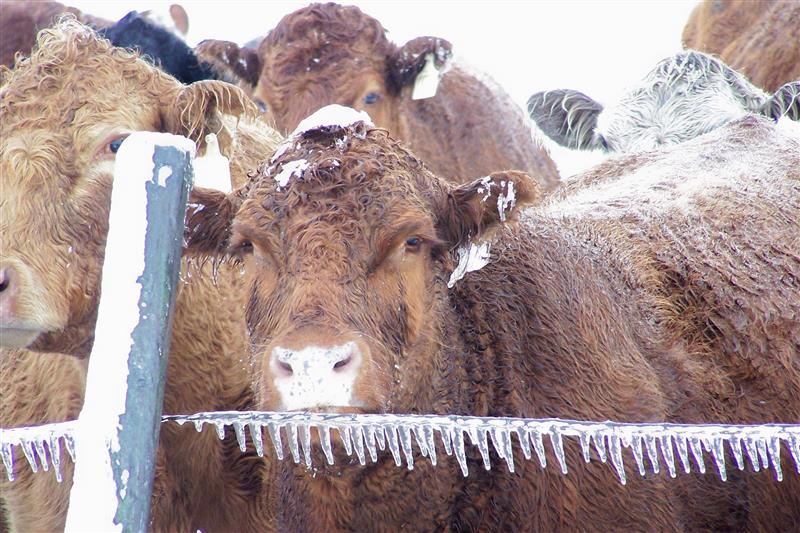
Tarpoff said winter can be particularly tough on cattle, and High Plains ranchers can take steps to mitigate potential environmental challenges. (Photo at top is courtesy of AdobeStock.)
“We can’t control the weather, but we can prepare and reduce those impacts on our animals,” Tarpoff said. “During the winter my mind obviously goes to cold stress. If you are developing a cold stress management plan, start simple.”
A basic portable windbreak, bedding and a box scraper to move and handle snow and mud will go a long way, he said. That work to provide animal comfort is a good investment in the operation, he said. The more feed that can go toward growth, milk production or gestation rather than just keeping the animals warm helps to mitigate extremes and is a more efficient way to use resources.
The next few months are important for cow-calf producers, particularly with the expense of calves, and the veterinarian urged producers to invest in nutrition for the momma cow and her calf because it only gets harder to increase the body condition score in ranchers’ cows. “If your cows are in the right body condition (5-5.5 out of 9), they will have fewer issues with dystocia (trouble calving), and have higher quality and quantity of colostrum,” Tarpoff said. “That extra nutrition will give your cowherd the necessary preparation if things get rocky later in the season.”
New World screwworm
The damaging New World screwworm pest has been able to be kept out of the United States because of the work by the U.S. Department of Agriculture, Mexico and states along the border, he said. From live animal import closure, infrastructure improvements and surveillance enhancements, it has been impressive to see the numerous government agencies work together to achieve a common goal, he added.
“New World screwworm impacts everyone (not just livestock producers), and I think that is one reason the response has been successful as of today,” Tarpoff said. “Jumping on this problem quickly hopefully gets us back to regular operations soon.” The heightened awareness and education for more than a year now has struck the right tone, he said. A proper message of awareness, animal monitoring and what this insect does is important.
“But I also don’t think this needs to keep you up at night,” Tarpoff said. “We have better and more readily available tools to combat this threat today than when we eradicated it decades ago. If we stay vigilant and aware, we can respond accordingly if these flies or larvae make it across the border.”
Historically, the New World screwworm did not survive the harsh winters of Kansas and other regions of the Northern Plains, but that doesn’t mean ranchers should ignore its threat potential, the veterinarian said. Kansas, for example, is a net importer of live cattle each year, he said.
“Transportation has greatly enhanced the efficiency of our livestock industries, but it also poses an opportunity for a nasty pest like New World screwworm to hitch a ride,” Tarpoff said. “While our risk might be perceived as less than south Texas, ignoring the risk altogether in areas farther north is not a good idea.”
Dave Bergmeier can be reached at 620-227-1822 or [email protected].