Expectations remain high for beef prices
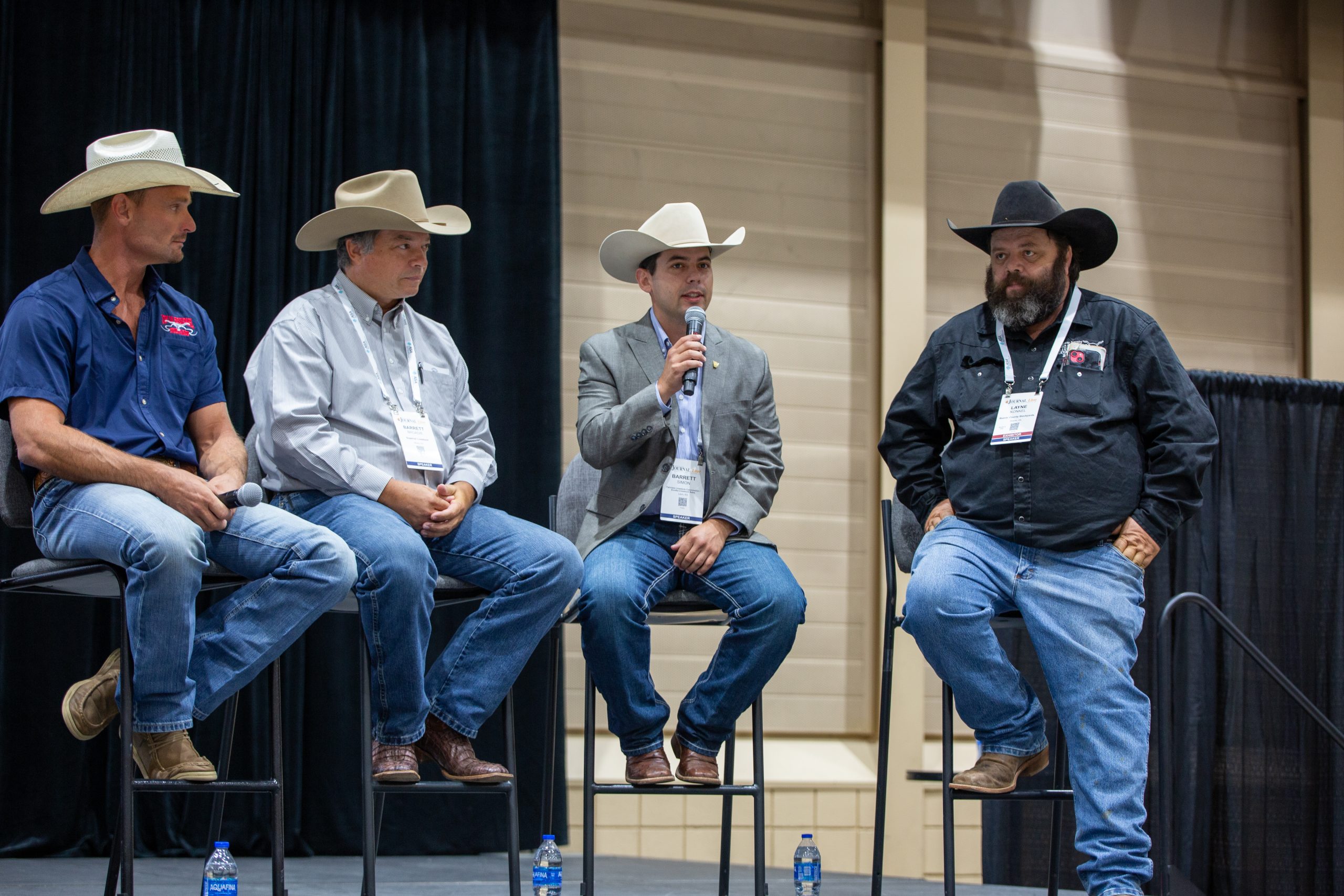
Beef prices have been on an upward path for more than a year and two men who help ranchers market their cattle say values are likely to be high in 2026.
Layne Konkel, with Beaver County Stockyards, in Oklahoma, said price is a reflection of supply and demand, and there continues to be a shortage of cattle.
The industry has weathered tariff pressure from the Trump administration, he said. That talk included letting in more imported cattle from Argentina and Brazil. Another variable is the closure at the Mexico border, which started in 2024, because of the threat of New World screwworm and that has affected the feeder sector in the Southern Plains.
“We still had to import a lot of beef just to meet our domestic side and the shortage is not going away,” he said. “I’m not saying the prices are going to stay as high as they are forever, but the shortage is not going anywhere and you really feel it when you go looking for young cows, because they don’t really exist.”
Plus producers were able to sell older cows and profit from high prices, he said.
Barrett Simon, Fairview Livestock Commission and Eureka Livestock Sales in Kansas, said ranchers are finally being rewarded for enduring droughts, market volatility and many other market influences for nearly a decade.
“We found ourselves at the crossroads of the lowest inventory of producing beef cows our country has ever seen and tremendous demand for the product we raise,” Simon said.
As he looks to 2026, Simon said producers are poised to see another strong year. “However, we were reminded through the fall months how volatile our marketplace can be. Producers who use risk protection tools, stay in tune with potential outside factors affecting the market and seasonal demands will likely be able to capitalize on additional revenue throughout this production cycle.”
Konkel said futures prices that are driven by the board of trade will continue to keep the market volatile, but the cash market is likely to be more stable, although the Trump’s administration decision to lift tariffs on Brazil will play a part in the cash market as will Mexican cattle that are expected to come back across the border at some point later in 2026.
“The numbers are not going to change, if we decided to rebuild our cattle herd today and as an industry to make a concerted effort to do it, we’re still three to four years away from seeing any real change,” Konkel said. “The cow numbers are not going to change that drastically, which means there’s going to be a shortage of calves, a shortage of yearlings and a shortage of fat cattle.”
He looks for a steadier 2026 in terms of price.
Capturing a premium
A bigger push for good genetics is adding opportunities for ranchers, Konkel said, and the better genetics are being rewarded.
“The quickest change a person can make is to upgrade your bull power,” he said. “That’s not a cheap change, but when you can upgrade a calf $300 to $500 a head that softens the blow of paying $7,000 to $9,000 for a bull.”
The value-added shot programs really haven’t changed much the past 10 years, but from Oct. 1 through Dec. 1 that having two rounds of shots in them is critical. There was a $10 to $30 per hundredweight price gap this fall on calves that had two rounds of vaccines versus calves that didn’t have any shots at all.
Ranchers are being rewarded for having protective protocols, Konkel said.
In today’s marketplace, there are many options for generating premiums, Simon said.
“Building cattle with desirable genetic background, health program and condition are certainly ways producers can stand out,” Simon said.
Weaning and verification programs from a local to a national scale are often touted as sure-fire generators, he said. “I think it is important for producers to have in-depth discussions with their livestock market manager to discuss the marketability of these programs and whether or not they feel like their buyer base is prepared to give enough premium to offset the cost and labor associated with these certifications.”
Konkel said for younger or smaller producers, he encourages them to try to take another step to improve their operation. It may mean going one round of shots to calves to two shots.
“Hopefully you made enough money on your calves that you can upgrade a bull or two,” Konkel said, adding that it takes time, and successful producers understand the process. “Nobody could expect a young producer to start out producing the best cattle there are, but if every year he can just be one step better and then over five to 10 years, he will have a program that’s pretty darn successful and he didn’t have to break the bank to get there.”
Proper heifer retention is the safest way to build a herd, he said. If a producer is running 20 or 30 head of cattle, that can start with a couple of high-quality heifers, he said.
A good cow is going to a cost a producer $3,000 to $4,000 and what he termed a middle-of-the-road cow will still cost $2,500 to $3,000, he said. Retaining good heifers can help the producer build a more stable herd, “and you’re not buying somebody else’s problem.”
Potential roadblocks
Simon said change is inevitable, particularly in agriculture, and he expects to see more ups and downs because they can happen at any time.
“While none of us has a crystal ball to predict what might be in 2026, risk protection and market awareness will serve producers well moving forward,” Simon said.
Konkel is watching the impact of the dairy industry could have on beef supply. The carcasses can hit yield grade and be added to the nation’s meat supply.
He is also watching to see how imports from Brazil might impact the market.
One positive in the current market is that consumers in the United States and globally crave the taste of American-raised beef, Konkel said. The demand for quality meat is here to stay. He is reminded of a conversation he had with a marketer from Brazil who said that instead of worrying so much about price points producers should continue to focus on quality.
Konkel said in the conversation they both noted that people are going to steakhouses in London, Rio de Janeiro, Los Angeles, New York, and places in-between because they enjoy the taste of beef.
He credits Certified Angus Beef and other programs that have promoted carcass value. Consumers love the taste of beef that is Prime and that means genetics and feeding programs have to work together. While that might be hard for a small producer, it is not impossible particularly if he is willing to think outside of the box and is another reason for a producer to work with his local sale barn.
“If someone brings us 30 calves and we know they’re all Gardiner-influenced calves, we’re going to promote it and when they enter the ring, there’s a good chance they bring a little extra money,” Konkel said as an example.
Any other advice
Simon reminds himself many times to take a look around and enjoy the moment because it is a tremendous time to be in the cattle business.
“We have the good fortune of weighing multiple options that have generally all been profitable for the past couple of years,” he said. “Much of the High Plains Journal’s coverage area has received ample moisture, which again provides greater opportunity to capitalize on margin potentially for ranch operations of various sizes and business models.”
Konkel encourages ranchers to work closely with sale barns because those operations want to see them succeed and can help producers of any size of operation to find success and options.
“How a person is set up largely determines what yo need or what you can do and there’s a lot of options out there if you’re willing to put a little bit of work into it.”
Dave Bergmeier can be reached at 620-227-1822 or [email protected].