Farmers decry tariff impacts
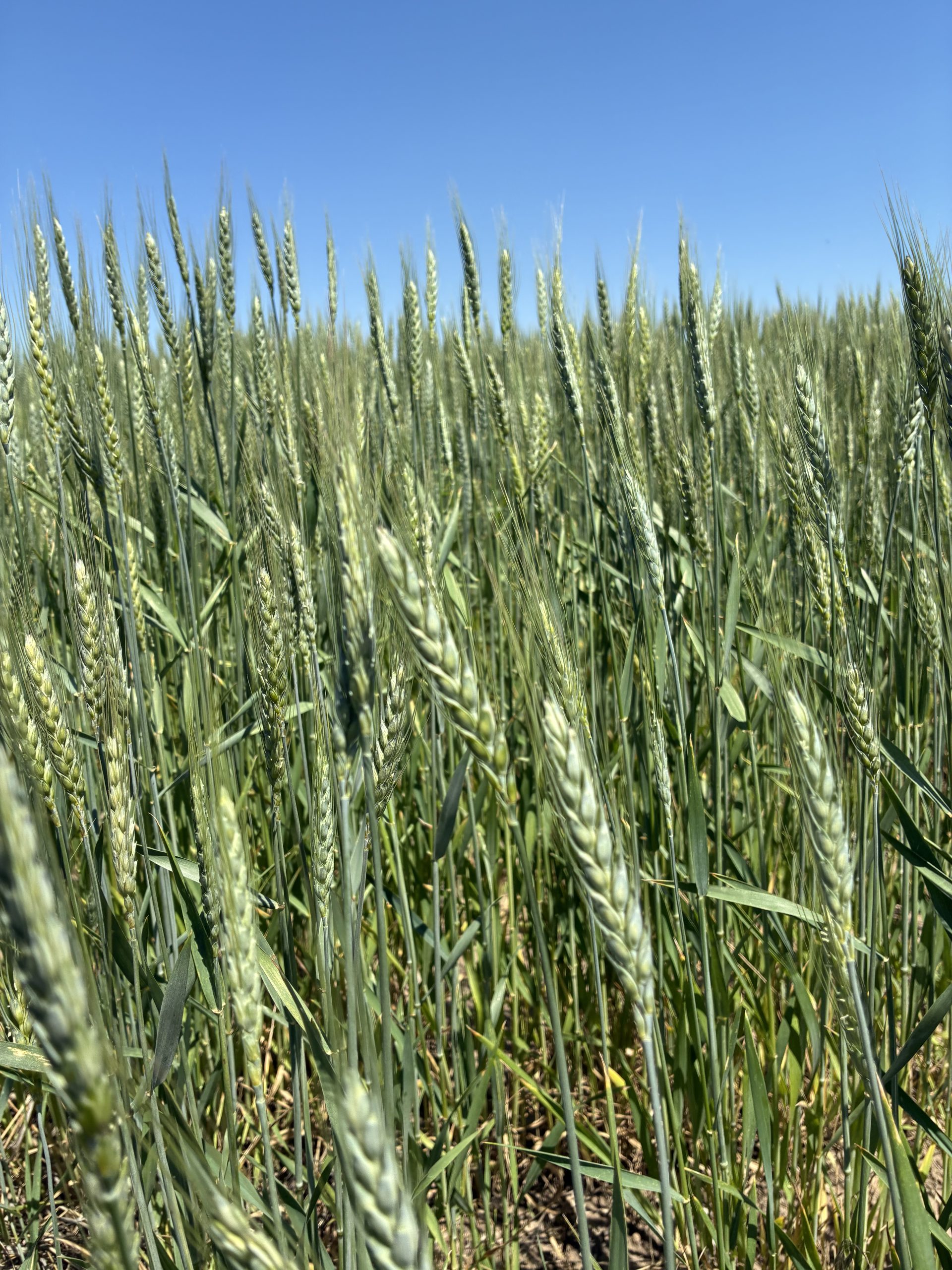
“Unpredictable tariffs are our biggest problem right now.”
As the world awaits a United States Supreme Court ruling on the limits of President Donald Trump’s tariff authority that could come any day, that was the gist of the message at a Jan. 20 press event sponsored by Tariffs Cost US, a group formed by farm producers and food chain organizations opposed to Trump’s tariff policies. They say those tariffs raise costs for farmers, shrink commodity prices and delay needed farm investments.
Since April 2025, the Trump administration has imposed across-the-board tariffs of 10% to 50% on nearly all imports, with higher rates for dozens of countries and industries. The average tariff rate now tops 16.8%, the highest since 1935, the group calculates.
Benjamin Peterson, a third-generation rancher in Montana who runs the E.L. Peterson Ranch, grows wheat, barley, hay, and operates a feedlot. “I’m trying to plan for the current planting year,” he said, but has had to pause or halt those plans due to the effect of tariffs.
He said due to the rise in fertilizer prices, his operation has shifted emphasis from crops to beef. “Lots of folks in Montana are considering idle ground and leaving the wheat market,” he said.
“Tariffs only benefit middle-market players with large capital who can take advantage of market swings,” he said. “That’s not us. We [producers] don’t get much say in global prices. Our job is risk management—but tariff swings make that job impossible.” As an example of rising input costs, he said a single dose of bovine respiratory vaccine rose from $3 to $6.50 a shot.
“When you multiply that by thousands of head of cattle, you’re talking an unsustainable hit.” He said heavy equipment costs are “unsustainably high.”
Aaron Lehman, president of the Iowa Farmers Union and a fifth-generation farmer, said, “Thousands of farms are being affected by chaotic tariff policies.” He said corn is selling for 44 cents a bushel below production costs. “Farmers are losing money on every bushel they grow. Farmers invested for years in building relationships with overseas buyers, but they no longer see the U.S. as a reliable trade partner. We know we have to get to fair trading practices—but the current chaotic policy doesn’t get us there.”
Nick Levendofsky, executive director of the Kansas Farmers Union, put it more succinctly: “Tariffs raise the price of what farmers need to buy and lower the price of what they need to sell.”
He cited operating costs for corn that were 4% higher than U.S. Department of Agriculture estimates, and for soybeans that were 6% above those estimates. “Farmers are questioning how many acres to plant.”
Levendofsky cited the curtailment of food aid shipments by the Food for Peace program and the U.S. Agency for International Development as causing a crisis in the sorghum market. He said some grain elevators have told sorghum growers they are no longer accepting sorghum storage. “Kansas farmers depend heavily on exports. Tariffs directly shape what we plant and grow.”
In the question-and-answer session, Lehman said it is also important to address over-concentration in the ag business. “Too few companies control inputs, and we need to address that with anti-trust actions.” He added, “few areas [of ag] in Iowa are able to show any profitability other than cattle.”
Levendofsky said, “A lot of folks are carrying a lot of debt right now. Profit is what matters. There are no bargain deals any more in inputs.” Asked what explained the January record corn yields and acreages reported in the World Agricultural Supply and Demand Estimates, Lehman said, “Iowa farmers certainly didn’t see those yields. I would dispute those figures.”
The press event came as the world awaits a Supreme Court ruling on the limits of Trump’s tariff authority. The court is widely expected to refine, and perhaps restrict, the tariff authority the president claims under the International Emergency Economic Powers Act. That act, passed by Congress in 1977 that allowed President Jimmy Carter to later impose economic sanctions on Iran after its seizure of the U.S. embassy in 1979, extended the president’s tariff authority to punish another country for non-trade-related issues.
Trump has cited IEEPA more than any other authority in imposing his tariffs. It has functioned as a blank check as Trump has tested its limits, seeing it as a warrant for imposing tariffs whenever and wherever he declares an “emergency” or wants to influence other countries.
But it’s not the only authority he cites. Congress has been delegating its tariff authority since the 1930s, usually with conditions attached. Trump has cited Section 232 of the Trade Expansion Act and Section 301 of the Trade Act of 1974 for specific product tariffs (steel, aluminum). Trump also cited Section 122 of the Trade Act of 1974 for broader “reciprocal” tariffs, linking them to trade deficits, and Section 338 of the Tariff Act of 1930 for unfair foreign practices, though these justifications remain disputed.
Treasury Secretary Scott Bessent has already said that if the Supreme Court restricts or invalidates tariffs levied under IEEPA, the president will simply switch to other authorities.
David Murray can be reached at [email protected].