Take a tropical trip without ever leaving home
Winter’s cold, dreary days have many daydreaming about jetting away to basking in a tropical paradise. “Such a getaway is not possible for most, but orchids can transport you to an exotic place without ever leaving home,” said University of Missouri Extension horticulturist David Trinklein.
Orchids can transform the average home into a tropical setting through their colorful blooms, Trinklein said. There are more than 35,000 species of orchids, and many live up to their reputation of being difficult to grow as houseplants.
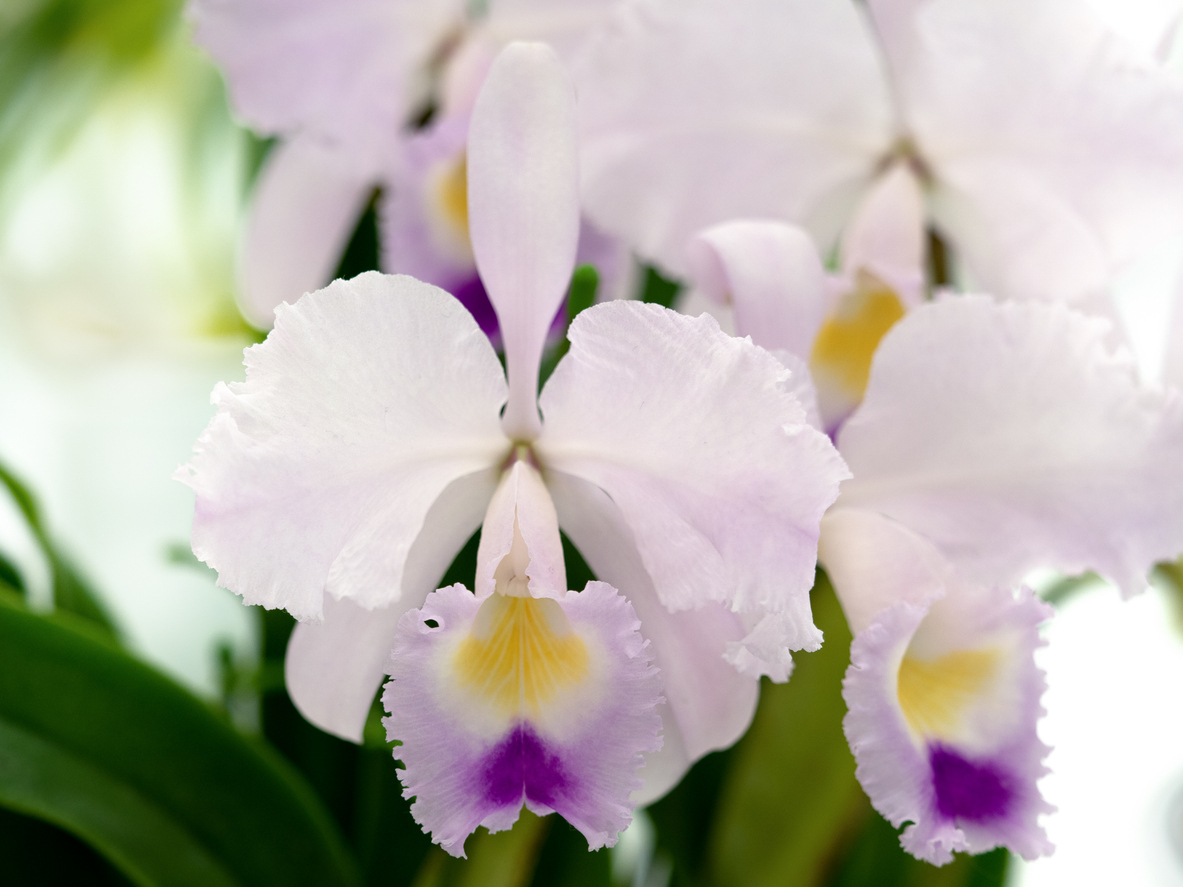
Fortunately, there are several orchids that can be grown successfully in the home, he said. Probably the most “user-friendly” orchids for the average homeowner are species and hybrids of the Cattleya, Phalaenopsis and Paphiopedilum genera. When the average person thinks of an orchid, they usually picture a cattleya. They produce large, spectacular flowers in colors including white, pink, red, yellow and many combinations. Cattleya flowers have two large horizontal petals and a lower petal, called a “lip.” Located between these three petals are smaller sepals. Cattleya plants have stiff, upright leaves with a storage structure called a pseudobulb at the base.
On the other hand, phalaenopsis orchids have a monopodial growth habit, with a compact central stem. New growth is added each year to this stem, and flowers are produced at the base of the leaves, which alternate from side to side. Monopodial orchids do not produce pseudobulbs. Phalaenopsis hybrids have distinct flowers and often go by the common name of “moth orchid” because of their unique, flat shape. They produce abundant flowers on long, arching scapes and come primarily in white and shades of pink.
Both cattleya and phalaenopsis orchids are epiphytic. This means they use another plant for support and derive water and nutrients from rainfall and organic debris on their host plant. In containers, epiphytic plants are usually grown in a medium that is loose and laden with air. For orchids such as cattleya and phalaenopsis, orchid bark and osmunda fiber are two popular growing medium choices. Repot plants when growth weakens–usually about every third year–and choose porous pots. Clay pots are ideal.
Paphiopedilums, or lady slipper orchids, derive their name from the shape of their unique flowers, which come in many different sizes and colors. The most easily grown paphiopedilums are the mottled leaf, warm growing types that are semi-terrestrial in nature. This means they grow in humus and other material on the forest floor instead of on host plants. An ideal growing medium for terrestrial orchids should retain moisture yet be well-drained. Finer grades of orchid bark or mixes containing orchid bark and various amounts of perlite, sand and/or sphagnum peat moss are ideal.
Cattleyas need light with luminance between 2,000 and 4,000 foot-candles, whereas phalaenopsis and paphiopedilums need only between 1,000 and 1,500 foot-candles. The latter is characteristic of the light required for good growth of African violets. In low light locations, fluorescent or LED lamps may be used to supplement natural light.
Watering arguably is arguably the most critical cultural practice when growing orchids. Since phalaenopsis and paphiopedilums have no pseudobulbs for water storage, a thorough drenching every five to seven days is recommended, depending on environmental conditions. For cattleyas, intervals between watering can be extended to 10 to 14 days. An orchid fertilizer can be added to the water at the time of soaking. High nitrogen fertilizers (such as 30-10-10) are recommended when using bark as a potting medium.
Temperature is another critical aspect of orchid culture. Phalaenopsis and paphiopedilums with mottled leaves like warmer temperatures and should be grown at 75 F during the day and 65 F at night. Cattleyas may be grown in slightly cooler conditions, with daytime temperatures near 70 F and night temperatures close to 60 F being preferred.
Most orchids prefer humid conditions at 60% to 70%. Since this is well above the average humidity in the home, especially during winter, steps should be taken to increase it. This can easily be done by setting plants on gravel or a similar material in a tray and keeping the bottom of the tray filled with water. Home humidifiers can be used to increase the humidity in larger areas such as hobby greenhouses.
Most orchids are relatively pest-free. Mealybugs and scale are the most problematic insects and should be dealt with before infestations become established. It’s helpful to carefully inspect new plants or plants that have been moved indoors after being outside all summer. You can minimize disease minimized through strict sanitation and by providing adequate air circulation around the plants. It’s also helpful to water early in the day to allow for rapid drying of foliage.
PHOTO: Cattleya flowers. (iStock │ #1369244476 – y-studio)