Leaders share thoughts at Kansas Commodity Classic
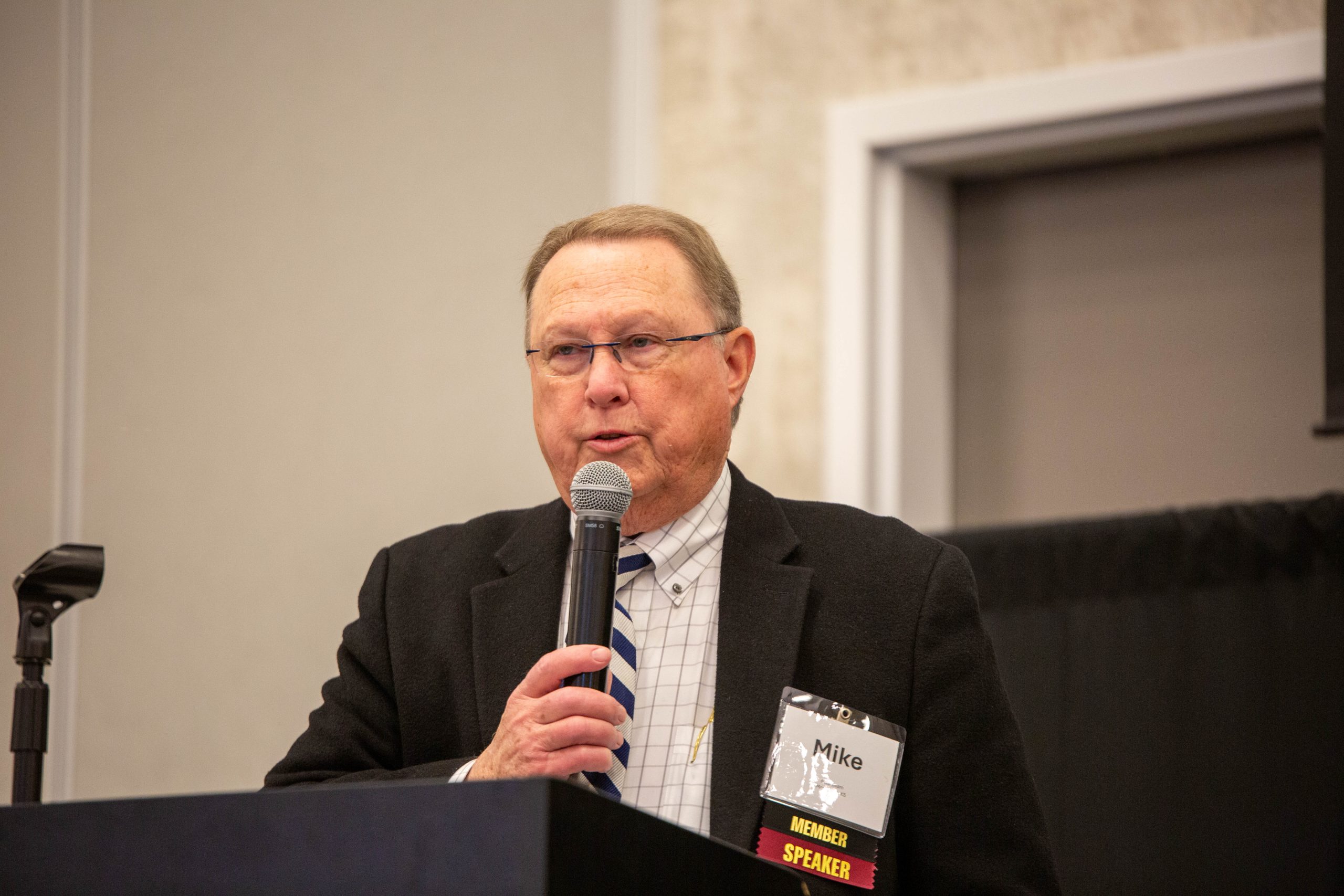
State ag leaders, elected officials and others joined the farmer-leaders of corn, soybeans, wheat, and sorghum at the Kansas Commodity Classic, Jan. 30, in Salina.
Kansas Secretary of Agriculture Mike Beam said in the state, agriculture has an impact.
“We’ve identified about 74 business sectors that we think make up Kansas agriculture, and the economic data shows that those 74 sectors have a direct output of over $63 billion in the Kansas economy,” he said. “And then if you consider indirect and induced, it’s over $85 billion and then that equates about 15% of the workforce is tied to those 74 sectors of ag.”
Beam said the state has faced some challenges this winter with highly pathogenic avian influenza, including the dairy industry, Kansas’ numbers have grown.
“I’ve also bragged about our dairy industry, how it’s grown 45,000 cows this year, with a record of 4.5 billion pounds of milk,” Beam said. “We’re going to be now the 14th largest dairy state, largely due to the growth of the Hilmar Cheese in Dodge City, Kansas.”
According to Beam, the Kansas Ag Marketing Team has heard repeatedly that there are challenges within the transportation realm, both within the state and abroad.
“Not having that lower cost direct access to the ports, to rail lines, and if we could really increase that infrastructure, that would really help,” he said. “That’s a big emphasis for us here this year.
Beam hopes the department can get engaged enough to help improve the commodity flow of Kansas from the farm to the endpoint.
“We are about to finish the contract to update that, because many of you know there are new value-added sources here in Kansas, and things change,” he said.
As Beam nears the end of his second term as state secretary of agriculture, he’s reminded of priorities. First is water. A large part of the agricultural production in Kansas lies over the Ogallala Aquifer.
“Don’t give up on addressing our water needs,” he said. “We cannot let up on that. The task force has to come up with some recommended policies, proposals, long-term funding. They have a job to do, and they will start back working on that sometime, probably in June.”
Second is to always look for opportunities to support value-added businesses in the state.
“Because that is the one hope that we have, is to try to add value to these commodities, instead of trying to send them whole across the world,” Beam said.
Legislative side
Congressman Tracey Mann, KS-01, was among the invited legislators and a day earlier he was named the National Association of Wheat Growers Wheat Leader of the Year.
Mann said he recognizes how tough times are for some in agriculture right now.
“I don’t have to tell you how tough times are. Times were tough when we were here gathered a year ago,” he said. “Because, I think since then, input costs have gone up, and commodity prices have gone down.”
Some producers had good yields, and Mann said, “fortunately a lot of them did,” and that helped lessen the blow of high costs.
But through his recent travels, Mann has visited with multiple ag lenders and believes it’s important to try to stay optimistic and clear-eyed about current conditions.
“When I think about the state of Kansas, the biggest issue facing our state is the condition of our commodity growers right now,” he said. “Our livestock prices have never been higher.”
Mann discussed accomplishments in 2025, and the impact those had on farmers and ranchers, and what needs to be done going forward. In the “what we have done” category he said he cannot overemphasize how important getting the One Big Beautiful Bill passed that will help working families with tax cuts. It also included many important provisions for agriculture.
Solidifying and strengthening crop insurance for the next six years was at the top of his list too.
“And rest assured, there are efforts in Washington to diminish, chip away, decline, degrade crop insurance,” Mann said. “I think we need to be strengthened and fortified and making it better.”
Getting another farm bill is very important too, as currently 81% is food nutrition and the other 19% is “everything else,” according to Mann.
“The reason that food nutrition of 81% is that it’s mandatory spending,” he said. “But so, to look at entitlement reform, meaning requiring folks that are getting food assistance to have work requirements until the age of 64 to make sure that only able-bodied working adults have work requirements.”
These are “very significant changes” to that program, which are going to matter to ag producers as work on future farm bills commences.
“The most meaningful entitlement reform, really, that we’ve seen in this country in the last 25 plus years, tax policies,” he said. “If that bill wouldn’t have passed Jan. 1 of this year, we would have seen the biggest tax hike in the history of the country. So incredibly important to keep our tax rates where they were in some areas lower.”
The Farmer First Fuel initiative, according to Mann is making sure the 45Z tax provision only goes to American grown products.
“Why in the world would we have that benefit go to foreign owned or foreign grown ag products that are coming into this country?” he said.
Another accomplishment from 2025 was the Farmer Bridge Assistance Program.
“Just a little over a month ago, $11 billion—$888 million of that to Kansans, at a time when our ag producers really, really need that money,” Mann said. “Many lenders I’m talking to (said) that’s what really helped to continue to fund and keep a lot of our farms going here for another year.”
Thirdly, Mann said over the past year, many regulations have been curtailed—like the Waters of the United States rule, the lesser prairie-chicken and others that are no longer on the table. Those were very problematic for ag production.
When it comes to “things we need to be doing” Mann said the biggest thing in his view is doing things to generate more demand for Kansas commodities and U.S. commodities.
“That means trade deals,” he said. “I’ve been pleased that the trade deals that have gotten done. Agriculture was a big part of, or was, many, many times the center of those deals.”
Mann said ag products needed to be front-and-center on the trade deals, and more deals need to be done as quickly as possible moving forward. Getting year round E15 is another thing that’s “incredibly important and near and dear to me,” according to Mann.
As far as demand goes, Mann believes Food for Peace needs to be codified into law and it needs to be at the U.S. Department of Agriculture. He sees the Food for Peace program revitalized, and that will benefitKansas commodities.
He reiterated the importance of a farm bill.
“It’s far past time we’ve done it. I’ve been on the floor of the House now. The last count, 37-38 times, urging the rest of Congress to get serious about getting a five-year farm bill done,” he said. “Glad we got done what we did in the Big Beautiful Bill. But there’s some other, a lot of other things that we need to get done.”
Kylene Scott can be reached at 620-227-1804 or [email protected].