

The January World Agriculture Supply and Demand report delivered a shock to the corn markets with its estimate of record-high acres and yields. Prices dropped about 20 cents a bushel in response.
But strong usage and export numbers are sending market signals that are telling producers not to cut back too much, according to Chad Hart, professor of agricultural economics at Iowa State University and an Extension grain markets and policy specialist.
“We know we have the biggest crop we’ve ever seen,” Hart told High Plains Journal. “But we also have really good usage, with a strong export market and strong feed demand numbers. We’re coming up with more ways to use corn and feed that demand. Despite the price situation, it’s still better priced than almost any other crop.”
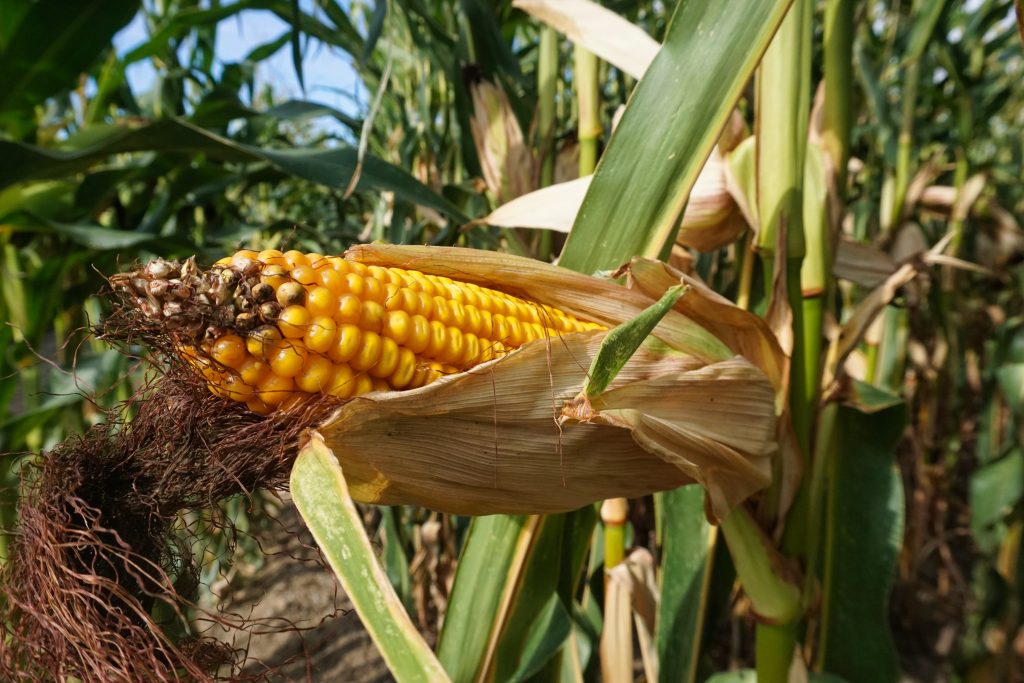
The rest of the world apparently sees American corn as a buy opportunity. Export numbers remained strong through most of last year, unlike soybeans. (At top is a photo by Cornell Fruehauf, Pixabay.)
Hart said he was not referring to recent news about either the conversation around year-round E15, or the recent changes to the 45Z carbon credit program announced by the Treasury Department and Internal Revenue Service. He agrees both of these could be positive over the longer term, but neither will have much immediate impact on corn markets today, he said.
With regard to year-round E15, Hart said the lack of specialized E15 pumps is a drawback that delays the market impact of E15, even if it is made year-round.
“There are about 120,000 gas stations across this country, and only about 3,000 of them have pumps that can handle E15,” Hart said. “We have manufacturers that are making them. But an E15 pump costs about $50,000 or $60,000. That’s a big upfront investment for a small gas station or convenience store, and the owners want to know when they will see returns from that. Even in Iowa, you see brand-new E15 pumps in old gas stations.”
He said upfront costs like that could be driving some of the consolidation of rural convenience stores. If year-round E15 happens, he said, it would be like an uptick in cattle feed demand, which takes a couple of years to work through markets.
The 45Z changes, though welcome, will likewise take a while to have a substantial market impact, he said.
“Over time, yes, that will make a difference,” he said. “But remember, corn is just one of the feedstocks for the biofuel producers. It has to compete against soybeans, waste food oils, canola oil, etc., as a feedstock.”
Moisture is always a concern, he said, and while mid-America got some good precipitation early in the winter, it’s not building up the snowpack he would like to see. “It’s been warmer this winter. Driving around, I’ve seen some tiles with running water this winter. Of course, that’s a concern.”
Some corn producers may cut back corn acres a bit for agronomic reasons, he said. “Even if planted acres fall back to 95 million, that’s still a high number. You don’t want to plant corn three years in a row. We had record crops in 2024, then we topped that in 2025. Soybeans will probably gain a bit of acreage. But again, we are not seeing that record usage demand for other crops.”
The fundamental issue, as Hart sees it, is that corn producers can ramp up production faster than demand can catch up—even expanding demand. So what does he think producers will do this year?
“I think (corn) producers are going to use storage to let prices slowly rise and chew up some of that storage. If usage patterns keep up the way they have, that’s what will happen.”
David Murray can be reached at [email protected].


