Wet conditions can cause more problems than the obvious ones with hay
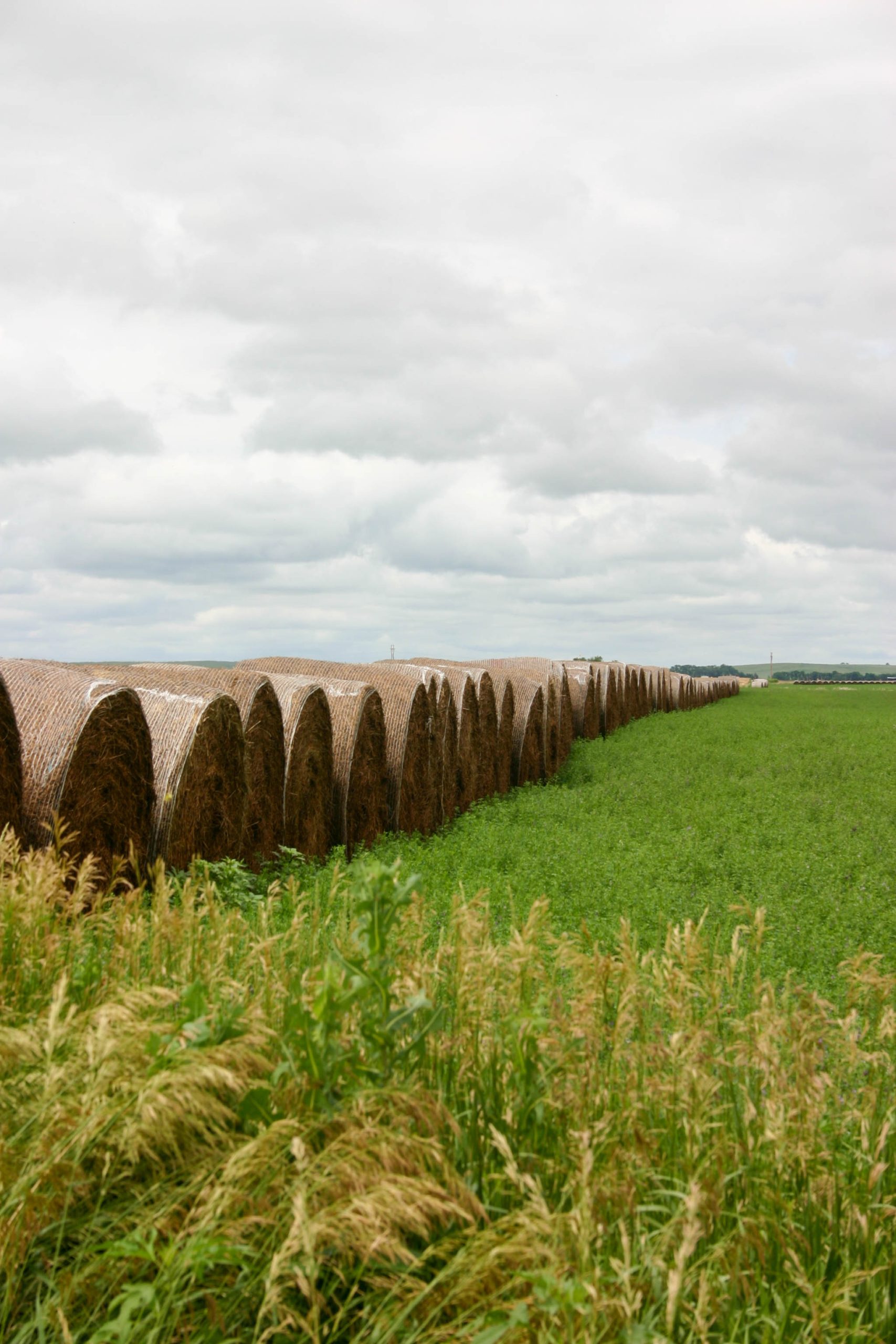
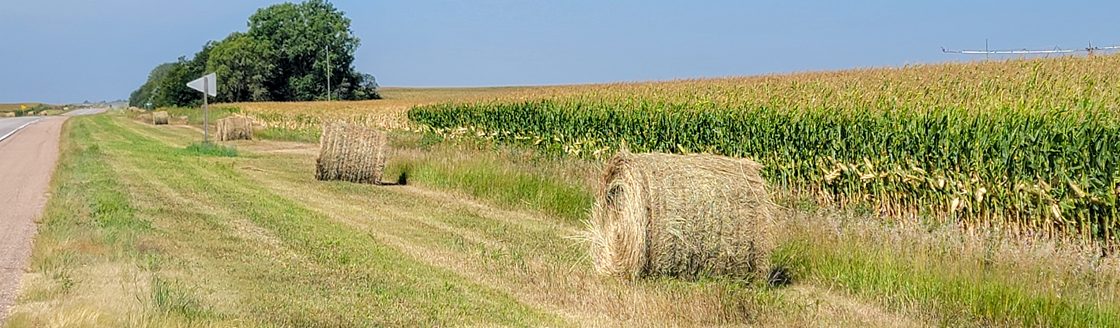
In some parts of the High Plains, 2025 was wet. Excess rainfall and later heat may have caused damage to hay and forage crops in some areas.
Rebecca Kern-Lunbery, with Ward Labs, discussed how wet conditions affect more than moisture levels in a hay crop during a recent webinar hosted by Nebraska Cattlemen. She also talked about how grazing can be influenced by wetter conditions as well as mycotoxin risks that are present when there’s excess moisture in corn crops.
Lunbery said many producers are used to drought and dealing with conditions.
“We need to be aware of nitrates when we’re grazing,” she said. “We need to be aware of prussic acid.”
Lunbery said there’s not many conversations about what happens during a wet haying or growing season, what the differences on forage reports mean and what producers should be looking for.
“What do we need to be testing?” she said. “It is still really important to test to make sure that we’re going to be able to meet our animal production and health goals.”
Understanding
Lunbery said it’s important to know what happens when hay is put up wet or wetter than normal or even storing wet hay. Consider the degradation to protein, fiber and soluble carbohydrates and micronutrients when it’s made in wetter than normal conditions.
Optimal moisture for hay is between 14 to 18%, and according to Lunbery, spontaneous combustion can happen above 18% moisture.
“Anybody that’s got a report and its above 18% (moisture), really wants to pay attention,” she said. “Specifically, how heat can impact protein availability. Heat damaged protein is the biggest concern outside spontaneous combustion.”
If the hay is over 22% moisture, don’t stack it and spread the bales out as much as possible. When bales are above 18% moisture, the protein is damaged, and microbes become very active.
“Because they have the two things they need,” she said. “They have oxygen. Because we’re not inhaling, we’re not sealed and creating an anaerobic, high acidic environment, so they have oxygen, and they have good pH, and then they also have plenty of water available to them. So, the microbial activity increases.”
When this happens, the microbes put off heat and that triggers a reaction, binding proteins to the fibrous portions of the feed, making it unavailable to the animal.
“On our forage report, we’re going to want to look at heat damaged protein, and that’s something that we actually added to our reports this year, along with available protein to help producers navigate this unusually wet haying season,” she said.
Heat damaged protein is associated with the fiber and depending on how much there is that is going to determine what is available for an animal to consume. This appears as adjusted crude protein on a hay report from the lab.
“Anytime you’re looking at your hay report, and you have heat damage protein in a significant amount, it causes the adjusted protein to be different than the crude protein,” she said. “When you’re balancing rations or building your supplements, you want to make sure you’re going based off the adjusted crude protein number and not the crude protein number.”
Along with heat damage, when hay is still in the field, and it’s getting rained on and wet, while it’s drying out, anything soluble will be lost.
“Anything that’s water soluble, so certain carbohydrates, so a lot of the sugars are going to leave, some of the micronutrients, and some of the soluble protein is going to leave that plant,” she said.
When receiving a hay report like one from Ward Labs, Lunbery said, for example, if the moisture is at 30% and dry matter is 69%, and the producer is wanting to feed this through the winter to 1,300 pound beef cows, their protein requirements are at 7.3%, TDN is 51% with a dry matter intake of 23 pounds per day. A red flag to her is the moisture level.
“Since this was submitted as a hay sample, that’s not good at all, obviously,” she said. “And then we look at the crude protein, the heat damaged protein, and available protein altogether. (If) crude protein was at 8%, we actually lose a whole percentage point because of that heat damage and the calculation for the adjusted available protein.”
Those cows are going to need a bit of protein supplementation, but not “too much” she said. But the fiber levels are a “big red flag” too.
“Because our neutral detergent fiber is at 80% that’s so high, it’s definitely going to be interfering with dry matter intake,” she said. “Honestly, at this point, regardless of the digestibility, our TDN is below, because of those high fibers and because of the lack of protein availability there. I would guess things got washed out. So, we’re going to need a significant amount of energy to meet these requirements.”
Winter grazing
Extra moisture isn’t all bad, there could be opportunities to graze a little longer in the season after the hay is in the barn. Native pasture and rangeland and how they’re managed can be affected by weather differently
“With native pasture and rangeland, you’re a lot more at the mercy of your location and what’s out there,” she said. “Of course, we can manage rangeland somewhat, but for the most part, it’s going to be native plants, so you have less control over what’s out there. And there are just so many factors that are going to impact the forage quality. So, it’s going to be important to test that and just make sure you know what you’re feeding before just letting cattle out there.”
Weeds and invasive species also play a role. Lunbery has received many questions about different types of toxic weeds. She’s not a weed scientist, but believes cattle producers need to know what’s out there, and said forage quality depends on location, elevation, precipitation, and those unwanted species.
With excess moisture growers should watch for volunteer plants that might come up, and in that case, nitrates could possibly be a concern
“We also need to be aware of the fact that these plants are essentially hitting—it’s almost like a second spring coming up, and so they may not have all the micronutrients that we would want them to have, such as magnesium being one,” she said. “Now the timing isn’t typically going to be coinciding with lactation, unless you’re a fall calving operation.”
Lunbery said with wind and precipitation, when the forage is still standing and completely exposed to the elements, there’s a chance of damage.
“Of course, that’s going to damage leafy material. Leafy material is really where the proteins at,” she said. “So, you might end up with a stand that’s more fiber and less protein. Make sure we’re properly supplementing in those situations.”
Mycotoxins in grain
When you do have a wet growing season, it’s important to evaluate mycotoxins in grain crops. Lunbery asked, why would one want to test for a mycotoxin? They’re a specific type of toxin that is produced by mold, which is a fungus and needs wet and hot conditions.
“There are some that grow in wet and cool conditions, but for the most part, wet and hot, so kind of like the summer that we had,” she said. “And then the thing is, there’s economic losses because of just poor performing animals. A lot of times, mycotoxin symptoms won’t be clear.”
Animals might not be doing well, and in extreme cases reproductive effects could be noted, along with some respiratory illness.
“Mycotoxins can be passed through meat and eggs,” she said. “I know that, obviously that’s not something with cattlemen, but it also protecting yourself, just breathing in mycotoxins and things like that on your farm consistently. That’s not going to be good for you either, because it’s a human health risk as well as animals.”
When the grain crop is coming out of the field, it is a great time to test, according to Lunbery because then you know the baseline of where you’re starting out. Another is when the grain comes out of storage.
“So basically, in the fall, as you come out of the field, and in the spring, as you’re pulling grains out of storage, or during the winter as you’re pulling grains out of the storage to feed, because some of the mycotoxins can increase during storage,” she said. “Out of the field gives you a baseline, so you’ll kind of understand where your risk levels are at, and then pulling out of storage will make sure that you know if you need to do anything for additional feed management.”
Aflatoxin is probably the most commonly known mycotoxin, as it’s one of the most talked about. It does tend to increase during storage, and there is Food and Drug Administration guidance on it. It is measured in parts per billion and cannot be detected by naked eye.
“It’s not something you’re going to detect by using sight and smell, but looking at your corn grain in the field, or coming out of the bin, its going to be good, because the fungus that produces it is more of an olive-green color,” she said. “And so, seeing mold on your grains, especially your corn, is going to be a good indicator that you need to get this test done.”
Vomit toxins are another, and most commonly associated with swine, because it makes their throats sore and causes irritation and vomiting. It can affect cattle too.
“It increases in the field under cool temperatures and wet growing conditions,” she said.
Lunbery said they’ve seen examples of mycotoxins in the lab, and their reports. When they’re detected in corn that’s still going to be used as feed, it needs to be “diluted quite a bit,” she said, to still be utilized. Mycotoxins pose a risk to animal health and production, and cattlemen need to be very aware of what’s in them and how much. She shared an example from the lab.
“The reason this one actually was tested with us is because it was rejected by the elevators for fumonisin, which is a story that I heard a lot this year,” she said. “Just know, if your corn was rejected from the elevator because of fumonisin, and you’re planning on just keeping it back and feeding it, you probably do need to test it first to make sure you can figure out what to do with it next, to ensure your animals remain healthy and productive.
Be cautious though because if one type of mycotoxin was found, there could be other things going on as well. Same goes for distiller’s grains, as they can have mycotoxins too.
“We’re not seeing those issues as we move further away from growing season, and they may have to start accepting some contamination in order to continue with production,” Lunbery said. “This may be something we want to keep an eye on before feeding our animals.”
Kylene Scott can be reached at 620-227-1804 or [email protected].