Backyard wildlife ponds — also called ornamental ponds or water gardens — do more than add beauty to your landscape. When designed well, these small, in-ground features provide a reliable water source for birds, amphibians, pollinators and other wildlife, especially during hot, dry summers.
Tyson Keese, a Texas A&M AgriLife Extension Service pond management specialist in the Texas A&M Department of Rangeland, Wildlife and Fisheries Management, Overton, said homeowners can add backyard ponds to support wildlife while creating a personal outdoor retreat.
“We’re creating freshwater ecosystems with particular goals in mind,” Keese said. “With a little planning and ongoing care, you can create a backyard oasis for yourself and wildlife.”
Evaluate site conditions, local rules and safety
Before building a pond, think about how water moves on your property:
- Consider slope and drainage if you plan to use rainfall to help fill the pond.
- Avoid areas where overflow could drain toward your home or cause erosion.
- Choose a site with access to electricity for pumps or filters.
You can also consult with U.S. Department of Agriculture Natural Resources Conservation Service experts for help evaluating soil types, rainfall and evaporation rates.
Before you dig, check local ordinances and homeowners association rules. Some cities require permits, set depth limits or require fencing. You’ll also need to locate underground utilities before breaking ground.
Consider location, sunlight and water movement
Ponds stay healthiest with five to six hours of sun daily, while avoiding intense midday heat that can raise water temperatures quickly.
“Water quality is one of the most important factors for pond health, but water temperature is just as critical,” Keese said.
In small ponds, even slight changes can quickly affect the whole ecosystem. That’s why circulation is essential for these wildlife sanctuaries.
“Some kind of water circulation or refiltration system is pretty much a non‑negotiable for these smaller features,” Keese said. “Moving water helps with oxygen, prevents stagnation and can even attract birds and beneficial insects.”
Design ponds for wildlife access and safety
Wildlife ponds need gradual slopes and shallow areas, so build them with:
- Gently sloped edges to make it easier for animals to drink.
- Terraces and escape routes to help prevent drownings.
- A three-to-one slope ratio — 3 feet of horizontal slope for every 1 foot of depth.
“If you’re targeting specific species, you may need to research things like habitat needs or water depth,” Keese said. “Fish, for example, require careful species selection and water quality planning.”
Use native plants and careful lawn care
Keese said aquatic plants improve pond health by filtering water, absorbing nutrients and providing shelter for wildlife.
Native species are best, since non‑native plants can spread to nearby waterways.
Keese recommends native plants that serve multiple functions, like pickerelweed. It stabilizes soils, absorbs nutrients and provides cover and food for birds, small mammals and pollinators.
Lawn care also affects your pond. Rain can wash fertilizers and herbicides into the pond, so limit use nearby and consider adding a vegetative buffer zone.
Plan for visitors and ongoing maintenance
You can’t choose every species your pond attracts. Predatory birds like herons may be attracted to stocked fish. Small mammals like raccoons and opossums may also visit.
The presence of these animals is natural. However, problems can arise if they find food in nearby unsecured garbage cans or bird feeders. Be sure to secure these potential food sources.
Finally, plan for regular upkeep:
- Monitor water temperature and clarity.
- Expect monthly maintenance in warm seasons.
- Test water quality at least once a year.
“Wildlife ponds can really add to the aesthetic and ecological value of your backyard,” Keese said. “It’s just important to do your homework and set realistic expectations regarding the amount of planning, work and maintenance these features require.”
Planning a pond?
Learn how to design, stock and maintain a backyard pond that thrives in Texas conditions. Get step-by-step guidance from Texas A&M AgriLife Extension Service experts.
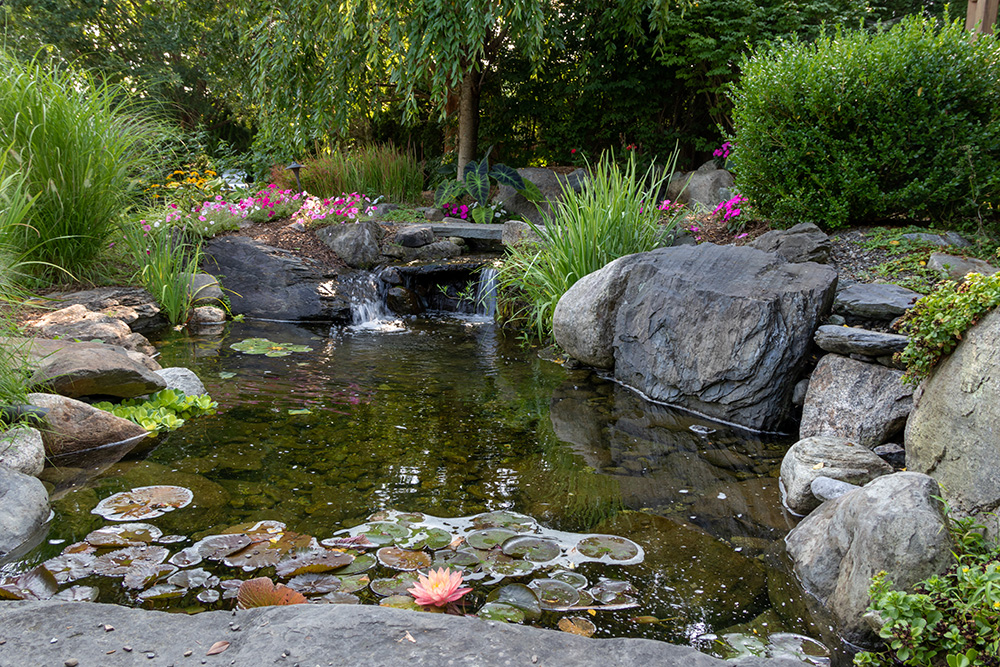
PHOTO: Landscape architecture for spring and summer garden featuring a pond. (Adobe Stock-#451868350 │ rabbitti)