Farm bill on minds of many in agriculture
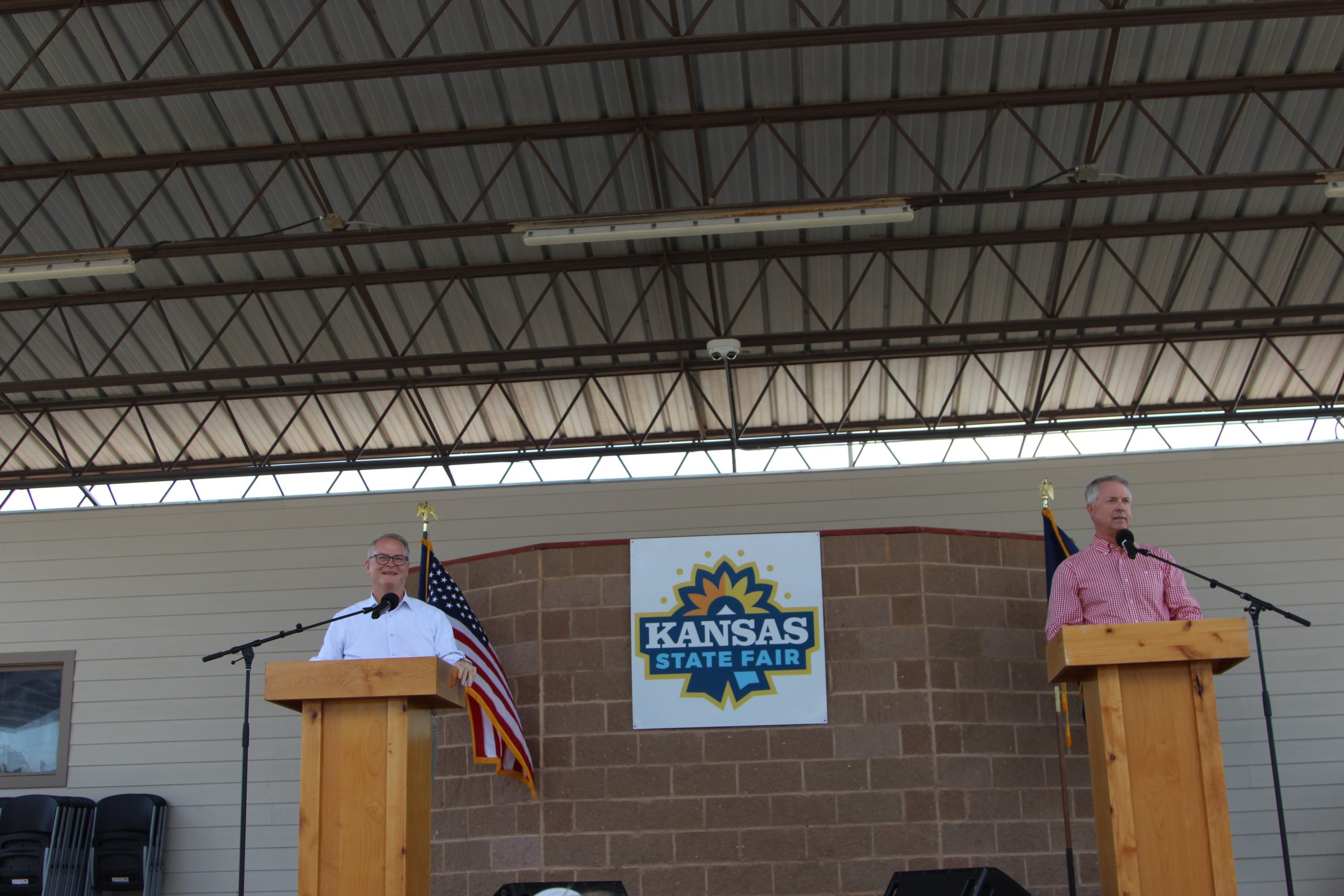
Three members of the Kansas congressional delegation continued to voice support for getting a farm bill passed before the end of the year.
U.S. Sen. Roger Marshall, R-KS, and U.S. Reps. Tracey Mann, R-KS, and Ron Estes, R-KS, provided an update during the annual Kansas Farm Bureau breakfast Sept. 12 in the Encampment Building on the Kansas State Fairgrounds in Hutchinson. It was a busy day for Marshall as he later participated in a debate with Democratic candidate Adam Hamilton. (Both are pictured at top before the start of their debate.)
Marshall and Mann are members of the Senate and House agriculture committees, respectively. Mann and Estes voted earlier this summer for a bipartisan farm bill. U.S. Rep. Sharice Davids, a Kansas Democrat and a member of the House Agriculture Committee, also voted for the House version.
With the return of U.S. Sen. Mitch McConnell, R-KY, Marshall said Senate Agriculture Committee Chairman John Boozman, R-AR, should have the votes needed to get the farm bill out of committee. Marshall said it will take 60 votes to get it approved. Marshall expects a Senate bill to receive support from enough Democrats to push it past the finish line.
Marshall and Mann said fertilizer and diesel costs have been consistent concerns expressed by farmers.
Mann remembers when he came into office in 2021, crop prices were high and livestock prices were “in the tank.” In 2021, fed cattle prices were $1.04 per pound; in 2026, they have reached $2.48 per pound.
The Kansas 1st Congressional District is the top beef-producing district in the nation, Mann said, so high beef prices help the farm economy.
“But our farmers are struggling,” he said, noting that a year ago they had record yields.
“The good news commodity prices have gone up the past few weeks, and combines are rolling,” Mann said. “We need to focus on input costs and increasing demand for our ag products.”
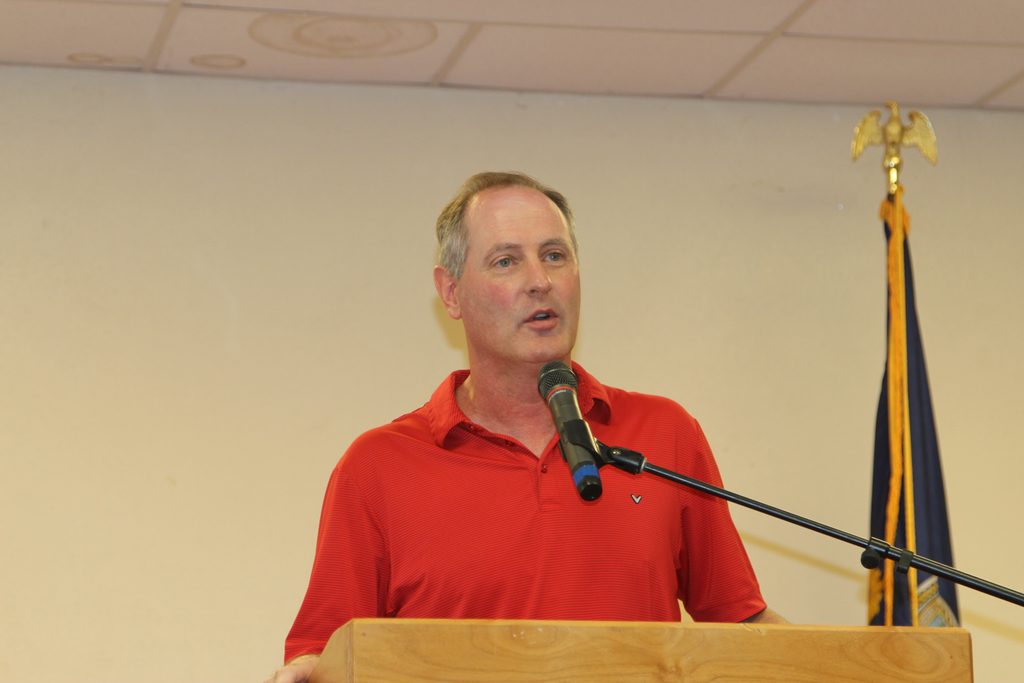
Trade deals and continuing to build global relationships are important, he said. More money has been budgeted to improve market promotion in other countries. The money has doubled from about $250 million to $500 million in fiscal year 2027.
He also advocated for year-round E15, which is in the House farm bill and also is included in the stalled Senate farm bill.
Mann said the One Big Beautiful Bill Act, passed in July 2025, solidified crop insurance. Beginning this fall, agricultural risk coverage and price loss coverage prices will increase, helping farmers manage their risk.
The OBBBA also provides tax rate certainty, particularly when it comes to planning for the next generation, Mann said.
Mann said he continues to be bullish on the state’s agriculture economy.
Feisty debate
Marshall also participated in a live debate later in the day against Hamilton, during which the two sparred over about 15 questions, including several on agriculture, with noteworthy exchanges over the farm bill and trade.
Marshall said he believed a farm bill would have passed with support from Democrats, noting they were unified in blocking legislation that farmers and ranchers want. Hamilton said the partisan divide kept it from being approved, and he would have worked harder to see one pass. Marshall asked Hamilton if he would have supported the one that Republicans crafted.
A five-year farm bill gives farmers and ranchers certainty, Marshall said. Hamilton said the current makeup of the Senate has only provided one-year continuing resolutions, and that creates uncertainty instead.
Hamilton said tariffs, while necessary at times, create a backlash for farmers, ranchers and Kansas consumers when unchecked by the Trump administration. Marshall said he supported the president’s tariff strategy because it will rebuild the country’s domestic manufacturing base, which he said will be good for America long term.
The two agreed that unsecured borders during the Biden administration were a disaster, and that a commonsense approach to H-2A was needed to help farmers, ranchers and agribusinesses that need the workers.
The two also noted the high cost of diesel fuel and fertilizer because of the Iran war and its impact on the agricultural sector. Hamilton said he would never have supported the war. The war, he said, has cost Kansans $650 million more in higher fuel costs when compared with a year ago. As of mid-September, diesel has been running at or near $6 per gallon in Kansas.
Marshall said the fight was worth the short-term cost to end Iran’s nuclear threat capabilities and terrorism. He expected the price of diesel to get back to $3 per gallon when the war ends. He also said recent reports show that exports of farm commodities have increased, and grain prices are up.
Marshall said the beef herd is at record-low numbers as a result of multiple years of drought in cow-calf-producing states such as Kansas. Regulations have also hampered beef production. Hamilton said when the president announced that he would allow 300 million metric tons of foreign ground beef and lean trimmings into the country duty free, sends the wrong message to ranchers, and a senator has to be a strong advocate for the state’s beef industry and strongly oppose such actions.
The incumbent voiced opposition to the administration’s action, which is for a 90-day period. Trump said the action will help consumers.
The debate was sponsored by 580 WIBW Radio and the Kansas Radio Network and livestreamed on 580WIBW.com and KWCH.com. The writer of this story was one of the panelists who asked the candidates questions about agriculture.
Dave Bergmeier can be reached at 620-227-1822 or [email protected].