What should be in a farm first aid kit?
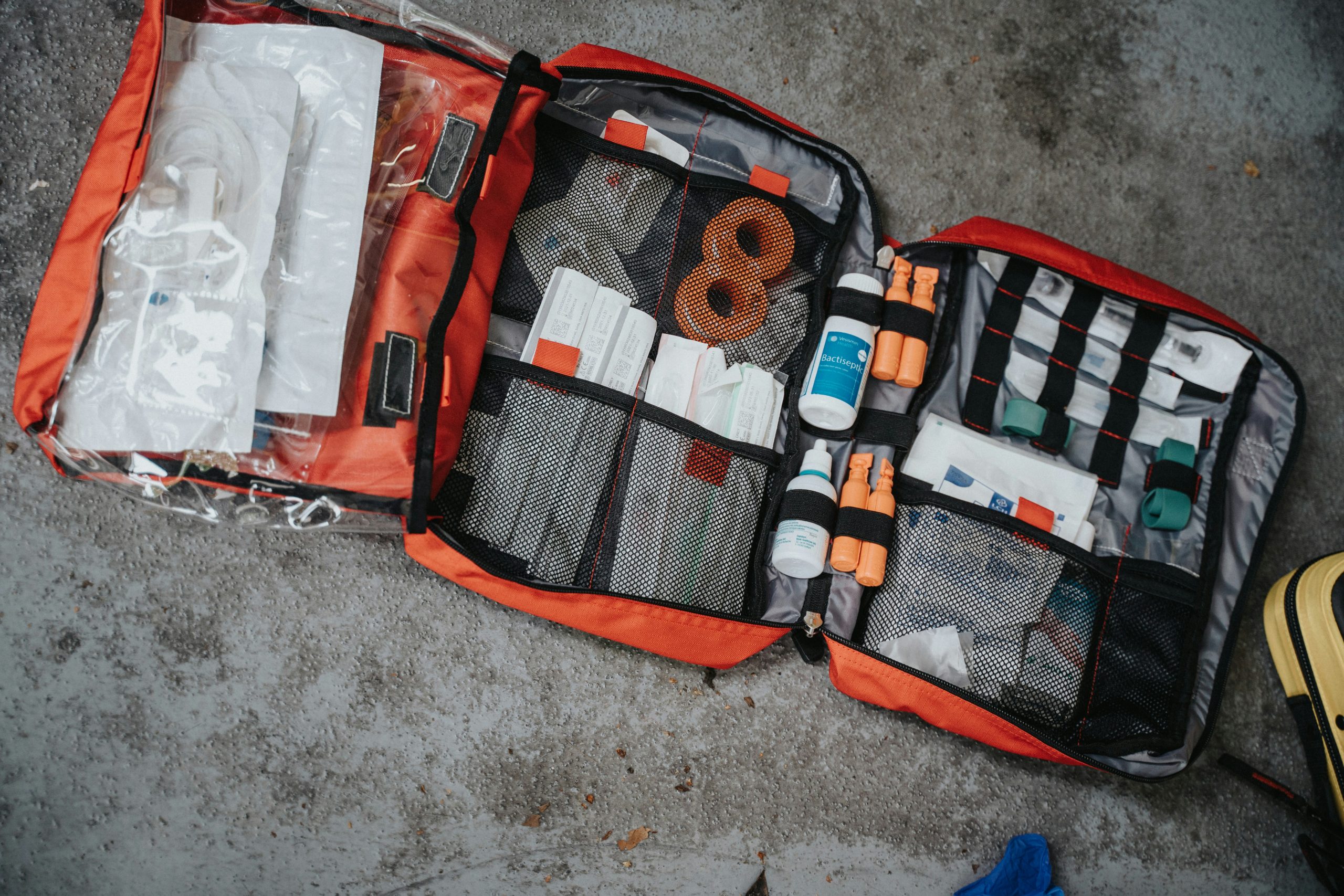
Photo caption: Every farm or ranch should have access to a first aid kit in case of accident or injury. (Photo by Mathurin Napoly via Unsplash.)
Farm safety is a never-ending concern for agricultural workers and their families. Although farm safety education has helped to lessen farm and ranch injuries, agriculture is still one of the most dangerous careers compared to other occupations.
According to the Centers for Disease Control and Prevention’s National Institute for Occupational Safety and Health, in 2022, workers in the agriculture, forestry, fishing, and hunting industry had one of the highest fatal injury rates—18.6 deaths per 100,000 full-time equivalents.
The rate for all other United States industries was 3.7 deaths per 100,000 FTE. Additionally, between 2021 and 2022, there were 21,020 injuries in agricultural production that required days away from work.
Prepare for injuries
Farming is particularly hazardous because many labor alone or have limited contact with others; operators utilize large equipment, chemicals and handle livestock that can be unpredictable; and they are required to work late hours on little rest—especially during planting, harvesting and calving seasons.
Charlotte Halverson, an AgriSafe Network health coach and former national clinical director at AgriSafe, has witnessed many traumatic injuries sustained on the farm or ranch and became an advocate for rural health care and safety.
“Farmers are an army of one, and they’re not only the worker bee, but also the manager,” Halverson said. “You just can’t predict an accident; it happens in a matter of a half second. Farmers, both male and female, must be adept and knowledgeable in so many different types of areas. Whether it’s equipment, animals, electricity, or weather, we have a great concern for their safety and for their well-being.”
Injuries in agriculture are inevitable, but a properly stocked first aid kit can be the difference in treating an injury before it becomes serious or may avoid a deadly outcome.
Halverson said the first step to creating a first aid kit begins with a carrying case. She said it can be a traditional first aid bag or case, or it can be a repurposed container, such as an ice cream bucket.
“It can be anything that you can seal tight to keep the sunlight, moisture and the dust away from the stuff that’s in it,” she explained. “I think it’s a good idea when you get your kit, to label it and put reflective tape on it. That way you can find it in the dark.”
First aid checklist
Although there is a lengthy list of items to consider for a first aid kit, not every item is a necessity. Halverson said a kit should be tailored to the individuals who plan to use it.
“A lot of it depends on where you are and what kind of farming you do,” she said. “There is general list of items, but you can add to or take away, depending on what you might need.”
Halverson said every kit should have trauma shears capable of cutting through jackets, jeans and heavy material. She said they are usually between 7 and 8 inches long and have a safety tip on the end. Additionally, most shears are ambidextrous, meaning they can be used by left- or right-handed people.
Another recommended necessity is a mylar foil blanket. Halverson said it will offer protection from rain or sleet, but it also retains body heat.
“The other useful thing about these blankets is they are reflective, and if somebody comes looking for you, the light from a truck or a flashlight will reflect off the blanket making you easy to locate,” she said.
Halverson said instant cold packs are also a useful addition to a first aid kit. Cold packs are activated when shaken and squeezed and instantly become cold to soothe inflammation of a sprain or broken bone.
Next on Halverson’s list is eyewash.
“We like to include two or three 4-ounce bottles of purified water for flushing,” she said. “It’s not nearly enough eyewash for major eye irrigation, but it will help get you from point A to point B.”
These irrigation bottles are also useful for flushing small cuts and scrapes before applying a bandage. Because many eye injuries require extensive flushing, it is good to have ready access to sealed gallon containers of clean water.
Severed appendages and blood loss
Halverson recommends adding a few resealable plastic bags in case an appendage is severed.
“If you have an amputated finger or toe—and unfortunately this can happen in agriculture—you can grab that finger and wrap it in a damp paper towel or gauze and try to lightly brush off as much gunk as you can and put it in a sealed, watertight bag,” she explained. “Then put that bag on ice, but do not put the amputated digit directly touching the ice itself. Then get it to an emergency room as soon as possible.”
Nitrile gloves are ideal for these kits, especially since the environment where farm injuries occur is not usually sterile. There is not always a sink to wash hands before helping someone who is injured and in need of medical attention. Gloves can help prevent the spread of bacteria into open wounds and are small enough to take up minimal space in a first aid kit.
Another recommendation is to include a triangular bandage. Halverson said these can be used as an arm sling, or they can be wrapped around a wound as a pressure dressing. They can also be used as a make-shift tourniquet.
Most kits will also include a specialized tourniquet, whether it is latex or Velcro. Halverson said it is crucial that individuals understand how to use a tourniquet before trying to utilize one in an emergency situation.
“The most critical thing to remember is to put the tourniquet between where the injury is and the heart,” she said. “It’s an important part of a first aid kit, because a lot of these farm injuries are massive, and they bleed a lot. These are techniques that you should practice using, because if you’ve never done it in the heat of the moment, you may not know what to do with it. We strongly recommend asking your local EMS or hospital community education for first aid training.”
Dressing, bandages and gauze
Several types of dressings should be available in first aid kits to treat cuts, abrasions, and lacerations. Halverson recommended several oval-shaped eye pads and patches for injuries to the eye. Additionally, every kit should include combine or abdominal dressings. These absorbent rectangular pads can be used for larger or serious injuries until professional medical aid is rendered.
Small, 4- by 4-inch gauze dressings are also essential for minor cuts that do not cause serious bleeding. They can protect wounds and prevent infection. Halverson also recommended non-stick dressings, which will not adhere to a wound causing further trauma when the bandage is removed.
Several rolls of gauze, 4- by 6-inch elastic bandages, and adhesive or paper tape are also suggested. Additionally, Halverson listed tweezers for splinter removal, and several adhesive bandages—including knuckle bandages—alcohol and antiseptic wipes.
Although many first aid kits include ointments and creams, Halverson said they are controversial in the medical world.
“I never liked burn creams or antibiotic ointments in first aid kits. Once you put an ointment on an injury that might need to be sutured or if it’s a large abrasion that’s going to have to be debrided, wound cleaning is a challenge and healthcare providers may not be able to suture the injury, she explained.
“Now, if it’s a little burn, apply some burn cream on it and bandage it. But if there’s any question at all that somebody’s going to need stitches, you really want to use caution with ointments and creams.”
Halverson said a CPR face shield can also be a valuable protective measure. It prevents saliva from the person administering CPR from coming in contact with the person receiving it, and vice versa. This could prevent the spread of disease between the two individuals. Halverson recommended taking a CPR class to fully understand how to give this lifesaving measure. As a precaution, she advises everyone to keep his or her tetanus shot up to date as well.
Ready-made farm first aid kits can be purchased through the National Education Center for Ag Safety by contacting Dan Neenan at 563- 557-0354.
Lacey Vilhauer can be reached at 620-227-1871 or [email protected].
Related coverage and resources
- Related on HPJ: Farm safety belongs to all of us
- Related on HPJ: Safety hazards still loom large on the farm
- Outside resource: USDA National Institute of Food and Agriculture