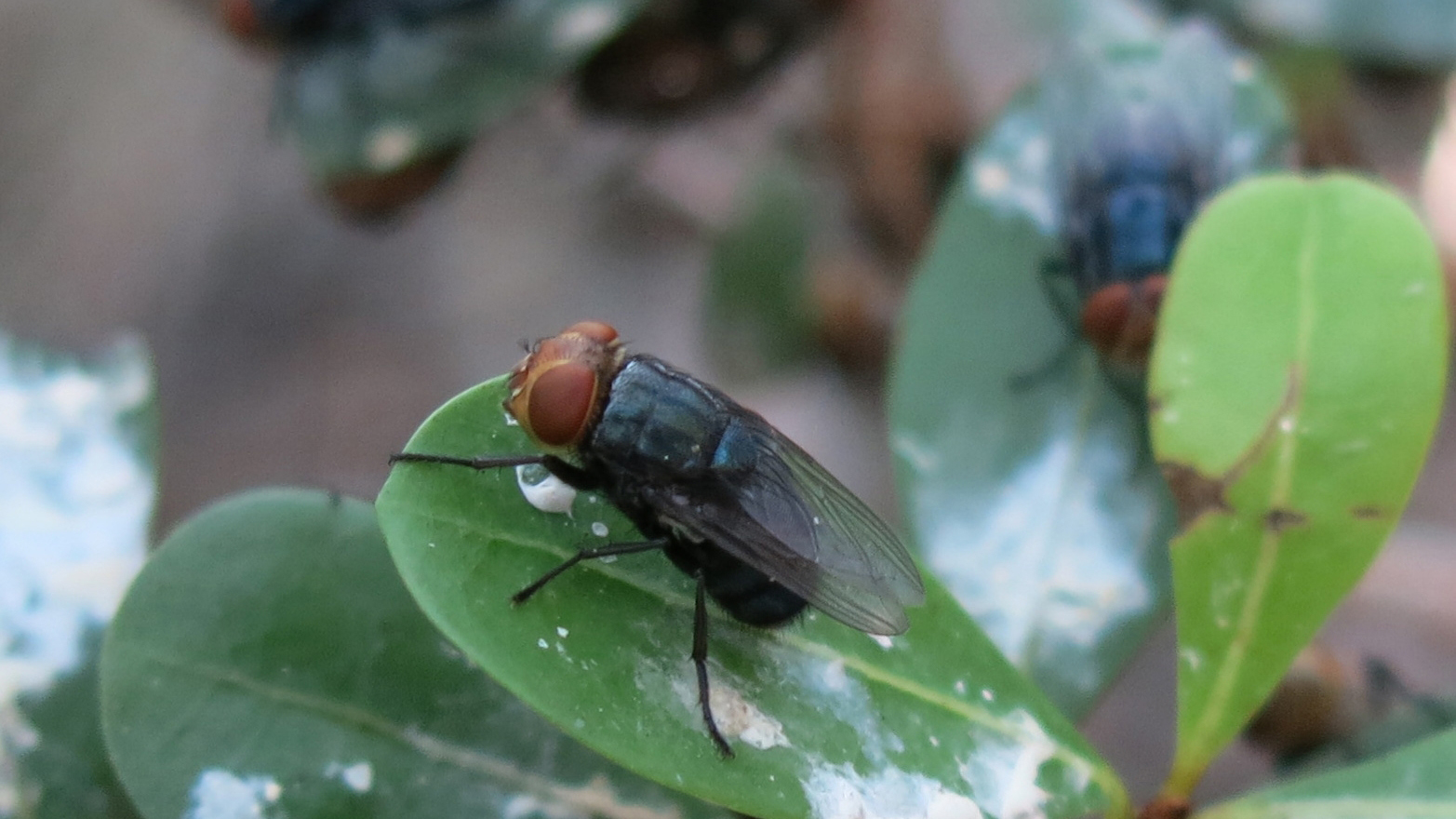

The U.S. Department of Agriculture has announced the phased-in opening of the Mexican border to allow cattle, bison and equine to again enter the United States. On July 7, the first opening was at Douglas, Arizona, to be followed by Columbus and Santa Teresa, both in New Mexico, to open in July and Del Rio, Texas, and Laredo, Texas, in August and September.
We all agree that we do not want New World screwworm back in the United States. Although I am not going to dive into that as much today as I am into yet another concerning USDA policy.
For 60 years, the USDA has been participating in what is called SIT: Sterile Insect Technique. This is a mass production in lab conditions where the male fruit fly is exposed to X-rays and Irradiation to sterilize the fly. Then, by the millions, these sterile male flies have been released into the wild with the theory that the wild female will mate with the sterile male and thus control the population.
Here is the problem: the wild fruit fly that lays the larvae that become the New World screwworm is attracted to the biggest male she can find. Extensive studies on this “birds and bees” situation shows that some species of female fruit flies don’t care but most prefer to mate with the big boys. This opens up another can of flies as the National Institute of Health has published many related studies on the topic.
From NIH in 2003:
These results support the hypothesis that intense sexual signalling indicates longer life span. We discuss the importance of age-specific behavioural studies for understanding the evolution of male life histories.
Studies suggest that factors related to the sterile male, such as reduced seminal fluid or genetic differences from wild males, may increase a female’s propensity to remate.
The fruit fly has a life span of 60 days. In that short time on earth, the female lays 2,000 eggs. The challenge to long-term control of the screwworm at any level is not going away any time soon.
In what appears to be unrelated news but I believe it is all tied together, Joe Esposito and Kenwon Fulsom from Owasso, Oklahoma, recently stop by the house. They have both suffered health damage from radiation and electrical magnetic fields that surround us all. In fact, I went looking for the details of how the male fruit flies are sterilized because it dawned on me that we are told human males are losing sperm quality.
Have you ever had an EMF meter run through your vehicle or house to see what you are exposed to on a daily basis? Well, we have now.
It was actually quite alarming and Esposito, a Marine veteran who spent most of his military life working with radar, has suffered from that exposure. The health problems he incurred inspired him to help others by showing up to test the radiation we are all exposed to a daily basis.
In short, if you are like the rest of the world and have fallen prey to the convenience of having everything wireless, you are exposed to grave danger. During this conversation with Fulsom, it occurred to me that we call these devices that we pack with us at all times a “cell phone.”
Actually, much like the lack of evidence supporting the re-opening of the border to Mexican cattle, in my opinion, the evidence to show that the wireless world we live in is not causing serious human health issues is not very common. I urge you to dig deeper into this topic and start looking at ways to make your life less wireless and your health better.
Editor’s note: The views expressed here are the author’s own and do not represent the views of High Plains Journal. Trent Loos is a sixth-generation United States farmer, host of the daily radio show “Loos Tales” and founder of Faces of Agriculture, a non-profit organization putting the human element back into the production of food. Get more information at www.LoosTales.com, or email Trent at [email protected].
PHOTO: A New World screwworm fly. (Photo courtesy USDA.)
Related Articles