
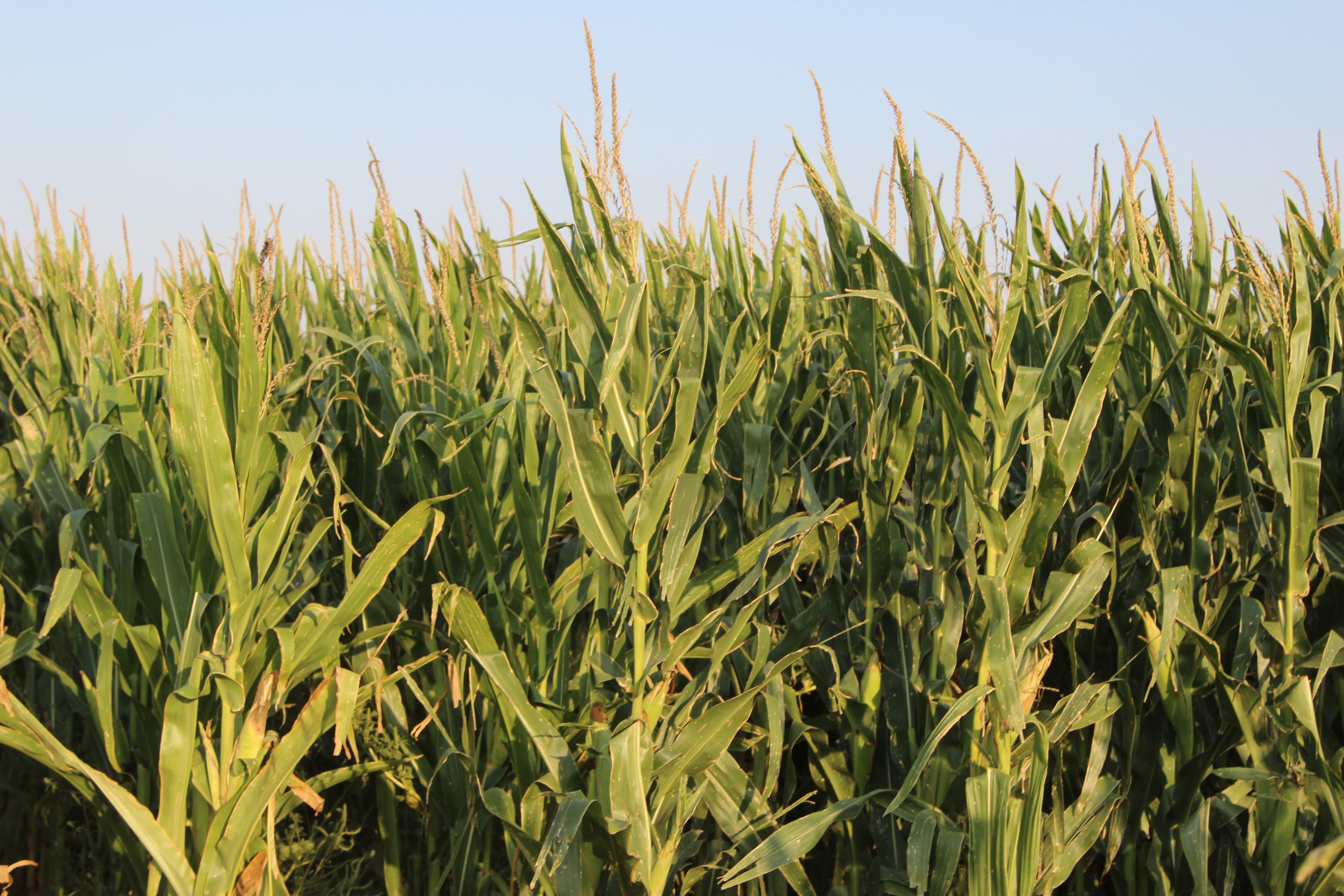
Concern over higher inputs is on the minds of corn producers as they are in the midst of fall harvest.
Jed Bower, the new National Corn Growers Association president, took note while he was picking corn in early October, as he also has an eye on next year’s crop. The good news was that yields were better than he expected on his Ohio farm. A late start in planting was followed by Mother Nature’s whims that included a long stretch of dry weather.

With today’s genetics, he was harvesting a field that was yielding more than 200 bushels per acre when he was expecting only 120 bushels per acre.
“There’s going to be some spots where it’s tougher, but when you average over 200 with the challenges we had, that’s amazing,” he said.
Next year as he puts the pencil to paper to figure out his plans, he knows that it is going to be a more difficult year. He normally applies anhydrous in the spring, but he knows that corn farmers farther west may also consider doing that too and that can push up prices, so he is considering several fertilizer strategies. Anhydrous ammonia is estimated at $816 per ton, according to the U.S. Department of Agriculture in an October report that cited Illinois figures.
“I’m looking at alternatives right now and there’s no great alternatives,” he said, adding he expects to continue his regiment of soil samples and to take a hard look at fertilizer application rates.
“I hate to use the term cutback because that’s not a long-term solution by any means.”
Bower knows he is not alone as he credited NCGA, farmers and economists who talk about higher input costs while the price per bushel is in the lower $4-a-bushel range.
A glimpse at NCGA findings
Average corn production costs have dropped 3% from their peak in 2022 to 2025 while corn prices have declined by more than 50% over the same period, the NCGA stated.
On Oct. 6, the price of corn in Dodge City was $4.05 per bushel and during the same week in 2022 it was $8.35 a bushel.
The NCGA noted that even with higher yields, farmers are unlikely to be able to offset high costs, resulting in continued and negative profit margins for the third straight year. A farmer with an average cost of production who receives the expected average price is facing an 85 cents per bushel loss in 2025. The outlook for 2026 is even worse with a forecast projecting lower corn prices and rising costs.
Three critical inputs make up 73% of the operating costs for growing corn: Seed, chemicals and fertilizer, the NCGA noted. These inputs comprise more than one-third of the total costs of growing corn. Seed costs per acre have increased 135% since 2007 to a projected cost of $115 per acre for 2025. Some increase in seed costs can be attributed to improvements in genetics and breeding techniques that have contributed to greater productivity over time.
However, the per-bushel cost of seed has also nearly doubled. On average, seed costs divide out to $0.33 per bushel for 2007 and $0.61 per bushel for 2025, an 88% increase per bushel. In other words, even with higher yields, seed costs have increased more than is offset by an increase in yield, the NCGA said.
Out-of-balance

Chad Hart, a professor and Extension specialist with Iowa State University, said historically when the price per bushel goes up, production expenses follow and when the price goes down expenses also tend to go downward.
“This time when prices went down then costs should be falling. They’re not this time,” he said, adding that market fundamentals plus a change in U.S. policies has played an important role in global markets for fertilizer and seed.
“We’re competing with farmers across the globe especially for potash,” he said, adding that farmers in Brazil and other global competitors are also increasing their usage of synthetic fertilizer to raise higher yielding corn and soybean crops.
While price per bushel is down in the U.S., other producing countries are not in the same situation and that is disrupting the connectivity between price and inputs here.
“That’s one thing that is hurting us now and the other thing is tariffs and since we do import a fair number of inputs those are costing us more to get them into our country,” he said. “When you put those two together it creates the situation we’re working with right now.”
Although the price per bushel for corn and soybeans have been trending downward the past two years with the change in tariff policy, there was not an opportunity to get ahead of it, and the result is input costs that have remained stubbornly high. Today he reminds growers this will be difficult time, even if the Trump administration provides some government payments.
“This is more about not trying to get ahead of it, but managing within it,” Hart said.
Inflationary costs

Gregg Ibendahl, an associate professor in the department of agricultural economics with Kansas State University, said inflation over the past couple of years has added to input costs, too.
A couple of stressor points of inflation, fuel and interest costs, have modestly declined in the past year, said Ibendhal, who specializes in farm management and agricultural finance.
Fertilizer is the second biggest expense outside of machinery expenses, and machinery costs have also been impacted by inflation, and tariffs have driven up the cost for steel needed to make equipment, Ibendahl said.
“That’s why we’re no longer the low-cost leader when it comes to producing grain,” he said.
South America can be a low-cost producer of corn and soybeans. In the U.S. costs continue to go up 2 to 3% and even higher with inflation calculated into the equation. Plus any variable costs that could also increase paints a bleak picture.
“It’s pretty pricey to grow corn these days,” Ibendahl said.
Ibendhal and Hart noted that heading into 2025, with the threat of tariffs by President Donald Trump toward China sent a signal that U.S. soybeans were not going to be welcomed in that country so some U.S. growers opted to grow more corn than beans, which USDA figures note.
Any opportunity for corn growers headed into 2026 will be watching for several signals.
Hart and Ibendahl will also be watching for government payments noting the Trump administration wants to see it happen.
Dave Bergmeier can be reached at 620-227-1822 or [email protected].
Related coverage and resources
- Related on HPJ: NCGA president understands challenge
- Related on HPJ: More corn at soybean’s expense?
- Outside resource: USDA ERS — Corn and Other Feed Grains



