
Equine herpes cases continue to be reported following Texas outbreak
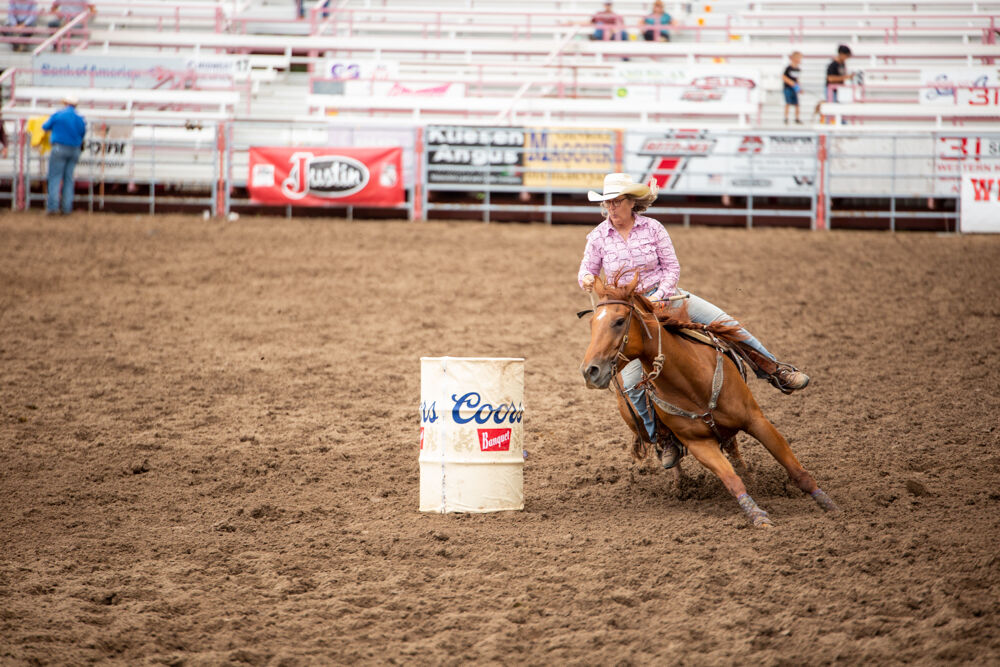
Imagine traveling to Texas in November for the culmination of the rodeo events for the year in Waco. Hoping for warm weather, clean runs and great performances.
But only having to cautiously come home and quarantine horses. Many competitors who went to the Women’s Professional Rodeo Association World Finals and Elite Barrel Race Nov. 5 to 9 are now dealing with the aftermath.
On Nov. 18, the WPRA was notified by Texas Animal Health Commission officials that equines that attended the finals and barrel race had started to exhibit clinical neurological signs of equine herpes myeloencephalopathy, the neurologic disease linked to equine herpes virus (EHV-1) after the event.
The WPRA said in a statement online, “We take this notification extremely seriously and are committed to providing full transparency while upholding the highest standards of safety for our contestants, their animals, and the public. We are working closely with Elite to ensure open lines of communication between both organizations and our membership/contestants.”
Sally Denotta, with the American Association of Equine Practitioners, told RFD-TV Dec. 4 in an interview the viral disease can cause sometimes fatal neurologic clinical signs in horses.
“This is a disease that’s been around for decades. It’s worldwide,” she said. “It’s considered endemic in this country, but when we have outbreaks associated with events, it can spread to several states fairly rapidly.”
Denotta said the outbreak stemming from Waco and eventually a barrel racing futurity in Guthrie, Oklahoma, at the Lazy E Arena, had several hundreds of horses from all over the United States.
“And then those horses left the event and went to about 30 states, some of them taking this virus with them,” she said. “There have been several affected horses now that have ensued in the wake of that. Luckily, thanks to a lot of word getting out and vigilant biosecurity by event coordinators and horse owners, I’m happy to say that we’ve only had cases in six of those 30 states.”
Denotta said as of Dec. 4, there have been 30 confirmed cases of the neurologic disease in horses associated with those original events.
The impact of this kind of outbreak has hindered the transportation of horses to and from the Wrangler National Finals in Las Vegas, Nevada, Dec. 4 to 13, and many other events that had been scheduled on either side of the WNFR.
“Well, the income impact can be fairly substantial, because, of course, word spreads quickly,” she said. “There’s a lot of horses moving around the country to compete and train, and people get quite fearful about moving their horses and getting them exposed and affected and potentially sick, particularly when this disease can be fatal, and that those fears are all warranted in the face of an outbreak.”
Denotta said large-scale equine events require much planning and financial investment for them to happen.
“We try to use biosecurity to our advantage so that we can keep those events open and on schedule,” she said.
Denotta said the most common symptom of EHM is a fever, and anything more than 101.5 degrees Fahrenheit in horses is considered a fever.
“Anyone that had horses at either of those two events, we’re actually encouraging them to keep their horses on their home farm for 21 days from the day they left those events, and take temperatures twice a day and report any fevers to their local veterinarian,” she said. “Other clinical signs can be nasal discharge, coughing, in coordination of the limbs, which we call ataxia, so that this disease affects the spinal cord, and so horses will get quite uncoordinated in their movement.”
The nerves that allow horses to urinate normally can also be affected.
“Any sort of urine dribbling or difficulty urinating can be a red flag as well, all of which should prompt a veteran or an owner to alert their veterinarian immediately,” she said.
Denotta said prompt examination and testing is very important, as well as isolating any horses suspected to have EHM or who have been or are suspected to have been exposed.
“That’s really the crux of biosecurity,” she said. “In a nutshell, is that it prevents one outbreak from becoming six outbreaks or 36 outbreaks, by containing the virus and stopping transmission and exposure.”
With EHM having good supportive care is essential.
“We have pretty good antiviral medications that we can use on affected horses, so the quicker they get treated, the better, and we can have up to a 70% to 80% survival rate, even in affected horses,” Denotta said. “But only if people report these cases, get them tested and get them to their veterinarian.”
Stats
According to the Equine Disease Communication Center website, equinediseasecc.org, as of Dec. 5, the following states have cases:
• EHV-1 cases—PCR positive, no neurologic signs: Texas, 4; Oklahoma, 3 and Washington, 2.
• EHM cases—PCR positive, with neurologic signs: Texas, 30; Oklahoma, 9; Louisiana, 3; South Dakota, 1; Colorado, 1; and New Mexico, 3.
• EHV-1 PCR positive, no clinical signs: Texas, 1; and Arizona, 3.
Equine herpesvirus-1 or EHV-1 is the virus causing this outbreak. While EHV-1 most commonly causes respiratory disease, some strains cause outbreaks of neurologic disease. EHV-1 causes neurologic signs because of inflammation of the blood vessels and activation of blood coagulation within the brain and spinal cord.
Neurologic signs occur because of a lack of blood flow and resulting damage to the brain or spinal cord; this disease manifestation is known as Equine Herpesvirus Myeloencephalopathy. Classic clinical signs of EHM include fever, swelling/stocking up of the limbs, hindlimb weakness, and urine dribbling. Some horses are more severely affected and display behavior changes, signs of cranial nerve dysfunction, seizures, and inability to stand. While EHM is a serious disease, most cases are not fatal. In most outbreaks of EHM, 60% to 70% of affected horses recover with treatment and supportive care. Veterinary evaluation and isolation of exposed or affected horses is crucial.
The EDCC reports cases of infectious disease submitted by veterinarians and state animal health officials. If you are a veterinarian with a confirmed or suspected EHM case, submit a report at to the EDCC at: https://equinediseasecc.org/forms/report-outbreak.
For accurate and reliable information regarding the clinical signs and transmission of EHV-1, visit the EDCC: https://www.equinediseasecc.org/equine-herpesvirus.
For veterinarians seeking guidance on disease management, see the following: https://aaep.org/resource/aaep-infectious-disease-guidelines-equine-herpesvirus-1-4/.
Kylene Scott can be reached at 620-227-1804 or [email protected].



