Texas A&M AgriLife and Texas A&M Engineering researchers join international discussions and presentations in Morocco
International science leaders gathered at the 19th World Water Congress in Marrakech, Morocco, in December to share emerging research and solutions to global water security and water quality challenges.
Experts from Texas A&M AgriLife and the Texas A&M University College of Engineering hosted more than 10 special sessions and contributed to several presentations. The gathering welcomed over 1,200 participants from more than 80 countries. They included 30 ministers and ministry delegations, representatives of the United Nations, and personnel from many international agencies.
The congress is hosted by the International Water Resources Association, IWRA.
Rabi Mohtar, Ph.D., is a professor in the Texas A&M Department of Biological and Agricultural Engineering, the Zachry Department of Civil and Environmental Engineering at Texas A&M, and the Texas A&M Engineering Experiment Station. He serves as IWRA vice president and co-chair of the World Water Congress and leads the International Scientific Committee overseeing technical content.
“The congress was hosted by the government of Morocco and placed Texas A&M on the global stage at the forefront of innovation in a changing world,” Mohtar said. “Besides the exceptional technical contributions, the legacy of the congress is in promoting youth and charting a path to inform the global water agenda through science and ministerial declarations that will be submitted to the U.N. Water Conference in 2026.”
Affordable and safe water sources for communities
Giovanni Piccinni, Ph.D., director of the Texas Water Resources Institute, TWRI, and professor in the Texas A&M College of Agriculture and Life Sciences Department of Soil and Crop Sciences, moderated a special session on the safety and affordability of water sources for communities — a major topic at the event.
Water safety and affordability are significant challenges in Texas and other parts of the world where water resources are decreasing and populations are increasing.
The special session, “Unlocking New Water Frontiers: Exploring Opportunities and Risks of Alternative Sources for Agriculture and Urban Use,” included Texas A&M AgriLife experts presenting research and analyses.
The Texas A&M experts were: Allen Berthold, Ph.D., TWRI associate director, Bryan-College Station; Katie Lewis, Ph.D., Texas A&M AgriLife Research soil chemistry and fertility scientist and professor, Department of Soil and Crop Sciences, Lubbock; and Joseph Burke, Ph.D., AgriLife Research and Texas A&M AgriLife Extension Service cropping system agronomy and weed scientist and assistant professor, Department of Soil and Crop Sciences, Lubbock.
Additional presenters were Maria Michela Dell’Anna, Ph.D., of DICATECh, Bari, Italy, and Vinay Nangia, Ph.D., of the International Center for Agricultural Research in the Dry Areas, Rabat, Morocco.
Rosario Sanchez, Ph.D., TWRI senior research scientist, Bryan-College Station, also presented at the congress. She opened a special session titled “The Future of Transboundary Aquifers Management Under Legal Uncertainty,” organized by the International Association for Water Law.
“Water is a shared resource that unites people across the globe, and the congress provided an invaluable platform for collaborating on the pressing challenges all nations face in managing it sustainably,” Piccinni said.
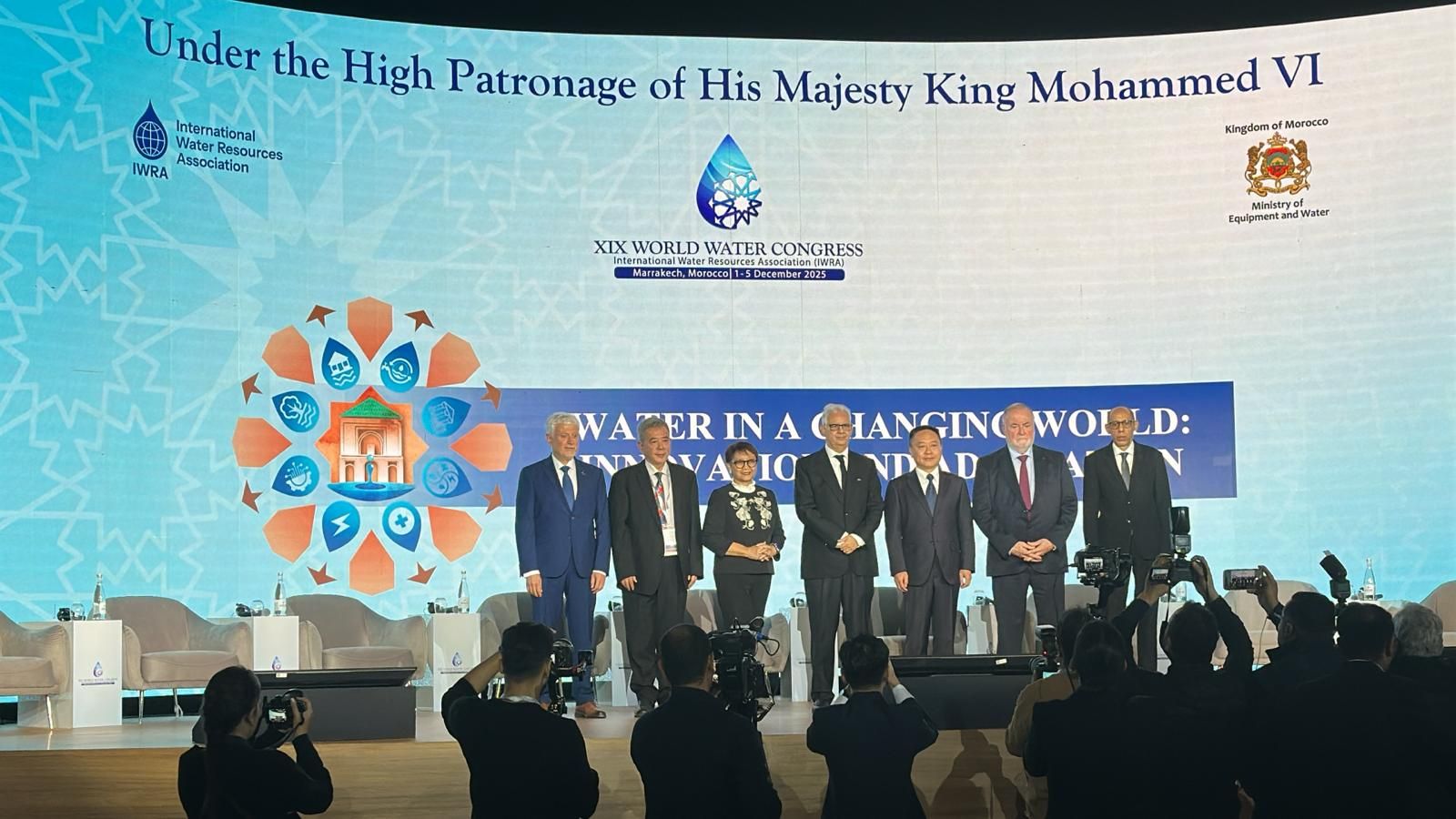
PHOTO: Rabi Mohtar, Ph.D. (far left) is co-chair of the World Water Congress and attended its opening ceremony. (International Water Resources Association)