Ag economists hope 2026 can offer an uptick for crop producers
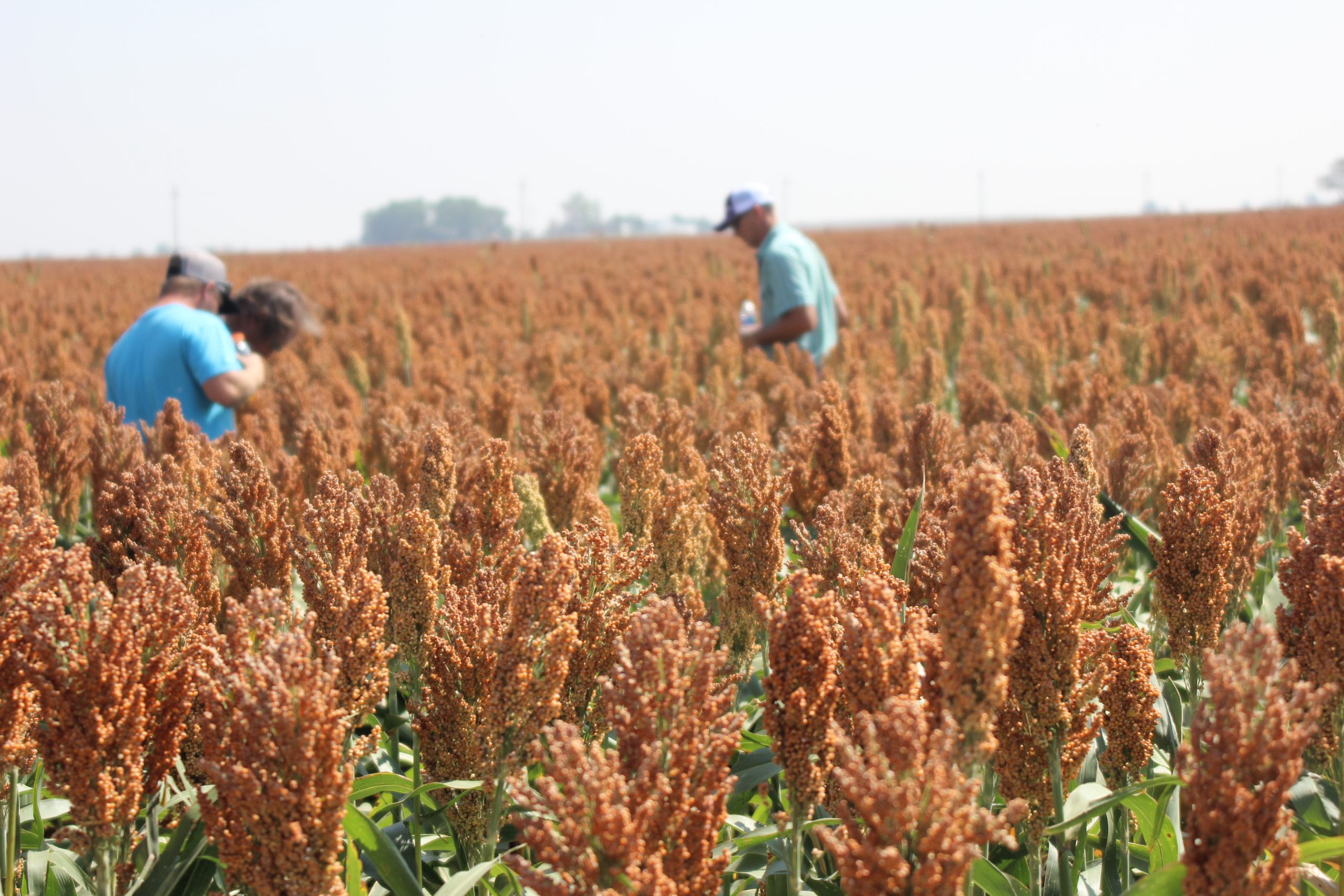
High Plains agriculture is facing a difficult period, and experts advise farmers and ranchers to be vigilant in watching expenses.
Crop producers are facing tougher times, and ag economists advise farmers that waiting on trade agreements to improve their fortunes is not a plan of action.
Pat Westhoff, director of the food and agricultural policy research institute at the University of Missouri, expects 2026 will have more surprises, but it will be hard to project their impact.
“Given what we know right now, we might expect market prices to remain near current levels for corn, soybeans, wheat, and other crops,” he said. “Global supplies are adequate relative to demand, so unless 2026 weather is unfavorable, there are not a lot of obvious reasons to expect a major price recovery in 2026.”
Examine all costs
Chad Hart, a professor and Extension economist at Iowa State University, said in today’s climate he asks farmers and ranchers to focus on what they can control. He says it is the same advice he gave a year ago and on numerous occasions over the years. He prefers the term cost control and that’s his message again.
He wants producers to sit down and put the pencil to paper and then ask, “I’m spending this much money, am I getting that much revenue back? If I don’t see that return on investment maybe I shouldn’t be making that investment.”
Three years ago, producers had high enough per-bushel prices they could take on more risk, he said, adding the past two years they are pinched.
Hart advises them to identify seed and fertilizer costs, for example, as areas they should see if they are getting the return they need. “I remind farmers I don’t like to say cutting cost because we don’t want to cut what brings in the money.”
However, he said, producers might want to evaluate seed production potential then check prices. Fertilizer application is often a necessity, but there are timing options that can save money without lowering yield.
Insurance is another important bottom-line cost that might require a farmer to seek multiple bids, Hart said.
“We’re in the business to take care of us, and it behooves us to remember that,” Hart said, acknowledging that conversation might not be easy. The farmer might need to say, “I have worked with you for a long time, and I’d like to continue to work with you, but I need to make sure I’m getting the best deal.”
“It really is a tale of two sectors in farming and ranching,” said Brad Lubben, an Extension associate professor and policy specialist at the University of Nebraska, said in mid-December. “Cattle are continuing to go like gangbusters, even after giving up some substantial prices in the past few weeks, but the crop sector is going downhill and has been doing so for about four years. Productions costs remain pretty sticky and near record levels and so margins are just tighter and tighter.”
Payments have helped
If it wasn’t for ad hoc federal government payment, the condition would be much worse, Lubben said. With the cattle markets and government payments that has carried farm income and has kept the balance sheets relatively strong, he added.
Crop producers have felt the weight of market price declines in recent years and combined with input costs that has made for very tight or even negative margins, Lubben said.
At the University of Arkansas, according to the Fryar Price Management Center of Excellence, its experts cited an October 2025 report from Missouri and it stated that noted crop receipts for corn, rice, soybeans, and wheat declined 18.3%, 18.2%, 9%, and 14%, respectively. Cotton had a 9.4% increase in crop receipts, but it is still down nearly 20% from 2023. On average, all major crop receipts are down 32% since that time.
“Several years of consecutive declining receipts have put Arkansas farmers in a difficult position, especially as production expenses continue to remain elevated and eat further into ever tightening margins,” wrote Ryan Loy and Scott Stiles.
Loy is an assistant professor and Extension economist for the Arkansas Division of Agriculture. Stiles is a program association in ag economics and ag business.
Bleak numbers
Under a fully owned land scenario in 2025, only soybeans and peanuts generate positive expected returns at $56.38 and $675.84 per acre, respectively. Showing negative returns per acre were corn (minus $111.86), rice (minus $14.18), cotton (minus $145.71), and wheat (minus $117.34).
The Arkansas summary reported the state farmers faced international trade uncertainties, due in large part to a hot-burning trade war, high global supplies, and South American competition, resulting in low crop prices and diminished U.S. crop competitiveness on the global market.
Lubben said while 2025 was expected to be a tough year, perhaps an improved outlook could occur because of growing demand with recovery in exports and growth in biofuels, with a big caveat.
“Both of those are so overwhelmed with policy uncertainty that it’s hard to make any solid market predictions given that it’s not tied to demand fundamentals,” Lubben said. “The promises for recovery, or the promises for improvements are fundamentally driven by the policy environment that we’re working in. It’s a realistic reminder that while we think about trying to be productive, efficient and competitive in a marketplace driven by supply and demand, yet so much of what we’re facing is actually driven by policy choices.”
Hopeful signs
Hart thought 2026 does show potential for an improved year. As an example, the corn market was offering about a 30-cent-a-bushel premium over what producers had in 2025.
“Prices are looking to move in the right direction that hopefully while it’s not getting us of the hole, it is saying that the hole may not be as deep next year,” Hart said. “If we combine a little bit of price improvement with a little bit of cost savings, maybe we can fill in the hole.”
Lubben said perhaps the worst of the trade conflict is behind producers. If China’s soybean purchase commitments do come to fruition in early 2026 and follow through with current commitments and then their annual commitments going forward, then that brings back some level of demand, to the export market that offers some improved economic news.
If the trade policy front returns to open trade with no conflicts to the U.S.’s major customers and barriers are removed as the administration there is a case to be made that trade prospects for 2026 could look much better than they were in 2025, “given that we’re at least growing out of the trade conflict, hopefully not getting deeper.”
More soybeans?
Hart said some analysts believe more soybeans will be grown this year. In 2025, about 4 million acres were switched from soybeans to corn as growers believed that tariff wars with China were going to impact global opportunities. Now with soybean prices trending upward, analysts believe there are additional opportunities.
Corn exports have improved, Hart said, but prices have not responded. The goal, he said, is “that demand will ratchet up prices.”
As in any year, weather developments here and elsewhere could make markets look a lot different in a few months than they do today, Westhoff said. There are some possible biofuel policy developments that could support prices for soybeans, corn, and other crops, but much remains uncertain. Likewise, there are likely to be further developments on the trade front that could help—or hurt—the price outlook, he said. “Interest rates may come down at least a little in 2026, which would also help borrowers.”
Hart said farmers may want to consider how to deploy their assets to increase cash flow. That might include contracting to remove snow in the winter and while that may add to operating costs in the short run ultimately, the cash flow would more than offset the expense. When spring arrives, they could consider custom planting crops.
Outside-the-box thinking helped farmers 10 years ago when they also faced tighter margins, Hart said.
Dave Bergmeier can be reached at 620-227-1822 or [email protected].