Post-holiday cleaning can help save money, reduce waste
Deep cleaning and organizing the home kitchen is often associated with spring, but a Kansas State University food safety expert says the start of a new year can be an ideal time to tackle cluttered cabinets, crowded refrigerators and overstuffed drawers.
Karen Blakeslee, a K-State food scientist and coordinator of the Rapid Response Center for food science, said many people are surprised by what they find once they begin sorting through their kitchens.
“The start of the new year, everybody’s trying to get organized, clean things out, so why not start in the kitchen area and see what kind of mystery food you might find in your kitchen,” Blakeslee said.
Listen to an interview by Jeff Wichman with Karen Blakeslee on the weekly radio program, Sound Living, produced by K-State Extension
Cabinets and cupboards are often prime trouble spots because items get pushed to the back and forgotten. Blakeslee recommends taking everything out, cleaning shelves thoroughly and allowing them to dry. Broken packages can attract pests, she said, so sealing cracks with caulk and discarding damaged or unused items is important.
If a utensil or gadget hasn’t been used in a year or more, it may be time to let it go. “If you’ve got 10 spatulas and you really only need two, pare it down,” Blakeslee said. Extra items can be donated or passed along to college students or others just starting out.
Using drawer organizers, small bins and baskets can help keep items corralled and make it easier to put things back where they belong. Lightweight storage racks on the back of cabinet doors can hold items such as plastic wrap, foil and storage bags for quick access.
Blakeslee also suggests grouping items by purpose. Bakers, for example, may benefit from creating a baking center where flour, sugar, yeast and mixers are kept together. Frequently used dishes and silverware should be stored near the sink or dishwasher to make unloading easier.
A general rule, she said, is to keep the most-used items between shoulder and knee height, while seldom-used items can be stored higher up. Seasonal items, such as cookie cutters, can be kept out of the way but labeled so they’re easy to find.
Checking dates is another key step. Spices typically last six months to a year, and canned foods should be rotated so the oldest items are used first. High-acid canned foods, such as tomatoes and fruit, generally keep 12 to 18 months, while low-acid foods like vegetables and soups may last two to five years. Home-canned foods should be used within one year.
Refrigerators and freezers also need regular attention. Blakeslee recommends removing everything, cleaning shelves and drawers by hand and sanitizing surfaces with a mild bleach solution. Labeling and dating freezer items can help prevent forgotten leftovers from lingering too long.
“Things don’t last forever,” Blakeslee said. “But when you organize your kitchen in a way that makes sense, you can save money, reduce food waste and make cooking safer and less frustrating.”
For those with mobility issues or arthritis, she added, a wide range of step stools and jar-opening gadgets are available. “Keeping things organized can even help your brain remember what you have,” Blakeslee said, “and that makes everyday life a little easier.”
The publication, Essential Home Maintenance, includes more tips on organizing around the home, and is available for free online from the K-State Extension bookstore.
More information on food safety is available at local extension offices in Kansas.
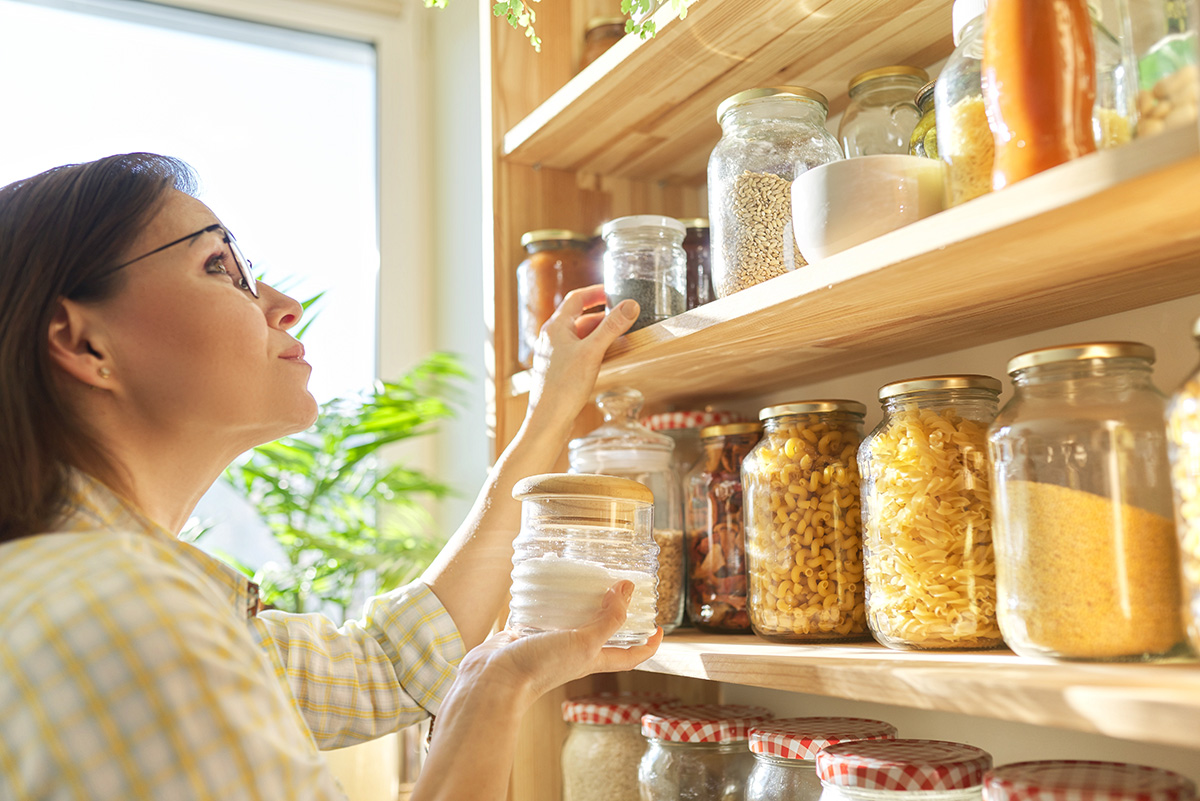
PHOTO: Food storage in pantry, woman holding jar of sugar in hand. (Adobe Stock │ #333994675 – Valerii Honcharuk)