BASF contest helped producer with his corn crop
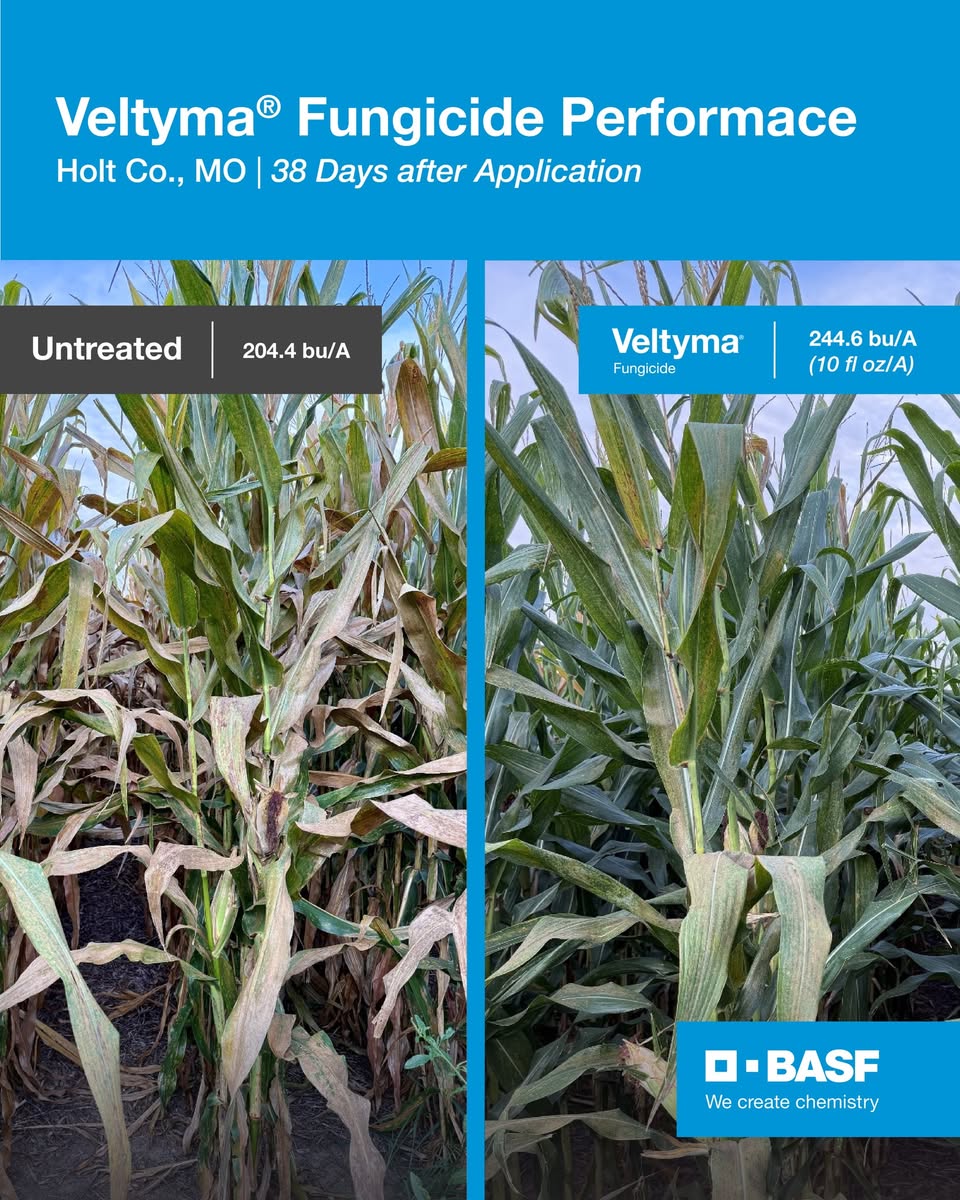
Southeast Iowa farmer Mike Hammes said yields for his 2025 corn crop were good, but he knows that if he had not used a fungicide in particular the story could have been different.
Hammes, from Fairfield, who also grows soybeans, was a producer who participated in BASF’s Real Results Yield Challenge. BASF had noted heading into the 2025 growing season that more than 900 million bushels of United States corn and soybeans were lost to disease in 2024. The company noted that only an estimated 45% of those acres were treated with fungicides.
To bridge this gap, BASF introduced the Real Results Yield Challenge. The challenge gave farmers an opportunity to compare performance-driven fungicides against untreated or alternatively treated acres right in their own fields. Hammes was one of thousands of participating growers, showing the positive impacts fungicides can make on grain quality and yield.
“The year was pretty good,” Hammes said. “We had really good weather. Planting went really smooth and we got everything in pretty timely.”
Every year always has its challenges, he said. His farm received ample rain and while it did not all come at once, fortunately it always came when the corn needed it most during the growing season. Hammes said in the back of his mind he thought that fungicide was going to be needed to fight tar spot and he did use it, upping BASF’s fungicide application of Veltyma from 7 ounces to 10 ounces per acre. The application was made in the first week of July with drone and plane application when the corn started to tassel.
His thought was that the extra residual would help improve the health of the plants.
“We were thinking about tar spot because that’s been the one we’ve really been told about the last few years and that’s the bad one and that’s kind of what we were expecting to see,” he said, adding southern rust was also on his mind.
“Luckily we put on extra fungicide preparing for tar spot and I think it really helped us against the southern rust,” Hammes said. The fungicide is applied with a water carrier.
Tar spot and southern rust are both fungal diseases that interrupt grain fill and cause major reduction in yields.
In a year with low prices, he considered Veltyma a crop protectant that is worth the investment. With a wet growing season, disease pressure becomes a greater concern.
“We thought the rain is great, but it usually makes the environment right for disease,” Hammes said. “The other big thing is it was really hot at night, which is another problem for corn, and the fungicide is the one thing you can really do to take stress off. Between the rain and the hot nights and the good crop, we thought we better just make sure we’re doing everything we can to get the maximum yield.”
One of the compelling reasons to participate in BASF’s Real Results Yield Challenge was because he thought it was important to learn new techniques. Working with his crop consultant and retailer were the first steps.
Hammes remembered the Nutrien retailer who believed the year was shaping up to be a year where fungicide could work and had anecdotal notes about what he observed with farmers in 2024.
While he did not win a pickup, Hammes endorsed the incentive to good protection for a promising corn crop because staying ahead of tar spot and southern rust is a good investment.
As far as the 2026 the crop, Hammes said knowing the fungicide is effective gives him another tool if he faces similar growing conditions.
For more information, visit https://agriculture.basf.us/crop-protection/Campaigns/real-results-yield-challenge.html
Dave Bergmeier can be reached at 620-227-1822 or [email protected].
(Photo courtesy of BASF.)