K-State sheep and goat specialist says tags and biosecurity help to protect flocks
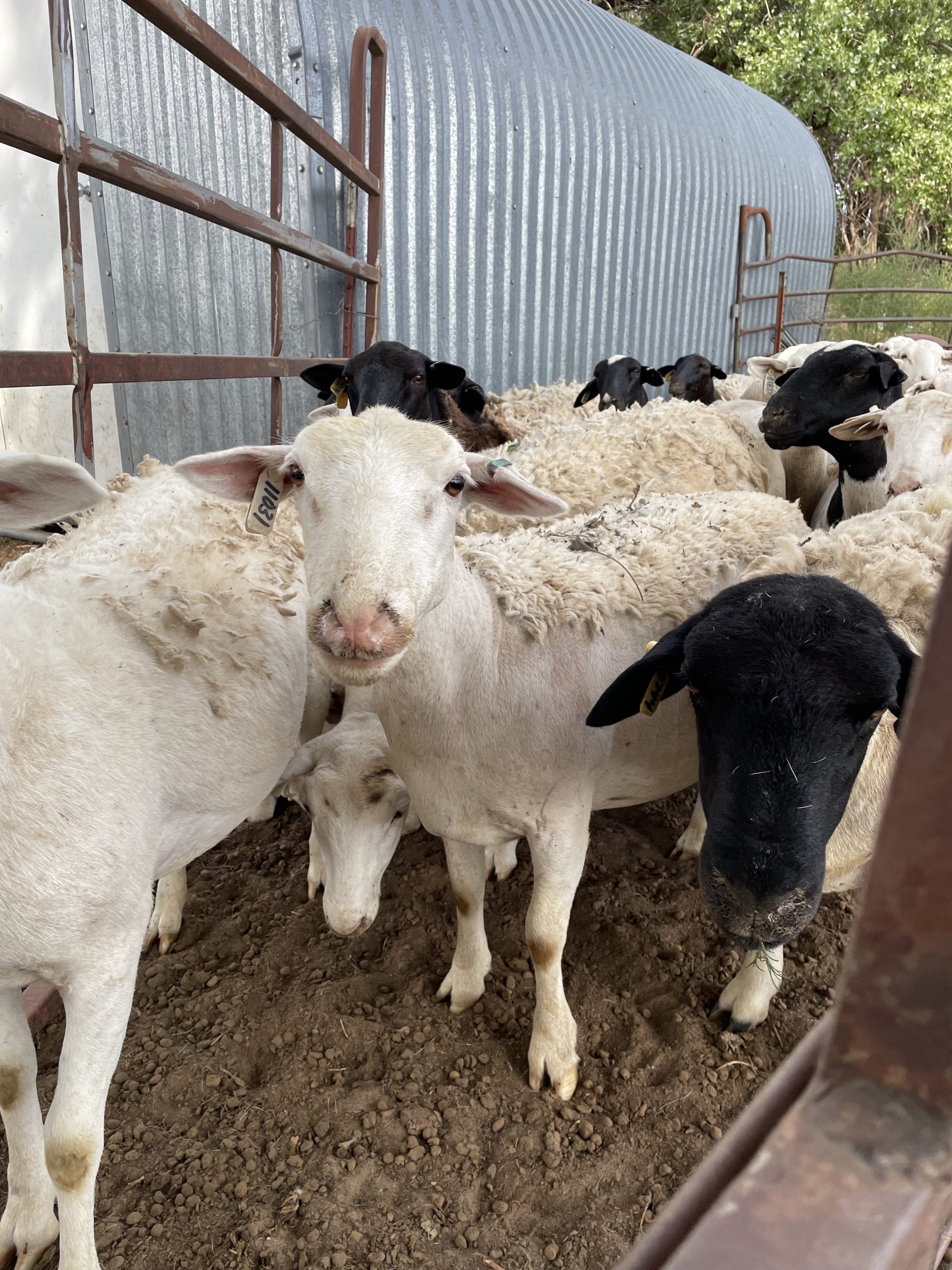
A recent case of scrapie detected in an Oregon sheep has reset the nation’s timeline for eradicating the fatal livestock disease, but a Kansas State University sheep and goat specialist said the discovery also serves as a reminder of the importance of animal identification and biosecurity for sheep and goat producers.
K-State Extension small ruminant specialist Kelsey Bentley said Kansas has not reported a case of scrapie in more than 10 years. Until the discovery in Oregon in late July, the country’s last confirmed case of scrapie was in 2021.
“Kansas producers should not be alarmed by this case,” Bentley said. “It was found July 31 in Oregon, and we have not had any cases here in Kansas probably within the last 10 years.”
Scrapie is a fatal neurological disease affecting sheep and goats. It is caused by a prion, an abnormally folded protein that damages the nervous system. Unlike bovine spongiform encephalopathy, commonly known as mad cow disease, there is no evidence that classical scrapie can infect humans.
Bentley said decades of work by the U.S. Department of Agriculture’s Animal and Plant Health Inspection Service, along with improved genetic testing and surveillance, have dramatically reduced the disease.
“In the 1950s and ’60s, scrapie was wiping out complete flocks,” she said. “They were having to do total depopulation of flocks and herds.”
Today, producers can use genetic selection to breed animals with greater resistance to classical scrapie, making infections increasingly rare. Even so, Bentley said maintaining traceability remains critical.
“It’s still important for us to keep accurate records, maintain good biosecurity and ensure we’re using appropriate identification and traceability,” she said.
A cornerstone of that effort is the National Scrapie Eradication Program, which requires official identification for sheep and goats moving through commercial channels. Producers can obtain a premises identification number, or premise ID, and order official scrapie ear tags through the USDA.
Bentley said producers with closed flocks technically do not need to tag animals until they leave the farm for breeding sales, auction markets or processing. Still, she recommends tagging lambs and kids shortly after birth.
“I think we should have tagging done at lambing and kidding,” Bentley said. “That way we can better track that individual throughout its lifespan.”
Early identification also improves recordkeeping, allowing producers to monitor growth, reproductive performance and parasite resistance while strengthening disease traceability.
The Oregon case means the United States must restart the seven-year countdown required before the disease can be declared eradicated.
“There’s been some groaning from producers because it does reset that timeline for us,” Bentley said.
She said the lengthy waiting period reflects the unusual nature of prion diseases. Unlike bacterial or viral infections, prions persist in the environment for years, and there is no vaccine or treatment. Animals also may carry the disease long before showing symptoms.
“The seven years seems extreme,” Bentley said, “but prion diseases can linger, and they also take time to rear their ugly head.”
Bentley encouraged Kansas producers who have not yet registered for a premise ID to enroll in the National Scrapie Eradication Program and order official tags before marketing animals.
“There is a fee associated with those tags,” she said. “But if you don’t have them, the sale barn is going to charge you for a tag anyway, and it’s often more expensive. Why wouldn’t you go ahead and register your flock, have premise IDs on hand, and be ready when it’s time to market your lambs or goats?”
Bentley added that the identification system also strengthens the livestock industry’s response to other animal health threats by improving traceability and protecting the long-term health of the nation’s sheep and goat populations.
More information on livestock production is available at local K-State Extension offices in Kansas.
PHOTO: Sheep. (Journal stock photo by Jennifer Theurer.)