3-ton honey drop to help KC nonprofits
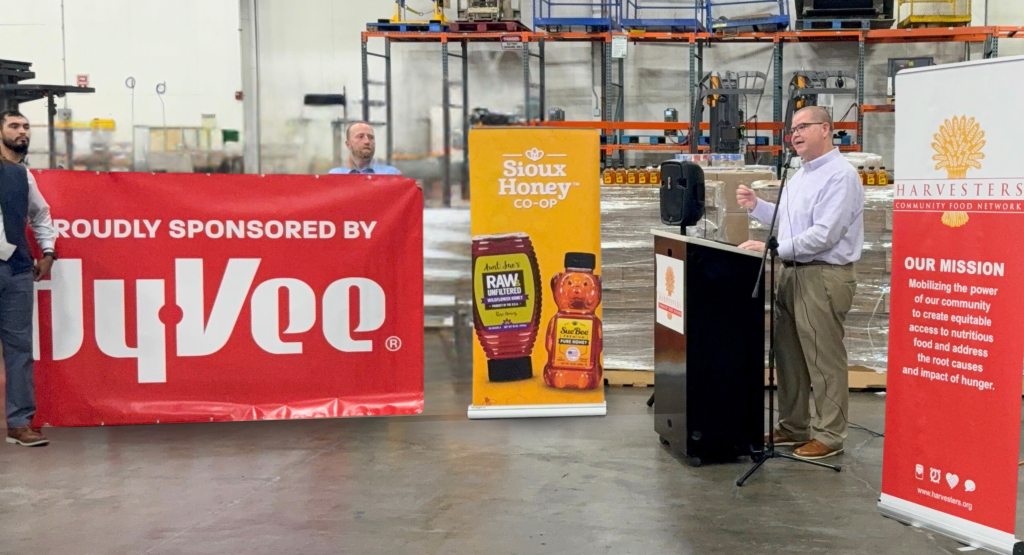
Sioux Honey Co-op and Hy-Vee grocery stores delivered a weighty donation of honey to two Kansas City-area non-profits on Sept. 24—ones that tipped the scales at 6,400-plus pounds. That’s more than twice the weight of the entire Kansas City Chiefs defensive roster, a fitting comparison for a team effort that is tackling hunger head-on.
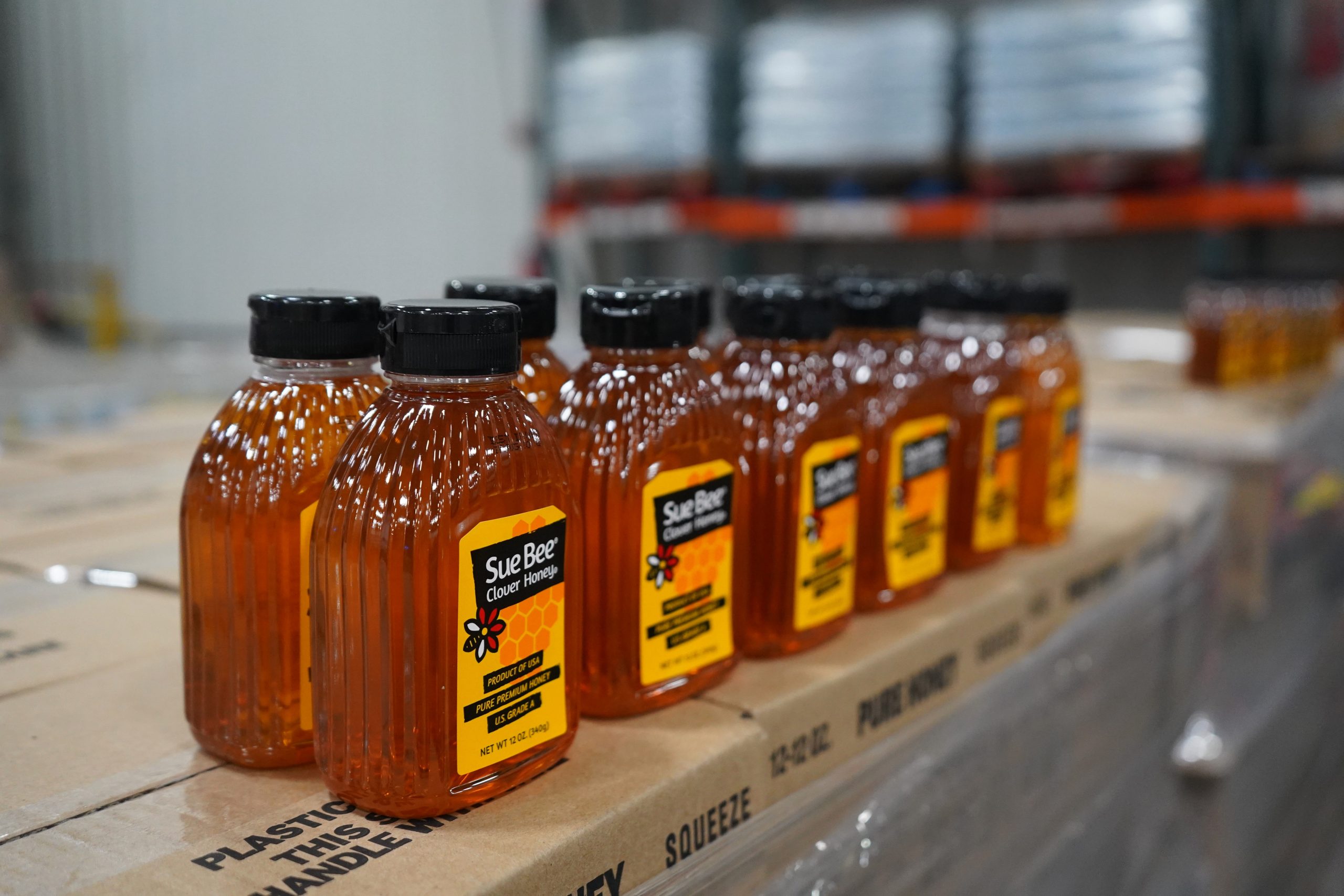
For Harvesters Community Food Network, it was the largest single donation of honey ever received—three pallets with 540 cases holding 6,480 bottles of Sue Bee honey. Add in another 2,160 bottles of Sue Bee that were delivered to the Starfish Project Foundation, a non-profit in Olathe, Kansas, and the total one-day honey haul for the Kansas City area comes in at over 3 tons—or, about the same weight as 29.4 million honeybees.
And the delivery during National Honey Month—when beekeepers across the country finish their annual harvest and celebrate the golden bounty before preparing their hives for winter—makes this week’s delivery to Harvesters a genuine harvesters hootenanny.
“We’re always thrilled to receive honey because it checks so many boxes for the families we serve,” said Stephen Davis, president and CEO of Harvesters. “It’s nutritious, has natural health benefits and it’s one of those coveted pantry items that is in high demand. To have Sioux Honey and Hy-Vee step up with this kind of donation ensures more families in our community will have access to both nourishment and comfort.”
A group effort
Sioux Honey, powered by 175-plus beekeeper families across the U.S., partnered with Des Moines, Iowa-based Hy-Vee, which operates 570 stores across nine Midwestern states, to make this show of support possible. Together, these Midwest-rooted companies are helping ease food insecurity in Missouri and northeastern Kansas.
The donation was part of Sioux Honey’s ongoing “Share Sweetness” effort, which has included making several large donations of honey to food banks and non-profits across the United States. The 104-year-old co-op harvested about 25 to 30 million pounds of honey last year, which was nearly one-fourth of the U.S. total (134 million pounds of honey harvested by commercial beekeepers in 2024, according to the U.S. Department of Agriculture).
“When those five Sioux Honey beekeepers decided to form a co-op over a hundred years ago, they did so knowing that they could make a bigger impact if they worked as one,” said Aimee Sandman, director of growth and community impact at Sioux Honey. “That conviction hasn’t faded. It’s alive in efforts like ‘Share Sweetness,’ where every bottle of honey is more than just a product – it’s the harvest of our beekeeper families and a testament to the generosity of partners who help us extend that sweetness to communities in need.”
John Lewis, store director at Hy-Vee’s Overland Park location, said, “At Hy-Vee, giving back is part of our DNA—it’s what we do in every community we serve. Partnering with Sioux Honey just makes sense because they share that same tradition of generosity and service. Together, we’re proud to make a difference here in Kansas City and beyond.”
Honey never spoils
For the Starfish Project, which redirects food and essentials to families in need, honey is a perfect partner in the fight against food insecurity: it doesn’t expire, doesn’t need refrigeration and remains as versatile as the day it was bottled. Need proof? The oldest known example of preserved honey was unearthed in Georgia in the Borjomi region near the village of Sakire, in the tomb of a noblewoman. The ceramic vessels containing remnants of honey dated back approximately 5,500 years.
“It’s just one ingredient and it never goes bad,” said Suzanne Phillips, food program manager at the Starfish Project. “It doesn’t need to be refrigerated, it’s endlessly versatile in the kitchen and a spoonful helps soothe kiddos’ coughs and sore throats during the winter. Our goal at Starfish Project is to make sure food never goes to waste, and honey—with its remarkable shelf life—it can go a long way in nourishing our neighbors in need.”
Sweet stats at a glance
The donation total was 8,640 bottles (four pallets, 720 cases of Sue Bee honey), which is enough honey to:
- Fill 2,224 pairs (4,448 shoes) of Travis Kelce’s size-15 cleats—a sticky fit for KC’s favorite tight end.
- Equal the weight (about 3.6 tons) to TWO full-grown adult hippopotamuses.
- Spread a honey glaze that could – with a very thin layer – coat the field at Arrowhead Stadium.
Founded in 1921 by five beekeepers near Sioux City, Iowa, Sioux Honey began with a simple cooperative model of sharing equipment, marketing and processing facilities. Today, the co-op has grown to more than 175 beekeeper families nationwide, some multigenerational and others just beginning their honey journey. Sioux Honey knows each member by name and to produce pure, quality honey trusted for more than a century. Sioux Honey’s Sue Bee and Aunt Sue’s were also the first honey brands to earn the U.S. Farmed certification, underscoring the co-op’s commitment to domestic farming and sustainable practices. For additional information, visit siouxhoney.com.