Coffee science: Expert answers about your daily brew

Specialist explains coffee’s global impact, answers common questions about this popular drink
Coffee is more than a morning pick-me-up. It’s a global industry that shapes economies and everyday culture. At the Center for Coffee Research and Education, scientists study every stage of coffee — from how it’s grown on farms to the drink in your cup.
Eric Brenner, assistant director of the center housed within Texas A&M AgriLife Research’s Norman Borlaug Institute for International Agriculture, works with growers worldwide to improve coffee quality and resilience. He also teaches the “Introduction to Coffee Science” course in the Texas A&M College of Agriculture and Life Sciences Department of Food Science and Technology.
Here, Brenner answers questions about this popular beverage.
Why does Texas A&M study coffee?
Coffee drives change around the globe. It provides income for millions of farmers and supports entire economies worldwide. At the Borlaug Institute, experts strengthen those economies by studying and improving coffee from the mountaintop farms where coffee is grown to the tables where it’s enjoyed.
Texas A&M AgriLife has been involved in national and international coffee projects for more than 20 years. In Rwanda, experts helped rebuild the country’s coffee industry after the devastation of the 1994 civil war and genocide. The project helped improve coffee quality, connected producers to specialty markets and restored economic opportunity.
Today, this work continues globally. Our experts help farmers adopt sustainable practices and boost profits. These combined efforts lead to stronger local economies and better coffee for consumers.
What’s the difference between specialty coffee and commercial coffee?
The difference between commercial and specialty coffee comes down to quality standards and the number of defects allowed in the green coffee – unroasted beans. Commercial coffee is mostly used in blends that are consumed with sugar and cream to mask flaws and bitterness. Specialty coffee, by contrast, has stricter grading and quality criteria, offering a richer experience where drinkers can enjoy unique flavors and subtle nuances not found in commercial coffees. It is very similar to the difference between box wine and fine wine.
The difference comes from where and how coffee beans are grown. In coffee, terroir – the unique mix of soil, elevation, climate and farming practices — plays a major role in shaping flavor. Beyond the environment, processing methods and the work farmers put into selecting the best quality cherries also determine whether those distinctive characteristics make it into the final cup.
Together, these factors create unique aromas, acidity, body and other important attributes that set one coffee apart from another.
What is the difference between arabica and robusta coffee beans?
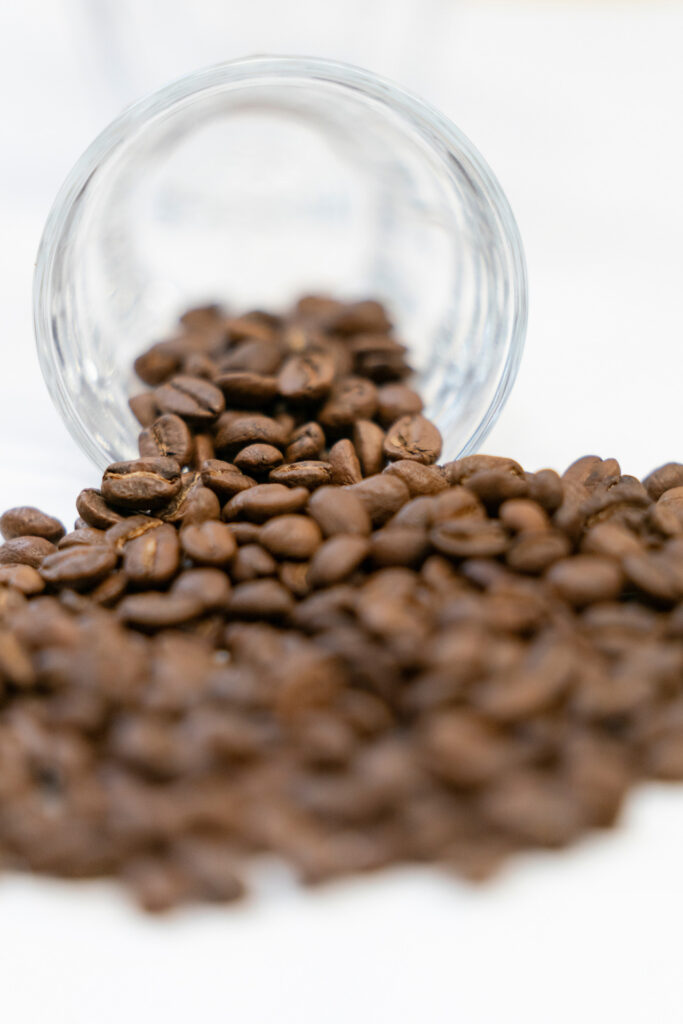
Arabica and robusta are the two most widely grown coffee species, each with dozens of varieties that give rise to different flavors and qualities in the cup.
Flavor differences aren’t always obvious, especially in dark roasts or milk drinks. However, when tasted black, arabica typically shows higher acidity and aromatic complexity, compared to robusta, which trends toward lower acidity, heavier body and stronger bitterness.
For growers, robusta plants grow at lower elevations, tend to be more resilient and produce much higher yields than arabica plants.
How much caffeine is in coffee?
The caffeine level depends on the species of coffee, not the roast. For example, robusta coffee beans have almost twice as much caffeine as arabica.
Here’s about how much caffeine you’ll find in coffee beans and brewed coffee:
- Arabica beans — 1.9 milligrams of caffeine per bean.
- Robusta beans — 2.9 milligrams of caffeine per bean.
- Brewed coffee — 70-140 milligrams of caffeine per cup.
- Espresso shot — 63 milligrams of caffeine, less than a standard cup of coffee.
Is coffee bad for you?
When consumed in moderation and without added sugars or syrups, black coffee has been linked in many peer-reviewed studies to positive health benefits. Some research shows coffee contains antioxidants and anti-inflammatory qualities.
However, it is essential to remember that people should always consult with their health care provider to determine what is best for them.
TOP PHOTO: Coffee pouring to cup surrounded by coffee beans (Photo: iStock – iWichy)