Change in seasons? There’s still work in the garden
K-State expert shares important chores in the garden for winter, spring
With a change in seasons, Kansas State University horticulture expert Cynthia Domenghini said there are some important factors to consider when taking care of the home garden.
Knotweed Control
“Knotweed is an annual that germinates in late February or early March,” Domenghini said. “So a pre-emergence herbicide can be used in the late fall.”
The beginning of November is the ideal time to apply herbicide. For pre-emergence knotweed, Domenghini recommends brand names Scotts Halts, Barricade, Dimension or XL. For post-emergence, Trimec, Weed-Out, Weed-B-Gon or Weed Free Zone can be applied in spring.
If seeding in the spring, another option is tilling, which will adequately control knotweed without the addition of an herbicide.
Compost Pile
Fallen leaves and other materials are abundant for the compost pile. It is vital to keep the compost pile moist in order for the materials to efficiently decompose.
“The compost needs to be kept moist so that the bacteria and fungi can break down raw materials,” Domenghini said.
During times without a recent rain, a sprinkler can be used to soak through the pile. After wetting, the pile can be allowed to drain. Aim for the entire pile to be moist but not waterlogged. Edges can dry out quicker than the rest of the pile and can be lightly sprinkled to be moistened again.
For more information on composting, the K-State Department of Horticulture provides an instructional video or series of publications.
Domenghini and her colleagues in K-State’s Department of Horticulture and Natural Resources produce a weekly Horticulture Newsletter with tips for maintaining home landscapes and gardens.
Interested persons can subscribe to the newsletter, as well as send their garden and yard-related questions to [email protected], or contact your local K-State Extension office.
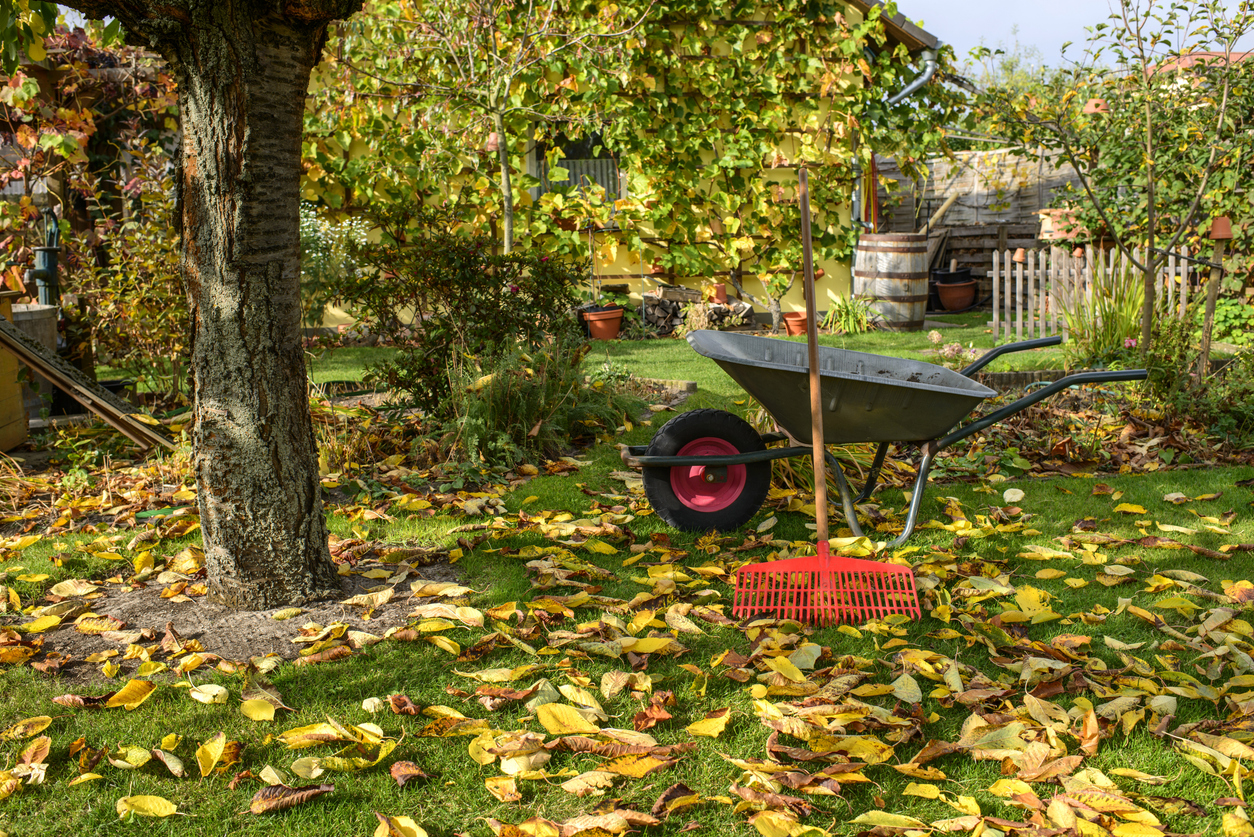
PHOTO: Autumn gardening. (iStock │ #1057083186 – schulzie)