
Tyson to close Lexington plant
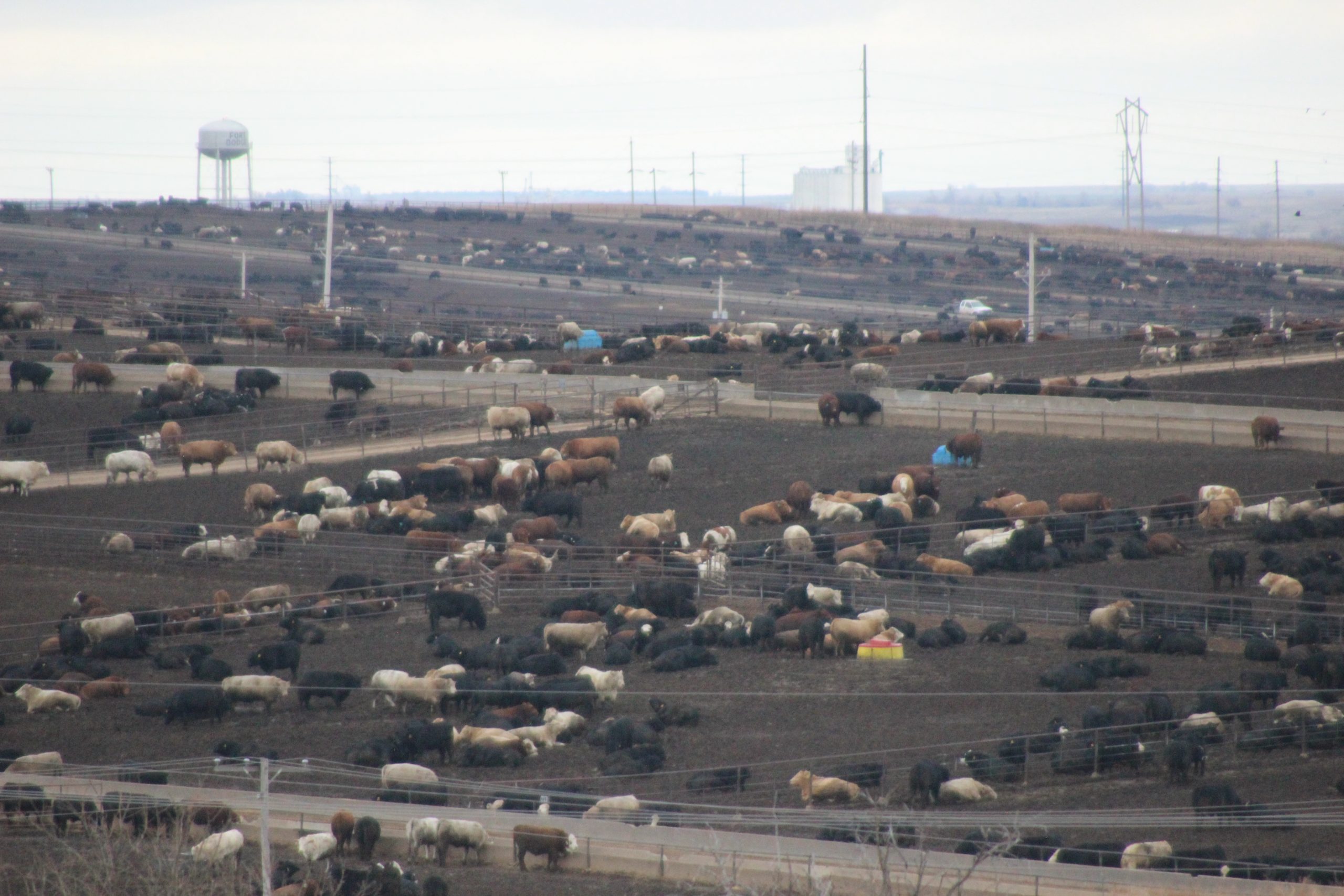
Springdale, Arkansas-based Tyson Foods announced it will close its beef plant operation in Lexington, Nebraska, in late January. The company announced the decision Nov. 21. The plant employs about 3,200 workers in a city of about 11,340 people.
The plant had been operating since 1990. The company said it was part of a realignment that also streamlined operations into a single, full-capacity shift in Amarillo, Texas. That plant will see a job reduction, too.
Derrell Peel, Oklahoma State University Extension livestock marketing specialist, said Tyson’s decision will reduce industry slaughter capacity by roughly 7,000 to 8,000 head per day—depending on how the company manages a one-shift plant. The reduction represents roughly 7.5 to 9% of total industry slaughter capacity.
Nebraskan Buck Wehrbein, who is president of the National Cattlemen’s Beef Association, said while the initial news was a shocker, particularly for its impact on his state, from a national perspective it was not a surprise.

A few months ago, he was in southern Texas to meet with Secretary Agriculture Brooke Rollins about the strategy to deal with New World screwworm, which included closing the border to Mexico livestock. Cattle from Mexico are a source for feedlots in the Southern Plains.
Wehrbein has a feed yard in Mead, Nebraska, and also has been involved in the past with managing Texas feedlots.
He remembers telling the secretary there could be additional economic fallout at some point because excess capacity was occurring when the nation’s cattle herd was at a historical low.
“This could be much bigger if we lost a packing plant,” he recalled saying then. “You could see it happen at the national level, but no one could have known when or where.”
Difficult economics
Glynn Tonsor, a professor in agricultural economics at Kansas State University, said he could not have predicted the Nov. 21 announcement about Lexington, but added that it was not a surprise for him and other observers who watch the marketplace.
“The reduction in physical operating capacity has become increasingly likely within the broader national marketplace,” Tonsor said. “This reflects margin pressure that follows from structural misalignment of too much physical capacity (from a national perspective) relative to cattle supplies.

“Also keep in mind that building and operating facilities is a multi-decade assessment—it reflects truly long-term realities that build over time (both backward-looking and forward-looking). To that end, the notably escalated challenges around availability of labor as well as volatile international trade environment of 2025 (which underpins the ability to maximize value of each harvested steer and heifer) makes this announcement less surprising.”
Peel said many observers have been concerned that a reduction in capacity was a possibility. “I didn’t think it would be quite this soon. The industry and ranchers have been concerned for a while although the timing was a surprise.”
With no hint that the nation’s cattle herd was going to expand any time soon, Peel said packers have been facing losses for several years, and ranchers know that.
Excess capacity
Tonsor said all packers are facing the challenge of the U.S. having too much capacity, which was extended as a challenge in recent years via new capacity additions, relative to cattle supplies. That observation indeed varies regionally but holds in general leading to profit margin pressure on the segment.
Tyson had recently announced it had $426 million in adjusted operating losses in its beef operations for the past 12 months.
The philosophical question may have been how long packers can hold out and which ones might be the most vulnerable, Peel said, adding no meatpacking company wants to close a plant.

“If you are in the business for the long term you don’t want to give up market share because it is too hard to get back.”
Livestock producers are rightfully concerned when a plant closes and have asked, “What are the odds we could lose infrastructure?”
His answer was it all depended on how long packers could withstand the losses, and they had an eye on their fellow competitors to see how they would react.
“The cowherd will get smaller before it gets bigger, and this will give a measure of relief for them,” Peel said. “That being said, now there is less capacity as they continue to scramble for less numbers. Tyson is taking the hit for the team.”
Price implications
For now, Peel does not expect any impact on cattle prices.
“The market has been up, but really jumpy too,” he said, part of which can be attributed to actions by the Trump administration particularly in the past couple of months.
Producers should know that the fundamentals are still in place for a strong market, he said.
“We expect prices to go up in 2026,” Peel said. “Nothing has really changed. Stay the course, manage your business and your costs and don’t do anything dramatically different.”
For producers located near the operations closing or reducing operations, this will have an adverse impact, Tonsor said.
“The realized price for their cattle will decline as now said cattle will incur larger transportation costs to be processed,” he said. “On the other hand, some farmers and ranchers who may be more aligned with other packing operations via direct or indirect ownership arrangements may benefit as this latest announcement improves the viability of other, not directly involved packing-processing facilities.”
Other major facilities in western Plains
The plant will stay open to process cattle to Jan. 20 and that can give some workers an opportunity to look elsewhere for employment, and there is a JBS plant in Grand Island and Sustainable Beef opened this spring in North Platte, Wehrbein said.
In nearby Colorado, Greeley has a JBS plant and Fort Morgan has a Cargill plant. Elsewhere in the western Plains there is a Tyson plant in Holcomb, Kansas, and southwest Kansas has plants in Liberal and Dodge City.
There are Tyson workers who won’t be able to relocate for any number of reasons, and that is tough, adding for those families it is a gut-wrenching time, Wehrbein said.
For the beef industry has dealt with a lot of volatility in the past few months and futures have fluctuated to news about the NWS, tariff policies, comments from President Donald Trump, and now a packing plant is closing.
“Hopefully markets will settle down, and we can get back into a normal routine,” Wehrbein said, adding that even with the ups-and-downs, consumers continue to choose beef.
Tonsor said it is a reminder about the complexities of the cattle market.
“If we let markets work, they send important signals,” he said. “Consumers have been sending clear and strong signals they value and want more beef leading to higher beef prices and hence cattle prices. Similarly, inner-supply chain relations of relative capacity (physical packing vs. animal count) send market signals in the form of profit margin pressure that ultimately underlies tough decisions such as what Tyson has made here.”
What’s ahead for Lexington?
Ernie Goss, the Jack MacAllister chair in regional economics at Creighton University in Omaha, Nebraska, who studies the mid-American economy, said Tyson is realigning its operations and processes and it’s not the first time the state has seen a major company close its operation.
At one time the Tyson plant in Lexington was a farm equipment manufacturing plant that was repurposed.

The key for the local, regional, state, entities—private and public—is to quickly work together to retain as many employees as possible. Sustainable Beef in North Platte, has close proximity and if that operation expands, that could open some opportunities. Today, with the broadband capabilities and training, it is possible for workers to create small businesses or find jobs in the region. That scenario did not exist 15 to 20 years ago, he added.
Nearby community colleges can be crucial in helping to retrain workers, and that will take monies directed by state and federal policymakers, Goss said.
Tyson wants to see employees find new jobs and if it sells the plant, Lexington is on Interstate Highway 80, which makes it an attractive location, he said.
Dave Bergmeier can be reached at 620-227-1822 or [email protected].



