
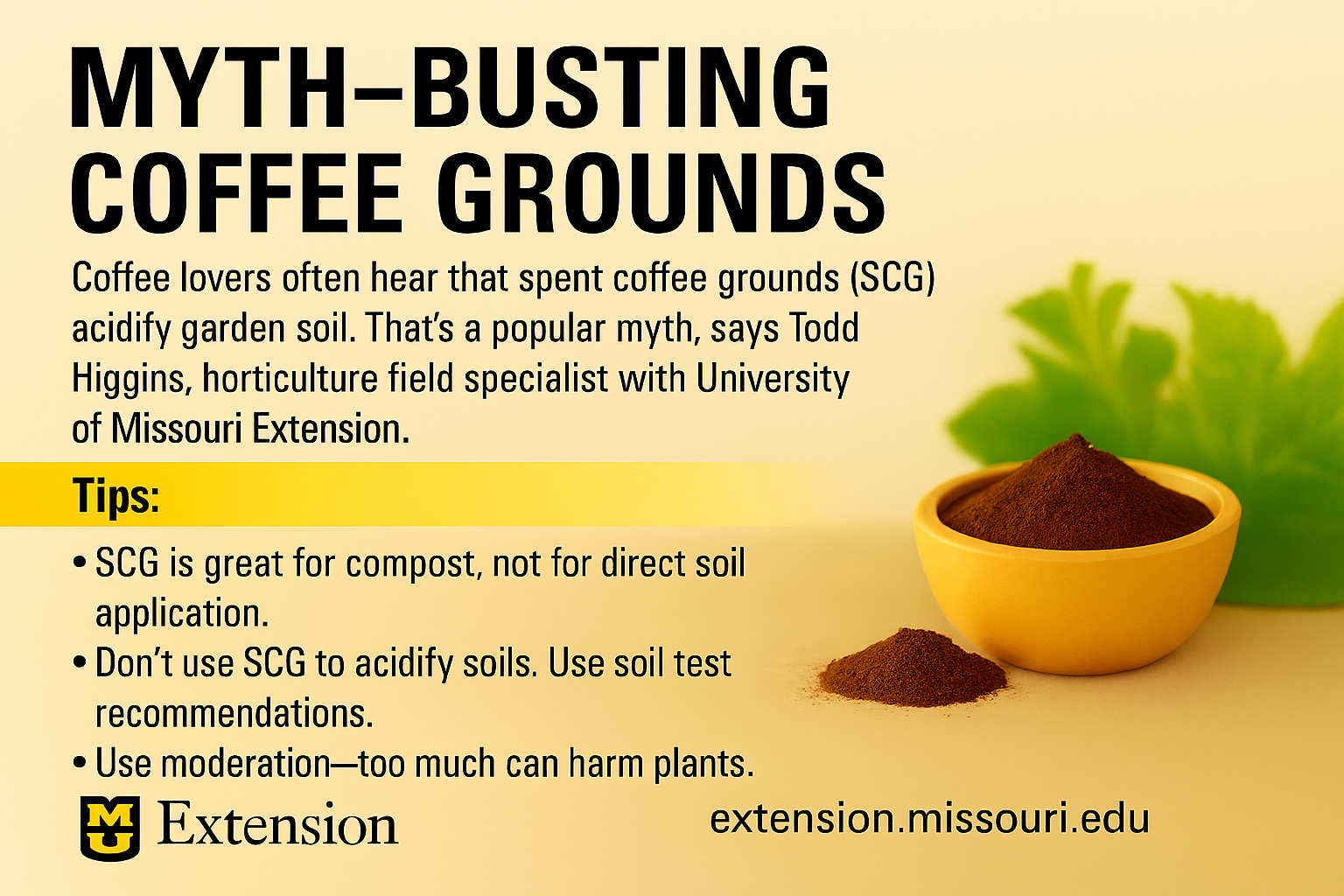
Myths and facts about using coffee grounds in the garden.
Do spent grounds from your morning cup of joe help your plants grow?
There is much on social media about benefit of using spent coffee grounds (SCG) to boost plant growth, but research is unclear about the benefits, says University of Missouri Extension horticulturist Todd Higgins.
In fact, SCG can be bad for acid-loving plants such as blueberries and azaleas since it can raise soil pH. SCG also can release toxins that affect nearby plants, says Higgins.
Most plants thrive in slightly acidic to neutral pH soil, between 6.0 and 7.0 on a scale of 0-14, although the optimal range varies by species. Missouri soils tend to be naturally acidic, and large amounts of SCG can reduce the acidity of our soils over time.
However, without a soil test and knowing the pH of the soil, coffee grounds may do more harm than good for acid-loving plants. So, Higgins recommends a soil test before you apply SCG.
More value as compost
SCG add organic matter and has a favorable carbon-to-nitrogen ratio (24:1), making it ideal for composting.
Vermicomposting, or worm composting, is particularly effective in breaking down SCG, detoxifying the harmful chemicals (such as caffeine) and releasing nutrients. Mix this composted material with soils to improve tilth and organic matter content, says Higgins.
He urges caution when applying SCG directly to the soil. Apply a thin layer (1 inch or less) since a thicker layer can act as a crusting barrier that blocks water and air from reaching plant roots. Also, too much SCG can tie up nitrogen temporarily and suppress germination and growth.
Grounds and brew vary in acidity
Acidity of the brew and its grounds are different.
The coffee in your cup is moderately acidic, with a pH ranging from 4.7 to 5.3. Grounds are less acidic. The roasting process forms organic acids in the bean. These acids dissolve as water percolates through the grounds. The brewing process leaches many of the acidic compounds from the coffee grounds, leaving the SCG with a slightly basic pH between 7 and 8. The longer the grounds age, the higher the pH of the SCG .
Many factors influence the acidity of the brew and SCG:
- Country of origin of the beans, climate, growing altitude, farming practices and soil nutrients contribute to flavor and acidic content.
- Roasting and brewing temperature. Acids and sugars break down when raw coffee beans are exposed to heat. Generally, the lighter the roast, the brighter and more acidic the cup. Darker roasts have less acid.
- Cold brew vs. hot brew. SCG from cold-brewed coffee are less acidic than those from hot-brewed coffee. Also, finer ground coffee beans produce more acid because more surface area of the bean is exposed.
The bottom line is that while coffee is acidic, SCG are nearly neutral. SCG offer a variety of plant nutrients, although none in large amounts. The nitrogen content of SCG is just 2%, and adding it to garden soil directly from the coffee maker may tie up nitrogen in the soil as soil organisms work to decompose them.
Higgins says there are four key things to remember before you dump your grounds:
- SCG is great for compost, not for direct soil application.
- Avoid using SCG to acidify soil.
- Use in moderation—too much can harm plants.
- Have soil tested before applying any amendments.
A soil test is an inexpensive way to establish a benchmark of nutrient needs for accurate amending. See MU Extension’s Soil and Testing Laboratory website.
Your local MU Extension horticultural professional also can help develop a plan for the right nutrients in the right amount and at the right time for your soil.



