In Hill County, Texas, John and Natasha Sawyer, the fourth generation of the Sawyer family, have embraced a new era of farming. Transitioning from conventional methods to sustainable practices, they’ve adapted to the evolving landscape and welcomed a unique new customer, a local whiskey company. Today, their fields flourish with corn, soft wheat, barley, and rye, contributing to the award-winning spirits their consumer is renowned for.
“John’s unique farming operation with this particular grower made us look at what he’s doing a little differently,” says Beau Brooks, a Resource Team Leader with the USDA Natural Resources Conservation Service (NRCS).
To maintain their 3,000 acres of soil in a region that fluctuates between dry and wet conditions, they’ve been working with the NRCS to implement sustainable conservation practices, like cover crops. They’re also exploring other available programs to fit their changing needs and goals.
Family Dynamics
Sawyer Farms has been in the family for nearly 100 years. Some additional land, previously owned by Sawyer’s great uncle, has already marked a century in the family.
“I’m the fourth generation to operate the farm. My great-grandparents, grandparents, and parents have all worked this land. Now it’s my wife and me,” Sawyer says. “My son has been working with me for the last two years, so we’re hoping to soon call it a fifth-generation farm.”
John and Natasha are partners when it comes to the work on the farm. Natasha, who was in banking when they met, continues to manage a business outside the farm part-time and handles the farm’s bookkeeping and taxes. “There’s lots of paperwork, and we have to keep each other in line. It takes two to keep all the paperwork right because there’s always something due,” Sawyer says.
Their son, Walker, has followed a similar path to his father, attending college and working away from home before returning to the farm. It’s an approach John learned from his father. “My dad told me to go get a job where you call somebody else boss, not just ‘dad,’ John said. “So, I told my son and daughter the same thing.”
Walker is now back and learning the ropes of the family business, while their daughter, Alison, who prefers her current career off the farm, still finds time to manage Sawyer Farm’s social media presence and promotional gear.
Adapting to Change
Like many in modern day agriculture, Sawyer Farms has evolved over the years. “Cotton was king in the county back in the ’50s,” Sawyer explains. Now, though, they’ve transitioned from cotton to grains and then to corn, maintaining small grains in rotation.
Over the past decade, they’ve developed a relationship with a local whiskey distillery in Fort Worth. “We’ve become a lot more focused on identity preservation and the quality of our grains, becoming customer-oriented to deliver a product they like and that wins awards for their whiskey,” Sawyer says.
In fact, the local whiskey company has won several awards for their products. “We are proud of our relationship and partnership with them,” Sawyer says. “When they won their first gold medal for bourbon that we had put everything in the bottle for ‘em—I was pretty proud we could produce a quality product that was doing what they needed it to do.”
A Lifelong NRCS Partnership
Sawyer has been working with NRCS since he started farming on his own in the early 1980s. His father instilled in him the importance of conservation. “My dad was one of the original board members for the Hill County-Blackland Soil and Water Conservation District Board in the ’60s and ’70s,” Sawyer says. He recalls attending board meetings growing up.
“I’ve worked with four generations of district directors at least,” Sawyer says. After his dad passed in 1999, Sawyer got onto the committee himself in 2000, serving as chairman at one point, and leaving in 2018.
Over the years, Sawyer has implemented numerous NRCS practices, including building grass waterways, structures, ponds, and terraces. “We’ve done everything there is except plant grass,” he says.
More recently, when their local whiskey partner requested a more sustainable product, Sawyer turned to NRCS for guidance. NRCS District Conservationist, Nicholas Belsher has been helping him transition to cover crops and reduced tillage to provide the sustainable product his consumer wanted. “We have a producer willing to switch to sustainable agriculture and practices,” Belsher says. “He realizes he’s been doing something the same way for years and is open to switching to more sustainable methods to improve his production.”
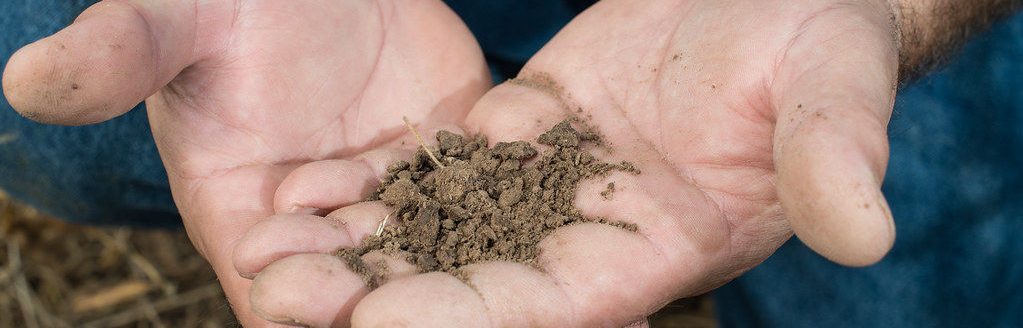
While cover cropping and reduced tillage are relatively new practices at Sawyer Farms, they’ve implemented various sustainable practices for years, including grassed waterways, terraces, pasture planting, technical assistance with pest management, nutrient management, and grade structure. These practices help protect the soil from erosion, retain organic matter, and promote soil and microbial health.
Diversity for a Unique Reason
“The whole reason we’re growing barley is to satisfy the requirements of our whiskey partner,” Sawyer says. After researching different crops, he converted from hard red wheat to soft red wheat and established a relationship with a local malt house. The whiskey company has the capacity to make about 20,000 barrels of whiskey, and Sawyer Farms responds in kind, supplying the grain required.
“Whatever it takes is what we deliver,” Sawyer says. “We bring it to them, and they distill it right there onsite and age it.”
To produce the best crops possible, Sawyer is collaborating with Belsher to ensure his soil is up to the task. Practices such as cover cropping, reduced tillage, and no-till are helping Sawyer Farms adopt more sustainable practices.
“I think we’re at a point where we’re finally starting to see how sustainable practices can help improve production on their farm and how it improves their overall operations in general and can keep them moving forward,” Belsher says. “He’s got a unique operation here that’s providing to a unique customer. It’s interesting to see that relationship between the farmer, the person who’s producing the product, all the way to the consumer. You see all three working together and creating a product to put out on the market that is a more sustainable product.”
Growing into the Future
Conserving the soil remains Sawyer’s top goal. He is determined to continue adapting and improving its health despite challenges from uncertain weather conditions, pests, or economic factors.
“Obviously, we’ve been here a long time, so taking care of the land is extremely important,” Sawyer says. “You’ve got to conserve your resources and not be overly flamboyant with expenses.”
Sawyer Farms, with its rich history and commitment to sustainable farming practices, exemplifies the balance between tradition and innovation, ensuring a prosperous future for the Sawyer family and their land.
Through this, Sawyer intends to keep NRCS as expert guides along the way. “We continue to work with NRCS and improve the condition of our soil, hoping to expand the farm and keep it thriving for future generations.”
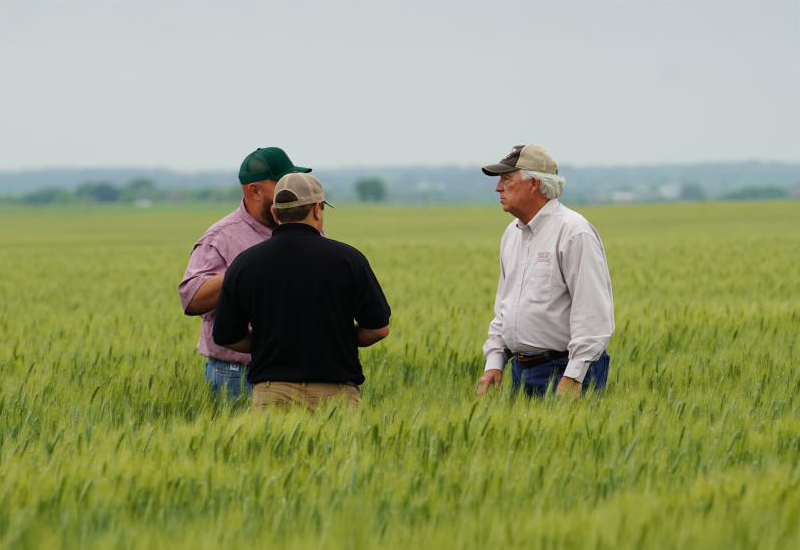
PHOTO: In Hill County Texas, John and Natasha Sawyer have embraced a new era of farming. (Adele Swearingen – USDA Natural Resources Conservation Service)