
Consumer trends panel discusses beef at KLA Convention
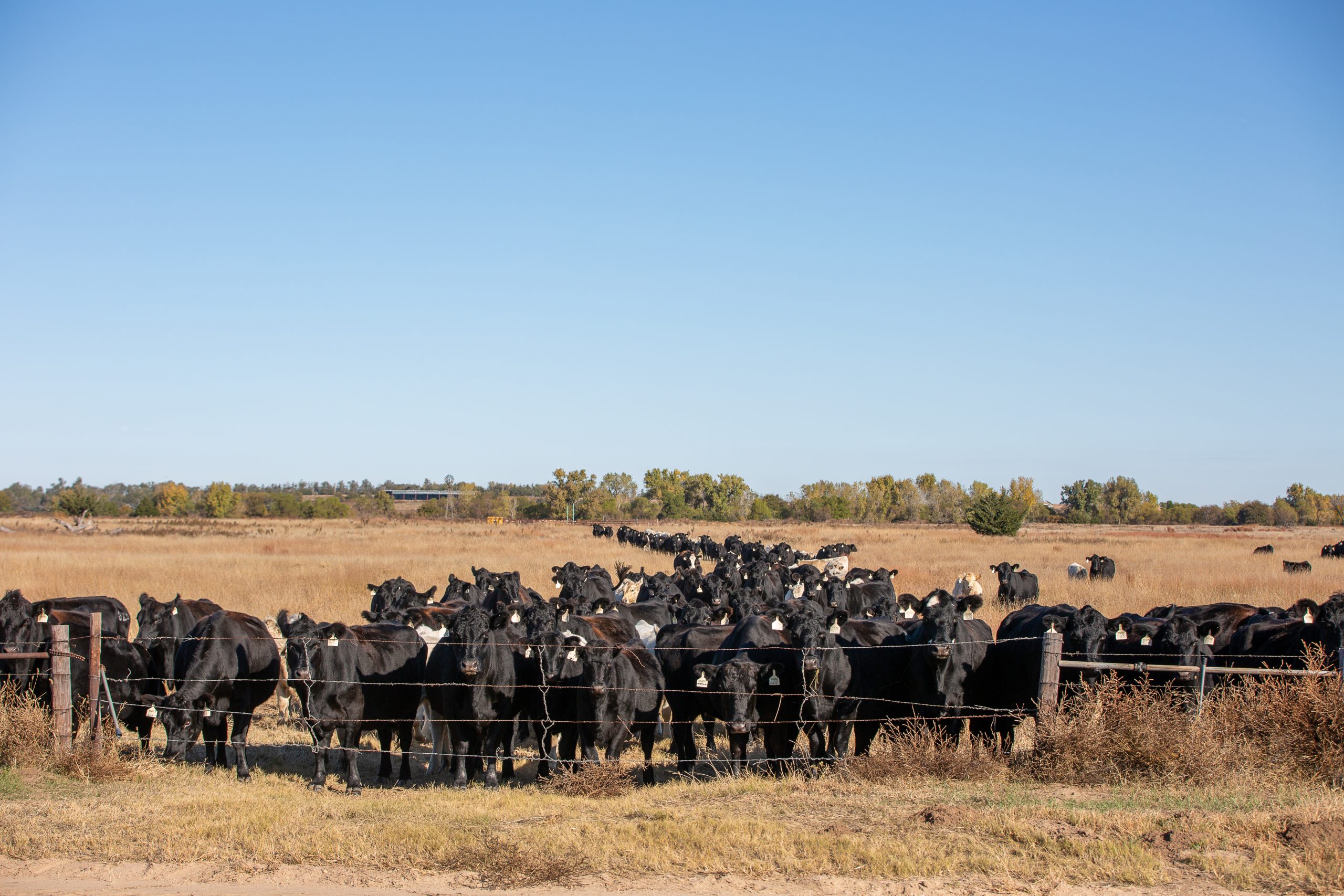
Three leading experts in meat science, agricultural economics and human nutrition spoke during the consumer trends panel at the Kansas Livestock Association Convention in Manhattan during late November.
Panelists were Shalene McNeill, executive director of nutrition science, health and wellness for the National Cattlemen’s Beef Association; Travis O’Quinn, meat science professor in the department of animal sciences and industry at Kansas State University; and Ted Schroeder, professor in the department of agricultural economics at K-State.
McNeill said believes in the positive health benefits of eating beef.
“In fact, I believe beef is a superfood,” she said. “I don’t think that there are very many foods that offer the same nutritional package that beef does, and especially when you factor in the great taste that beef has.”
Beef can play a foundational role in human nutrition and from a beef industry business perspective it benefits too.
“It’s also important to point out that nutrition is a bona fide demand driver for beef,” she said. “It helps our beef business when we can help consumers feel better about the nutritional attributes of beef.”
McNeill said during the course of her career she’s seen the great strides that have been made to help consumers recognize the nutritional value of beef.
According to McNeill, consumers’ interest in nutrition is at an all-time high. Plus, there are movements to make America healthy again. Parents want less processed food for their children.
With change and disruption in the food and nutrition realm, it’s going to create challenges and opportunities, McNeill said. New dietary guidelines have already been released, prioritizing protein and changing limits on saturated fat. Saturated fat is one thing consumers have against beef—saying it has too much saturated fat and might contribute to heart disease.
But before getting too excited, McNeill warns producers have to be real with themselves and acknowledge there are some corners of the Make America Health Again movement that are asking tough questions about the beef industry. Things like regenerative agriculture, grass finished beef, nutrient density, or how beef is raised.
McNeill said the Beef Checkoff has played an important role in getting to a place where the conversation about revisiting the saturated fat recommendations can even be had. It’s been instrumental in contributing to scientific research of heart health and nutrition experts. Those researchers are now changing their tune and don’t think saturated fats should be as limited as they have been.
Consumers also want balance, according to McNeill.
“They don’t want us to be talking to them about beef as the only thing that can cure their health. We have to talk about beef in the context of the total diet, and that’s something to think about as the way we communicate nutrition and health,” she said.
Views of nutrition and health are changing too. Beef can help bring people together and nourish them mentally and physically. McNeill said that it can continue to be an opportunity for producers.
“We want to get nutrients for our muscles and our bones, but we want nutrients for our brain health, our mental focus, our social connections,” she said.
Science behind taste
O’Quinn’s research focuses on fresh meat quality, specifically factors impacting tenderness, juiciness, and flavor. He said he asks at the beginning of every presentation he makes, is why do people actually chooseto eat beef?
“It’s more expensive than other proteins. It is something that consumers are just unwilling to substitute out of their diets,” he said. “When we compare it to chicken, pork or other products, and I always ask this question to get a lot of responses, most of the time these responses come back to this idea that the taste of beef is something that consumers are unwilling to substitute, that they can’t receive with other proteins, and we certainly happen to agree with that.”
O’Quinn said to think about tenderness, juiciness and flavor as the three-legged stool. They all play into the overall eating experience and overall palatability.
“Everyone’s had a steak that’s too tough. Their steak is too dry. From a flavor standpoint, maybe it had an off flavor that you weren’t expecting. Maybe it was just awfully bland,” he said. “So, once you reach that unacceptable level of that, it makes the product fail overall as well.”
On the opposite side of that, each person has a compensatory level of each of those traits they will tolerate before they’re willing to tolerate less. For example, beef tenderloins are very tender, but they do not deliver from a flavor and juiciness standpoint as other steak options. Yet tenderloins are some of the most expensive that consumers can purchase.
Then there’s the interaction between those three traits. That’s both an actual physical interaction in your mouth as well as the psychological interaction. That can be a challenge in itself.
Tenderness has long been the most important trait for consumers, according to O’Quinn. That trait has improved over time, and its importance has shifted.
“Today, when we ask consumers what the most important trait is, a large majority of them will refer to the flavor of beef products being the biggest driver of eating satisfaction,” he said.
About half of consumers are driven by flavor, 43% tenderness, and 7% juiciness. Much effort was put into improving traits like tenderness, but it’s not always simple. O’Quinn asks consumers what acceptable levels for tenderness, flavor and juiciness is.
He is asked all the time what can be done to ensure the best quality eating experience.
“The easiest thing for me to always tell people is marbling is the magic bullet. If I increase the marbling within a beef product, I increase all the traits of care, about tenderness, juiciness, flavor, and quite a bit as we go from one end to the other of the grade scale,” he said. “And so, marbling is still to this day, the easiest thing that we can do to be to guarantee consumers have a high level of eating experience within these products.”
Today there is more USDA Prime beef than there is Select, O’Quinn said. In the past there’s been success with improving the Choice grade, but the industry has also created new opportunities with Prime.
Another topic that often gets overlooked in the beef industry involves the degree of doneness.
“It’s the last thing that consumers experience before they actually consume that product,” he said. “We’ve done a lot of research that as degree doneness increases, all those factors related to eating quality, tenderness, juice and disclaimer, overall liking, they all decrease.”
If a consumer has a working knowledge of doneness, they can have the best possible eating experience, no matter where they choose to eat beef.
“But the biggest thing is we have a big challenge when it comes to communicating to consumers about this degree of doneness and what impact that actually has,” O’Quinn said.
Price of it
Schroeder’s research focuses on livestock marketing and price analysis to help the livestock and grain industries, as well as researching consumers’ perceptions of beef and protein alternatives.
Consumers aren’t surprised about the effect of inflation has had on beef prices during the past 15 years, he said.
“Now, the reason this is so fascinating to me is not just the fact that it’s high, it’s the reasons it’s where it is now,” he said. “I know a lot of you hear the same message I say, and others have been saying for quite a while, well, it’s the cattle cycle. It’s the low supply. It’s that there’s no beef around as to why we are so high.”
That’s part of the story, and that part is true, according to Schroeder. Beef production is down about 7.5% since 2022. Many producers are getting high prices for their cattle, and it’s resonating all the way to the cow-calf producer.
“It’s also because beef demand has increased, both occurring at the same time,” Schroeder said. “In other words, we would be in a lower retail price point right now, and a lower fed cattle than a lower feeder cattle, were if not for the fact that beef demand has also increased even during this very high price story.”
He pointed out that while there is a reduction in production currently and record prices are being seen, there’s more beef consumption per person in 2025 than in 2023.
“Now, don’t get too excited by the magnitudes here,” he said. “Any of you who may have taken Econ 101, remember what this says, ‘if you’ve got prices going up and you have a consumption going up, that is a robust growing demand story.’”
That’s much more fun to talk about, he said. Beef producers need to take credit for it and not anyone else.
What also helped keep consumption up was more imports of beef.
“When beef prices are high, people want to sell us beef and we want to buy it,” Schroeder said. “We’re importing more and we’re exporting less, doing both, to the tune of where we have actually increased the total amount of beef we’re consumed.”
That’s telling a story that hasn’t resonated very loudly, according to Schroeder, it’s because of growth in demand. Starting around 2014-15, there was an upward path.
He pointed to an index that showed how consumers have reacted positively. The big story on this is the punchline though.
“This is the one that has been so much fun for me, and in fact, I called it the incredible story of beef quality,” he said. “You did it. You took Prime plus Choice over time, and you increased it from 2014-16, where the demand curve started going up. You increased it from around 60 to 65%, to 80 to 85% of our beef being produced, guys, that is remarkable.”
Producers invested in genetics, quality monitoring techniques and made sure to get paid for quality. Many invested in feeding technology and management to get there, especially if incentives were there.
“That, in my opinion, is the key reason demand growth is continuing,” he said. “These others are equally important, but that one is a major driver. That’s a punchline story that I’m going to lean on here.”
Schroeder and colleagues at K-State work with the meat demand monitor index to help to tell the story.
“What consumers continuously tell us they want and some other things that you heard here as well, but clearly they want a fresh product,” he said. “If our product on the shelf is not fresh, it’s not appealing visually, they walk away. They go to the next one. They want a product that’s going to be safe. If it’s not and they don’t trust it, they’ll walk away.”
Trust in that case could be visual, a past experience or a recall, but price still matters, too.
“But it’s not No. 1, and clearly today, you have a very high price for high demand,” he said.
Other considerations for consumers include nutrition and animal welfare.
“What that tells us is that there are plenty of opportunities for targeted niche markets in this industry,” Schroeder said. “That is a good thing.”
Kylene Scott can be reached at 620-227-1804 or [email protected].



