Spring landscaping cleanup: Timing and technique key to successful pruning
Gardeners preparing their landscapes for the growing season should pay close attention to proper pruning practices.
David Hillock, OSU Extension consumer horticulturist, said pruning is an essential maintenance practice that improves both plant health and appearance.
“Pruning is definitely important not only from an aesthetics standpoint — it’s important for plant health, too,” Hillock said. “However, gardeners must remember that improper pruning can destroy the natural beauty of a tree or shrub. It can also reduce the tree or shrub’s landscape potential by weakening it, which makes the plants susceptible to various maladies.”
Pruning typically involves removing plant parts that are no longer effective or useful. Doing so helps redirect energy toward the development of flowers, fruit, foliage and remaining limbs.
Hillock said selecting the proper plant for a specific location can reduce or eliminate the need for frequent pruning. Trees and shrubs that outgrow their space often require repeated cutting to control size, which can alter their natural form and weaken them over time. Choosing smaller-growing varieties better suited to the site can help avoid those issues.
Homeowners can prune at any time of year, but timing matters for certain plants. Pruning at the wrong time generally will not kill a plant but can result in fewer blooms or weakened growth.
Hillock advises against pruning at planting, noting young trees need stored energy to establish roots and canopy. He also discourages pruning to “balance” roots and crown at planting. Once established, trees should be examined carefully to determine pruning needs. Proper training when plants are young can reduce the need for major pruning later.
Spring-flowering trees, shrubs and vines should not be pruned before they bloom. Cutting them too early removes flower buds and eliminates the seasonal display. Plants in this category include crabapple, flowering quince, forsythia, viburnum and wisteria.
In contrast, summer-flowering shrubs, trees and vines bloom on growth produced during the current season and can be pruned in early spring or fall. Examples include Rose-of-Sharon, butterfly bush and glossy abelia.
Evergreen plants should be pruned to control shape and size and to remove dead, diseased or damaged limbs, Hillock said. Removing older branches encourages new growth. Evergreens generally require less pruning than deciduous trees and shrubs.
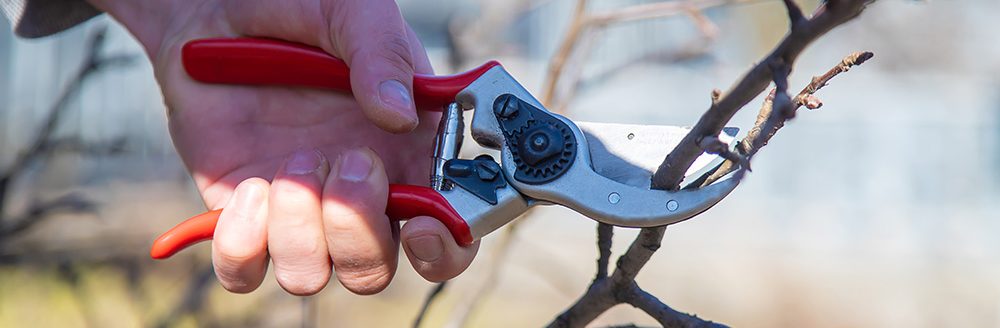
Proper tools also are important. Hillock recommends keeping pruning tools sharp and in good condition. Basic equipment includes lopping shears, a hand pruner, a folding saw for tight spaces, a bow saw and leather gloves. Gardeners should wear eye protection and clean tools after use to maintain their condition.
“Pruning is one of those gardening chores that can make a big difference in the aesthetics of the landscape,” Hillock said. “Just make sure it is done properly and at the right time.”
OSU Extension provides additional gardening information through its website.
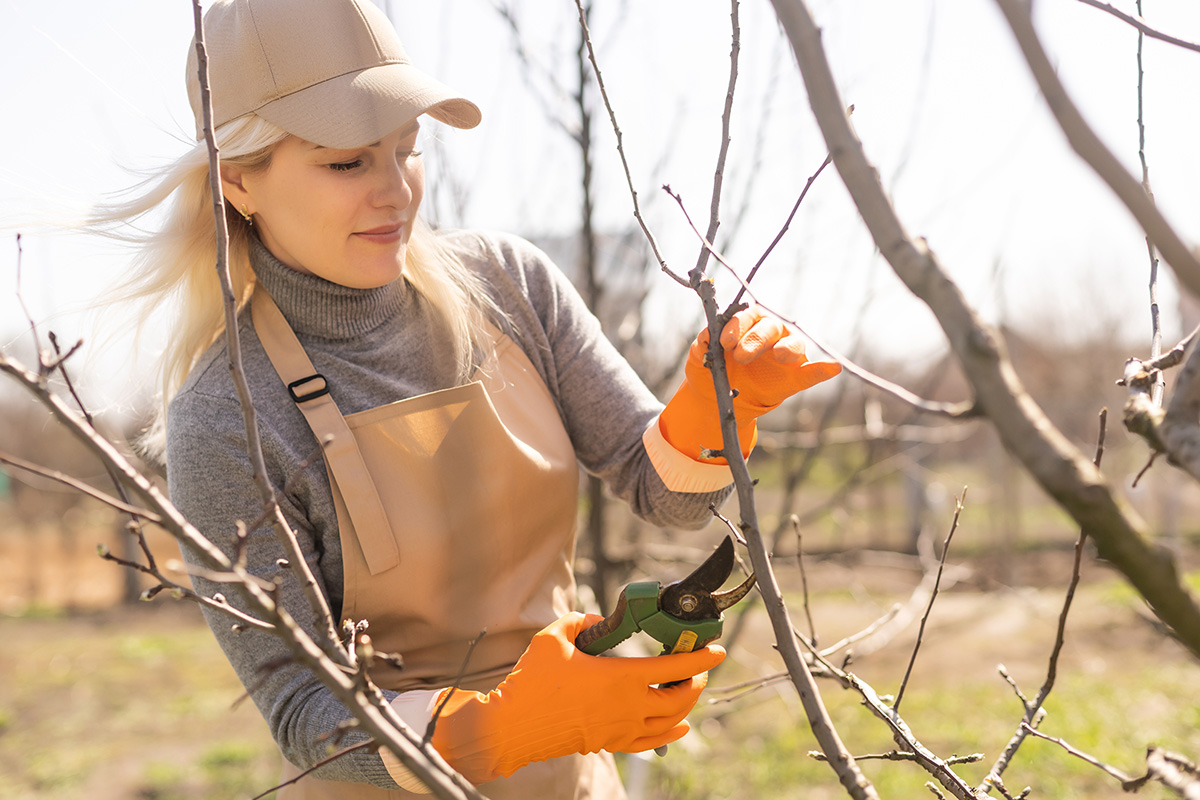
PHOTO: Female gardener pruning fruit tree in early spring. (Adobe Stock │ #552780790 – Angelov)