Envu adds tool to help ranch managers
When it comes to managing a cattle herd, Craig Hossfeld, understands first-hand the challenges ranchers face on a daily basis.
Hossfeld,is a product manager for Envu, a Cary, North Carolina-based company that uses technology to manage environments and collaborates with customers to design solutions to meet their needs.
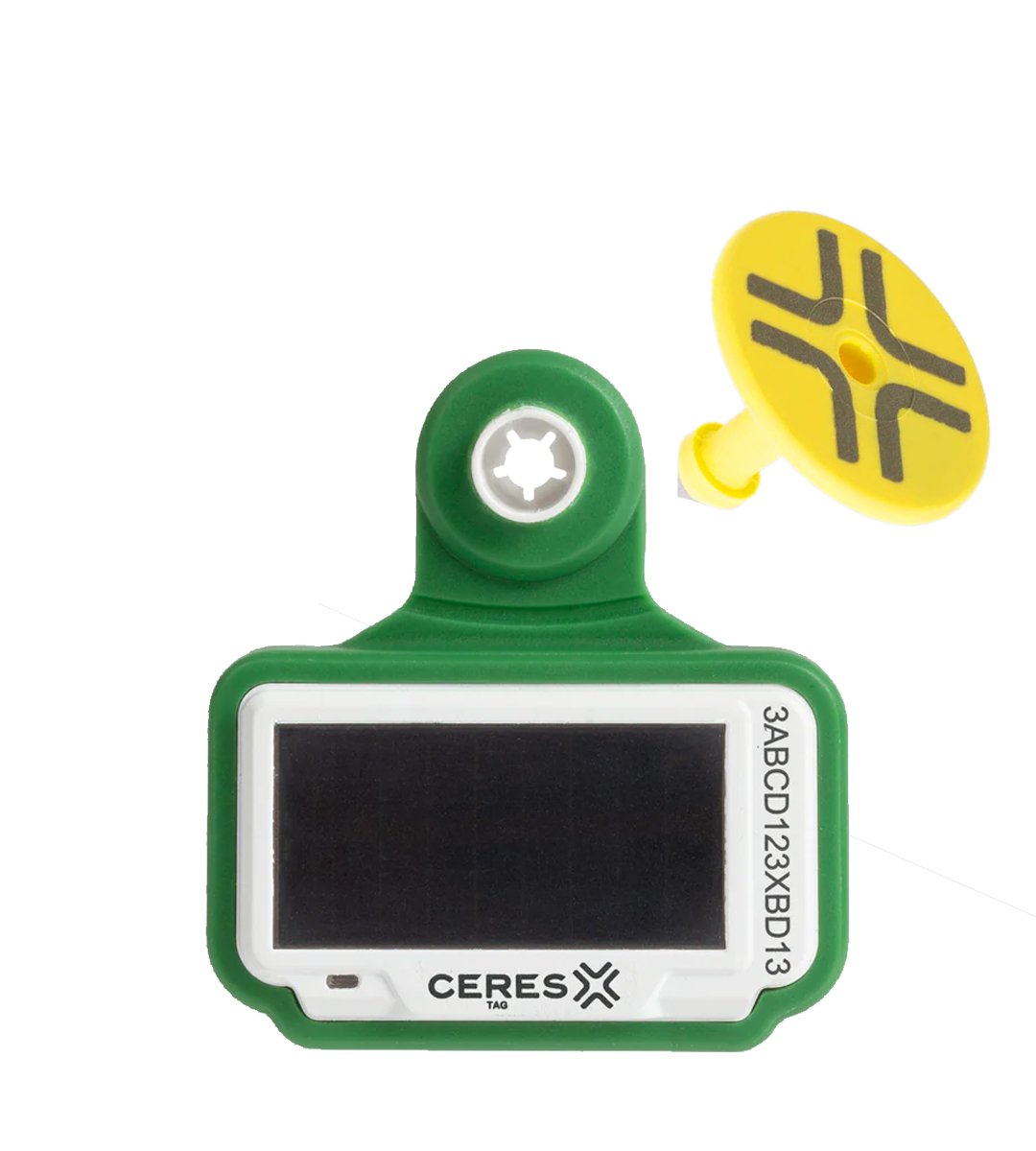
Envu has made headlines in the livestock industry when it was recently announced that CERES TAG has been integrated into the RangeView platform. CERES TAG is a company that uses solar powered ear tags to collect data and communicate directly with a satellite.
Envu came out with a product to provide remote sensing for invasive species, specifically invasive annual grass and invasive brush, Hossfeld said.
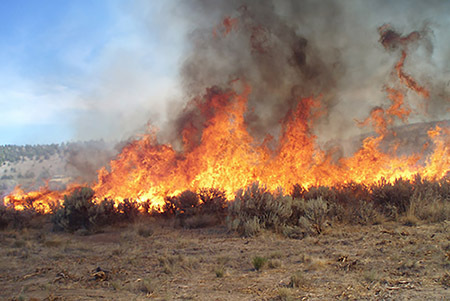
“We use satellite imagery to be able to identify these species, create maps for ranchers and help them identify a plan to use herbicides to take care of it,” he said. “We always knew we wanted to expand upon that by adding stewardship and livestock components.”
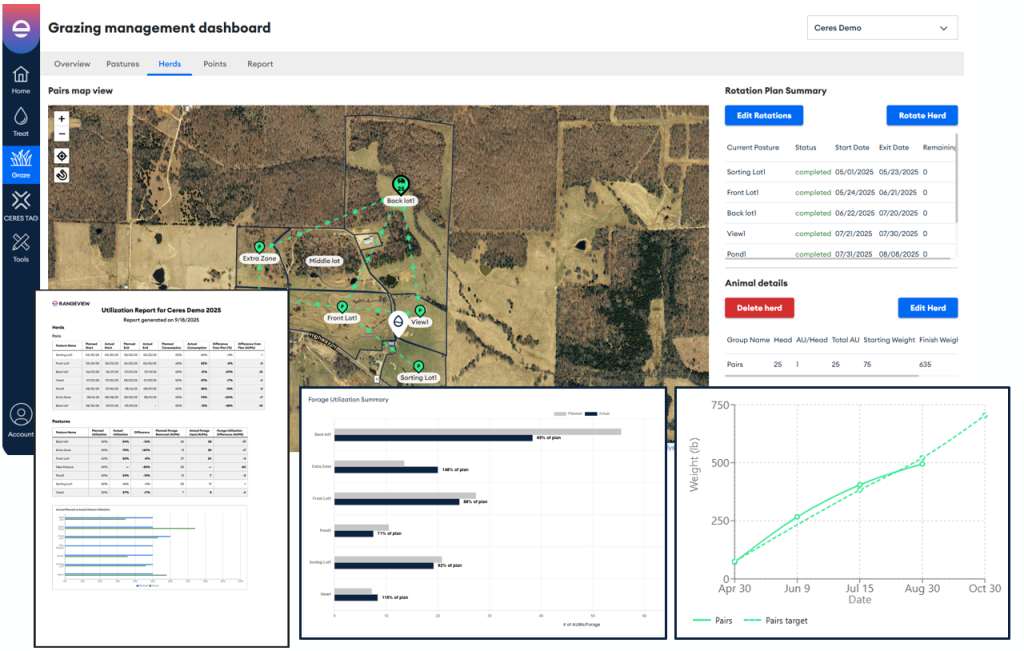
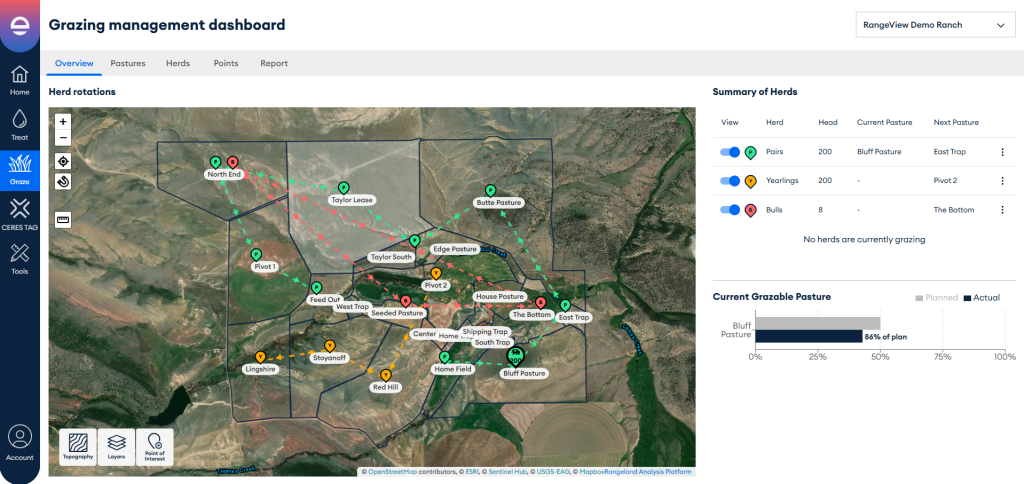
The company has added a grazing management module to RangeView where the rancher can add in all of his pastures, enter herd information, identify forage resource and other livestock needs, and then create a grazing rotation plan to properly use with top stewardship practices. The rancher can also track performance goals.
“It’s one thing to put together a grazing management plan in winter when you have some downtime, but it’s another when you’re trying to handle hay and cattle and everything else while making sure that you are staying on track,” Hossfeld said.
The company has now taken another step with CERES TAG. The technology provides regular updates on cattle throughout the day and tracks animal movements. CERES TAG can track how much time cattle spend grazing, walking, resting, and ruminating, and that allows the rancher to have data on how each animal is performing.
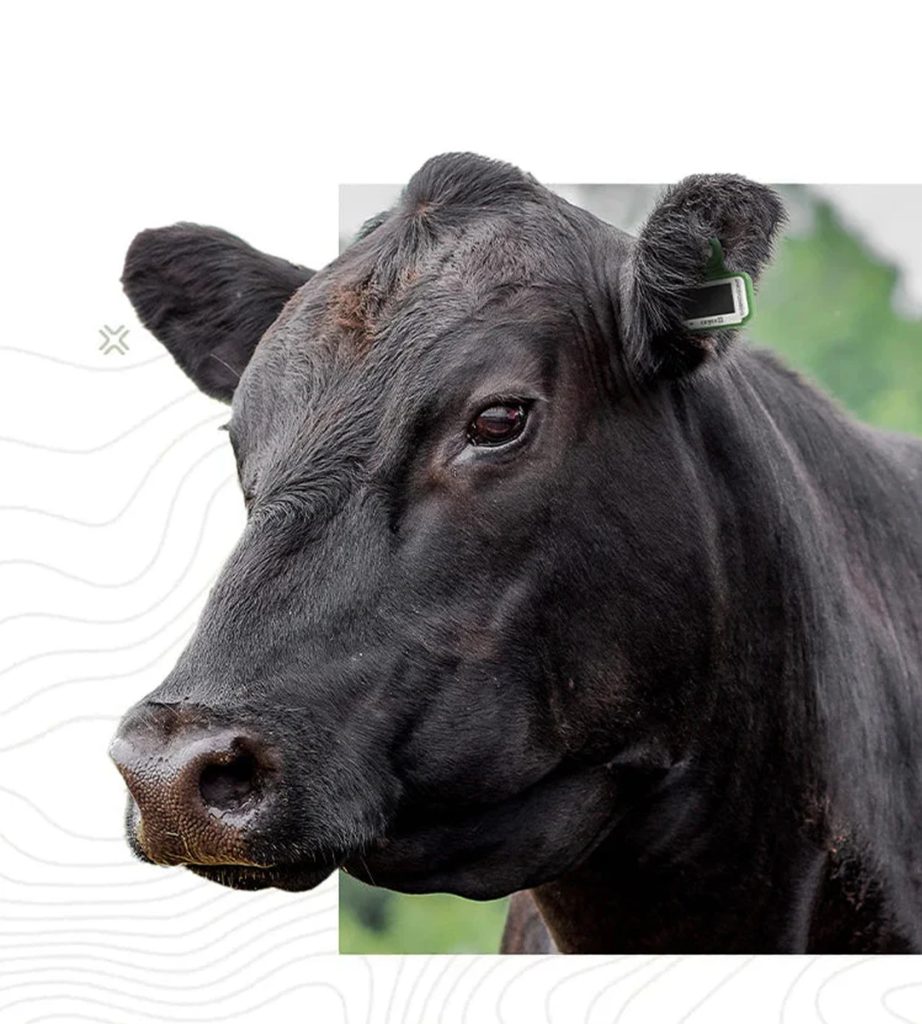
Recently it was announced at the National Cattlemen’s Beef Association’s CattleCon that CERES TAG introduced CERES GEN6 of three new reproduction algorithms. These include estrus detection in beef cattle, automated calving alerts and monitoring of mounting behavior. These additions build on CERES TAGS’ existing suite of insights, which already includes pasture feed intake indicators, location data and behavioral patterns tied to health and performance.
“The information comes through RangeView and it is very easy to visualize on our platform,” Hossfeld said. “You can set up geo-fences as well to say if an animal gets out of this predefined pasture area and it lets the rancher know. If you have a sensitive area that you’re trying to keep cattle out of, you can receive an alert if they wind up going in there.”
What Hossfeld likes is that it allow the rancher to visualize data. With heat map availability, a rancher can keep track of cattle and optimize his grazing utilization. “It’s such a great feedback loop to the forage plan that you’ve made with the grazing management plan.”
Versatile tool
Hossfeld said ranchers need resources and options because of drought and labor shortage. In Hossfeld’s case, he is passionate about how the technology can help ranchers because he grew up in Sheridan, Wyoming, and worked on large ranching operations. He has bachelor’s and master’s degrees in mechanical engineering, but has returned to his own roots.
The product manager continues to live in the Sheridan area where large pastures are the norm and moisture, labor and related costs requires a ranch operator to be efficient.
“What excites me the most, is getting a better understanding of what my herd is doing without having to be out there or paying somebody to be out there,” Hossfeld said. “Even if you were to go ride pasture and look at the utilization pattern you just can’t see it all. So this really helps. In these drought stress times—it was 70 degrees the other day here in Sheridan—we have hardly any snow on the ground. You need to know that you’ve used everything that you have at your disposal and maximize what you have.”
At a time when the nation’s cattle herd and beef cow herd are at record lows, pasture availability is also limited, Hossfeld said, adding RangeView’s technology can help producers to better assess their pastures and rangeland.
“We have daily dashboards about weather and preciptiation, fire maps and market information are all right there,” Hossfeld said, adding that soon a remote biomass detection tool will provide a more precise information aid to help ranch managers.
He said even within a single pasture, forage production can significantly vary. What Hossfeld likes is that instead of a rancher thinking he has to automatically expand his pastures to add cattle he can start by optimizing the resources he has first.
At CattleCon, Hossfeld’s booth and presentations were well-received by ranchers who asked questions about how to increase herd and forage capacity and how they work together.
RangeView technology can help ranch operations from small to large. With direct satellite technology producers do not have to worry about cell telephone access, which he knows from his experience that is not always available.
Data is the key to building an operation’s efficiency, Hossfeld said.
For more information, see a representative or visit https://www.us.envu.com/range-and-pasture/digital-ranch-management.
Dave Bergmeier can be reached at 620-227-1822 or [email protected].