K-State research team is developing a CRISPR-edited mealworm platform to provide a scalable, oral vaccination strategy against Highly Pathogenic Avian Influenza in poultry
Highly pathogenic avian influenza (HPAI) is a systemic, often fatal disease that impacts poultry and a wide range of wild bird species globally. As highly transmissible lineages, such as H5N1, continue to cause unprecedented outbreaks, Kansas State University researchers are using CRISPR-edited mealworms to develop a rapid-response vaccination platform to combat the spread.
“We are working with Dr. Marce Lorenzen at North Carolina State University and the K-State Department of Entomology’s Insect Farming Initiative to edit the genomes of mealworms to express an HPAI antigen,” said Laura Miller, associate professor of veterinary virology, immunology and genomics.
“When consumed, this protein induces a protective immune response within the chicken.”
Mealworms, the larval stage of the darkling beetle, are a common poultry feed supplement that contains high fat and protein content.
“The advantage of using mealworms as a platform is that the vaccine is delivered simply as feed,” Miller said. “This eliminates the need for individual injections, significantly reducing handling stress for the birds and labor costs for the producer.”
CRISPR-edited mealworms can be delivered to poultry as live feed or processed into a shelf-stable, freeze-dried meal. Once the genetic line is established, these mealworms can be mass-produced within existing insect farms, providing a sustainable and scalable supply of the vaccine.
“Feeding mealworm larvae is a significantly more effective way to administer these antigens rather than manually vaccinating millions of birds,” Miller said. “The platform is also highly cost-effective because the insects have a rapid life cycle and survive off of low-cost agricultural byproducts.”
Plus, she said that producing these mealworms does not require a centralized, high-cost bio-manufacturing facility. Instead, the vaccine-carrying larvae can be produced in decentralized insect farms near poultry operations, drastically reducing transportation.
“The platform is designed to be highly adaptable; while we are currently targeting specific HPAI strains, the system is essentially ‘plug-and-play’,” Miller said. “As the virus evolves, we can rapidly switch the genetic sequence of the antigen to ensure the vaccine remains effective against new circulating variants.”
Once these genetic modifications are established, they are stable and heritable, allowing the vaccine-producing trait to be passed through successive generations of mealworms.
“Our goal is for these mealworms to provide both a primary dose and subsequent booster, such as traditional vaccine protocols,” Miller said. “One of our ongoing research questions is determining the optimal exposure frequency to ensure a long-term immune response without inducing oral tolerance.”
Miller explained that while the insects are genetically modified, the chickens that consume them remain genetically unchanged. The mealworms serve only as the carrier vessel for the vaccine protein, ensuring the poultry remains safe for human consumption.
“There’s no genetic editing occurring within the chicken; the modification is strictly confined to the insect,” Miller said. “The mealworm simply produces a specific protein that the chicken’s immune system recognizes, much like any other feed-based nutrient.”
Miller said that the platform’s potential extends beyond commercial poultry, with future research potentially exploring its use in wild bird populations. Delivering a targeted oral vaccine to wild game or migratory species could provide a strategic buffer against the transmission of HPAI before it reaches domestic farms.
Additionally, the Insect-Farming Initiative is investigating insect-based additives in the pet food industry. As insect farming matures as a sustainable protein source for companion animals, it opens the door for a new generation of functional, health-promoting feeds.
“Because mealworms are a highly efficient protein production system, this platform is essentially pathogen-agnostic,” Miller said. “The same underlying technology we are using for HPAI could be adapted to produce antigens for a wide range of other viral and bacterial diseases affecting multiple species.”
More information on the HPAI outbreak is available online from K-State Today.
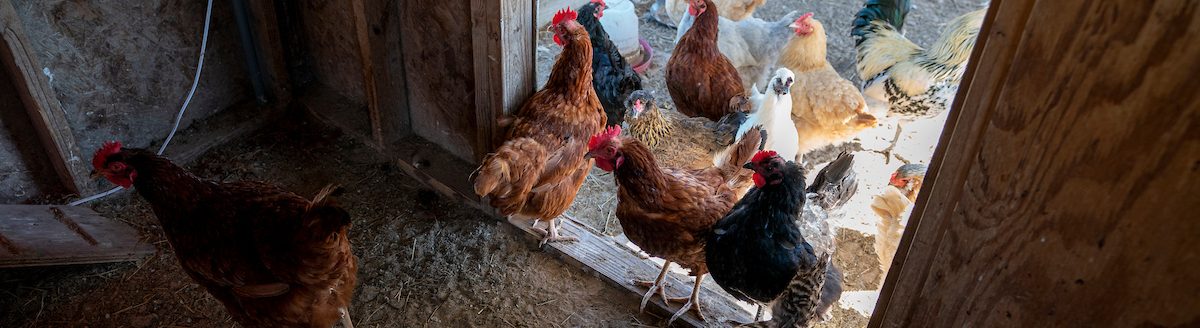
PHOTO: Chickens (Photo: USDA-ARS photo by Stephen Ausmus)