RFS update welcome news for soybean growers
Soybean growers received good news in late March when the Trump administration announced it was updating the Renewable Fuel Standard and by increasing biomass-based diesel by 2 billion gallons.
The decision, announced by Environmental Protection Agency administrator Lee Zeldin takes the requirements from 3.35 billion gallons to about 5.4 billion gallons for biomass-based diesel volume requirements.
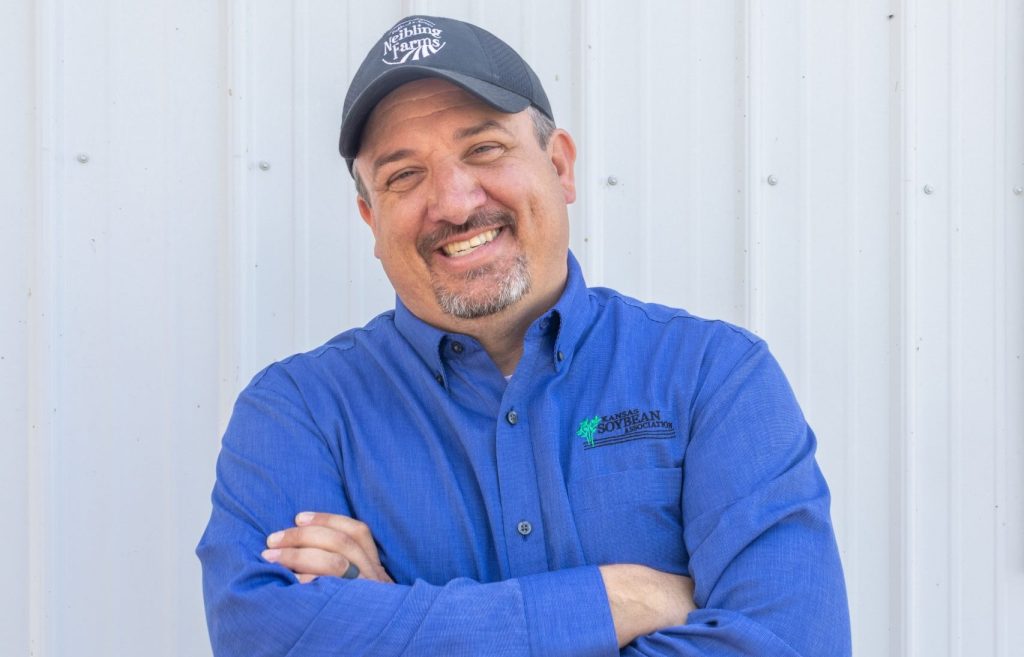
Brett Neibling, president of the Kansas Soybean Association whose farm operation is based in Highland, said the announcement was a surprise to growers and the entire industry.
“It was a happy surprise to see such a major increase,” Neibling said. “It will be the highest volume in history.”
The RFS Set 2 Rule establishes the renewable fuel volume requirements for 2026 and 2027 at the highest levels in program history, according to the EPA. “The agency’s final rule demonstrates the Trump administration’s commitment to America’s farmers and unleashing American energy by reducing America’s reliance on foreign oil, delivering long-term certainty and stability for America’s farmers and biofuel producers, and ultimately creating a path for rural economies to boom.”
“For 20 years, this program has diversified our nation’s energy supply and advanced American energy independence,” Zeldin said. “EPA is proud to deliver on this mission and to do so at historic levels.”
“With President Trump and Administrator Zeldin’s leadership, these historically high volumes are expected to create a $3 to $4 billion increase in net farm income,” said Secretary of Agriculture Brooke Rollins. “The Renewable Fuel Standard Set 2 Rule will create a $31 billion value for American corn and soybean oil for biofuel production in 2026, which is $2 billion more than in 2025. Our farmers are stepping up to grow American energy dominance.”
Kansas is called the Sunflower State and known for its wheat production, but it also ranks 11th in soybean production.
“Nothing but positive news for us,” Neibling said, noting challenges farmers have faced in recent years. The White House’s projections of $3 to $4 billion increase in net farm income remains to be seen, he said, but an opportunity to add value to the price of every bushel helps.
“It has been a rough winter for everyone in agriculture,” Neibling said. “When you look at the market and have no idea what your beans or corn are worth plus right now we have been dealing with higher input costs so any good news is welcome news.”
With the uncertain prospects resulting from tariffs and trade relations, the announcement helps the domestic front. He said soybean observers say it will be tough to regain foreign markets, “but the idea to look for new markets was always important to us and it could not have come at a better time.”
Neibling said High Plains crush plants are not only in the Sunflower State, but in nearby states.
The capability to crush beans opens new market for soymeal. It could mean more soybeans being grown, he said, as well as strengthen prices.
Adding support
Naomi Blohm, a senior market adviser for Total Farm Marketing, and a monthly columnist for High Plains Journal, said the news is supportive and keeps the demand for soybeans for domestic use strong. She said it helps make up for an industry that was hurt by the trade and tariff wars.

“U.S. exports have tanked, and so I think the industry maybe just views this as a nice offset for lost export demand,” Blohm said. “The market doesn’t seem too excited about the news.”
Dan O’Brien, professor and Extension agricultural economist with Kansas State University, said during the April 1 Winning the Game Grain Marketing webinar, that China is still trailing in terms of soybean purchases from where it has been in past years although it has improved in recent months.
“What hasn’t fallen off much is that the move of soybeans into bioenergy and renewable diesel,” O’Brien said. “We’re shifting to a reliance on domestic processing and still have our hand in in U.S. soybean exports, but it’s the processing that’s driving the boat more.”
Neibling thinks that in time it should add support because adding 2 billion gallons will mean more demand.
The news does show it is important for farmers to work with commodity organizations, stay informed and be engaged with the process, Neibling said. Positive developments occur because of dedication by producers and their associations that work together, he said. It takes many hours of behind-the-scenes work.
The latest development was the result of regularly and timely conversations with the administration and Congress, he said. Soybean growers and associations met with Zeldin met last fall and continuing to build upon that relationship with the EPA administrators and others who are influential in the process. For soybean growers the process paid off.
Crush plants
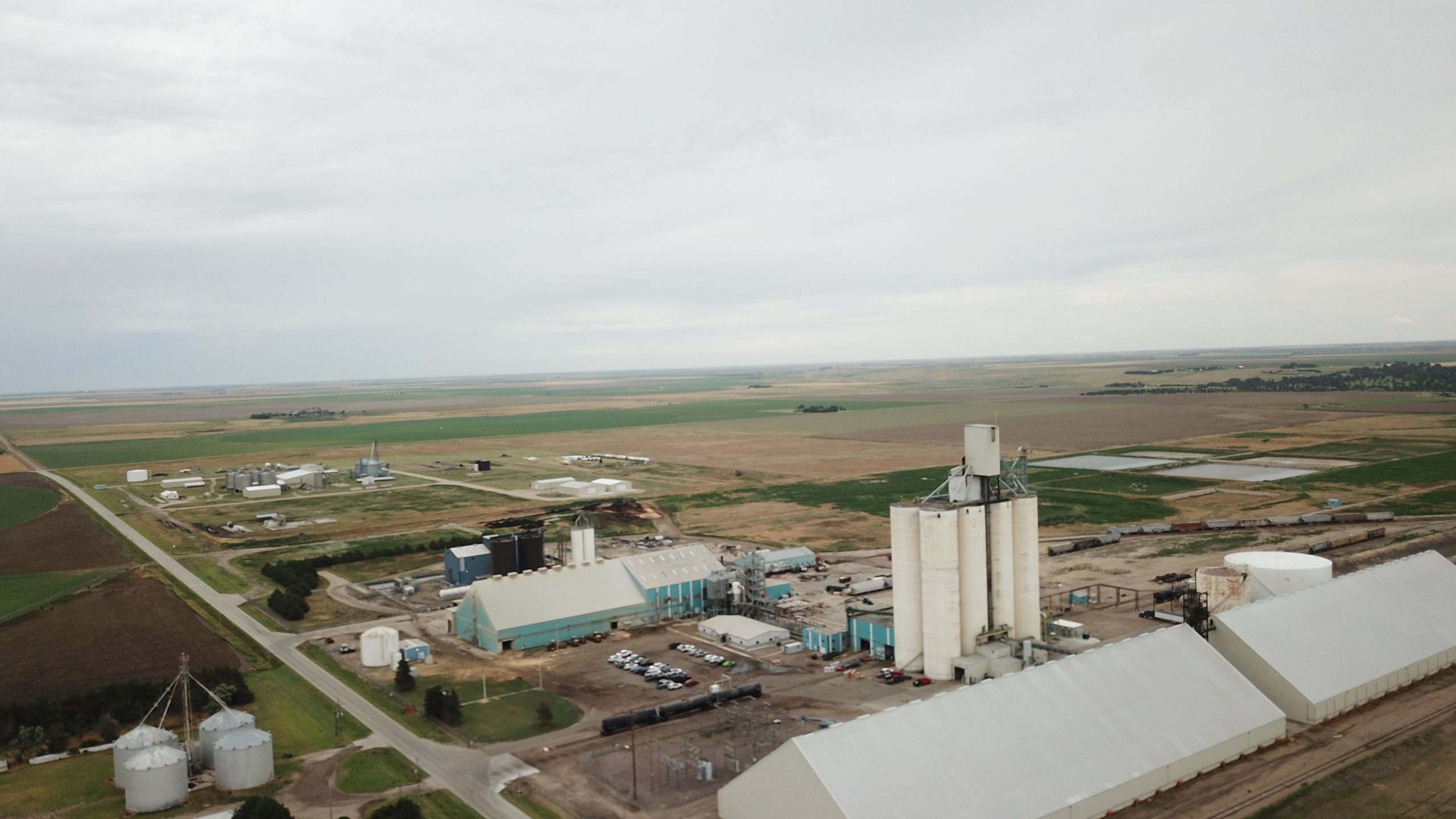
Ed Prosser, a senior vice president for government relations with Scoular, said Kansas and High Plains region has crush capacity to handle more soybean bushels. Bartlett has a plant in Cherryvale, Cargill is in Wichita and Bunge has a plant in Emporia. Scoular has a “switch’ plant that can crush soybeans and winter canola in Goodland.
The new renewable volume obligation sets the stage for tax policy that encourages domestic production. Under the previous RVO policies, plants could use imported waste oils and palm oil. The new RVO, with the 45Z tax credit increases the obligation to make more renewable fuels and in 2028, companies that use imports will only receive half the tax credit.
“On Friday it was a win for U.S. agriculture, a win for U.S. farmers and the Kansas farmer,” Prosser said.
Canola opportunity
While soybeans were big winners, he also noted that canola growers can also benefit.
Prosser said farmers are growing about 55,000 acres of canola in Kansas and Oklahoma, which is up from about 5,000 acres four years ago.
“We really think canola, with its high oil content and unique rotational attributes, is a great fit in a wheat or milo rotation,” Prosser said. “It uses a deep taproot to reduce compaction and allow water infiltration while its herbicide resistance allows chemistry to break weed and pest cycles. We believe it will be a great fit for central and Southern Plains farmers looking for a new cash crop in their rotation.”
The Goodland plant can crush 400,000 acres so there is capacity to expand, Prosser said.
Winter canola is about two months away from the start of harvest and winter canola in this region is often planted around Labor Day so there is an opportunity for growers to add acreage for 2027, Prosser said.
Dave Bergmeier can be reached at 620-227-1822 or [email protected].