National Ag Day celebration announces Product of USA
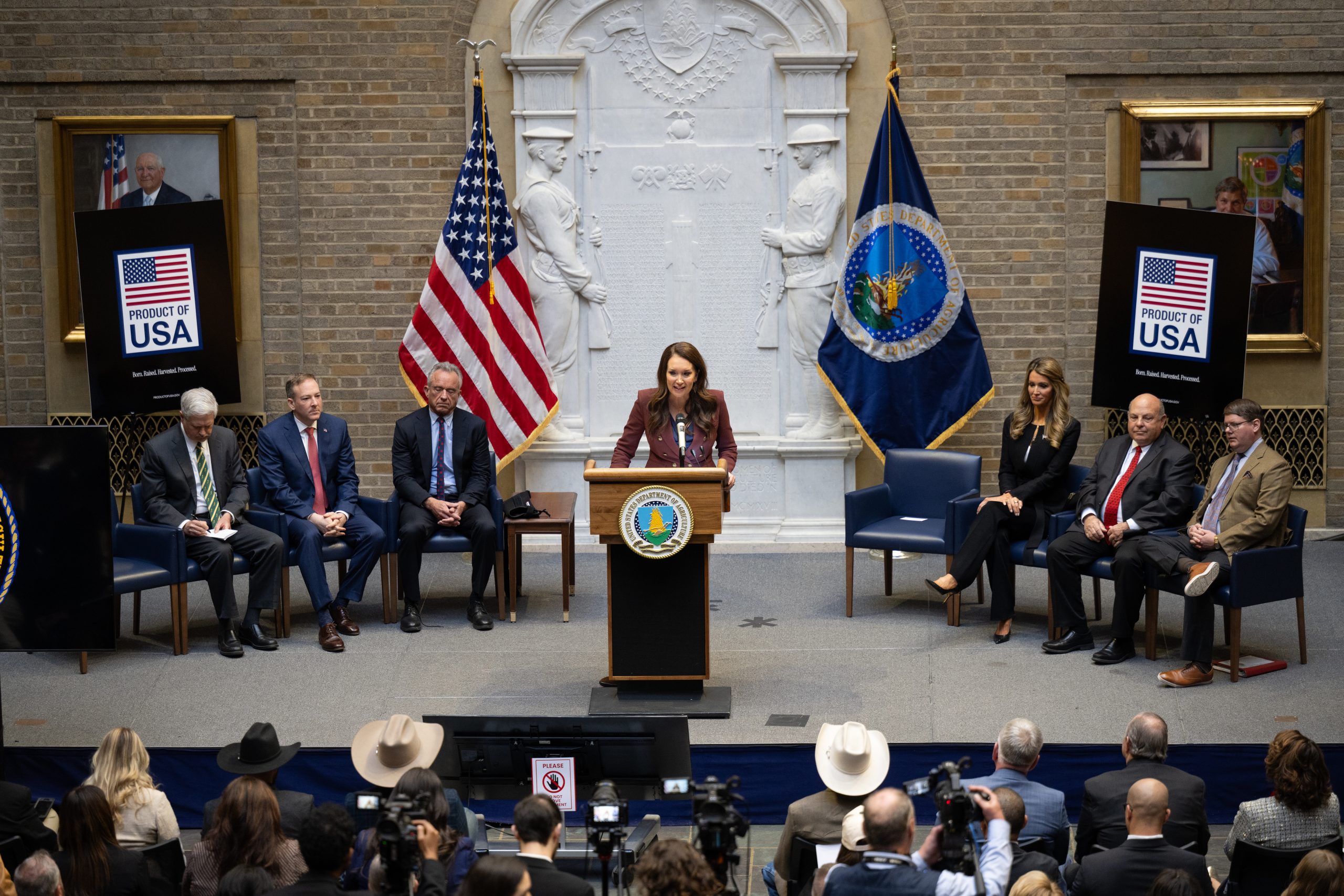
U.S. Secretary of Agriculture Brooke Rollins told the crowd March 24 at the National Ag Day celebration in Washington D.C., 2% of the population feeds the country and the rest of the world.
“Day in and day out, our farmers feed and fuel and clothe our nation and truly the entire world,” she said. “You all have seen the numbers. We’re down now to Americans that actually till the soil and grow the cattle and work the fields and pick the apples.”
Organized by the Agriculture Council of America, National Ag Day is an effort to increase the public’s awareness of agriculture’s role in modern society.
Rollins brought a slate of speakers to help celebrate the day, including Lee Zeldin, administrator of the Environmental Protection Agency; Robert F. Kennedy Jr., secretary of Health and Human Services; Kelly Loeffler, administrator of the Small Business Administration; John Hoeven, U.S. senator from North Dakota; Zippy Duvall, president of the American Farm Bureau Federation; and Mehmet Oz, administrator for the Centers for Medicare and Medicaid Services.
Rollins said the U.S. Department of Agriculture’s job is to ensure “all of our farmers and all of our ranchers and all of our producers are able to continue to do what they do best by empowering them, to preserving their way of life, to ensuring that our farmers and ranchers aren’t just surviving, which has been, unfortunately, the modus operandi for a long time now.”
Those in agriculture are moving into a new era, she said.
“As we all know, under the last administration, the cost of doing business skyrocketed. The cost of inputs exploded,” she said. “Whether it was fuel at 33%, seeds at 19%, fertilizer up 48%, labor up 44%, interest expenses up 70% in those four years, while at a time, not one new trade deal was struck.”
In the year since Rollins took her appointment as secretary, she’s thankful for what has been achieved so far by her department and others working on behalf of agriculture. There’s been 18 new trade deals.
“This is the foundation married to domestic supply,” she said. “We’ve taken what was a $50 billion agricultural trade deficit one year ago, and we have cut that in half in one year. Our corn exports are up 29%, our ethanol exports are up 11%. our tree nut exports are up 11% and there is more good news coming.”
Rollins recognizes it won’t happen overnight to get farmers and ranchers what they need in the context of “national security to ensure that these farmers can keep farming; our ranchers can keep ranching—that we don’t lose anymore,” she said.
“We’ve lost 150,000 farms and ranches in the last decade or so,” she said. “We have to stop that trend. Whether it was the farmer bridge assistance, whether it was the emergency economic assistance, whether it was the livestock disaster assistance, all of the programs that were moved out at the quickest speed in the history of USDA, we will not forget that those bridge assistance programs are so very important.”
According to Rollins, the farmers and ranchers she’s talked to don’t want to farm for government checks.
“We want a farm to be able to sell their product,” she said. “The righteousness and the dignity of the work should be enough.”
The reality in the short term is it requires USDA to expedite payments, she said.
Preserving the way of life many farmers and ranchers live, along with being able to ensure what’s being used to feed the U.S. and the rest of the world is the best it can be is a priority.
“Then America as we know it here at our 250th birthday will no longer exist in the way that our founders envision and what everyone in this room is working toward and fighting for, to preserve the great American experiment,” she said. “That is how existential I believe this work at USDA is in partnership with so many wonderful people across our cabinet and across America, we just couldn’t be more grateful.”
Duvall said there’s not a better time to focus on agriculture than right now. He agreed with Rollins that farmers don’t want to farm for a government check.
“We want to farm for the market. But to do that, you got to have a level of playing field. Give us that market to do that,” he said.
Product of USA
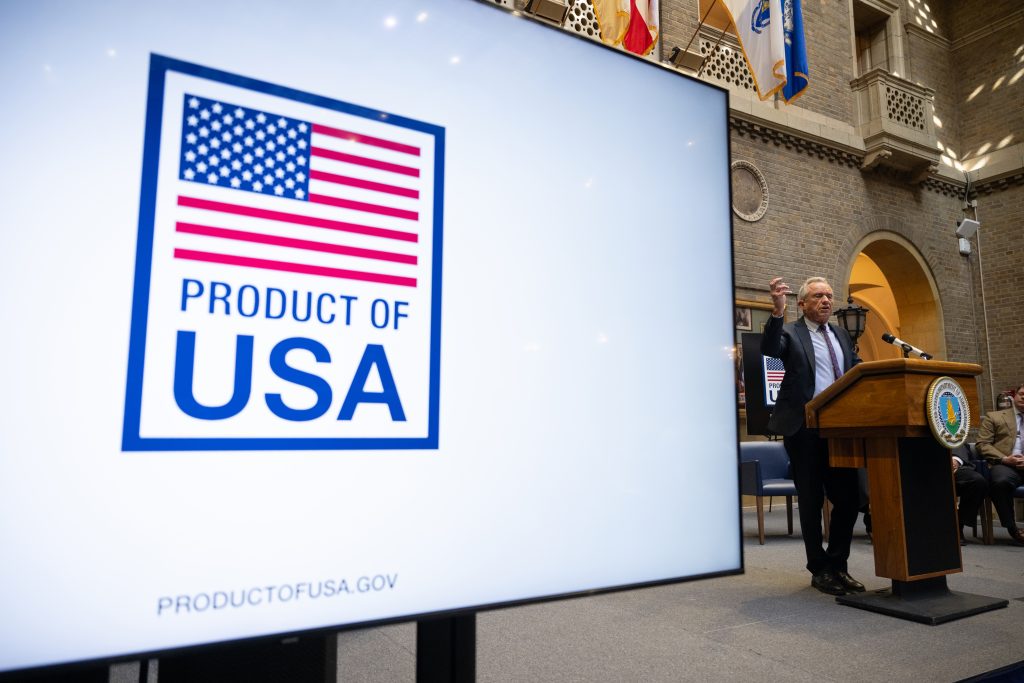
Rollins announced at the National Ag Day celebration the Product of USA voluntary labeling standard, which went into effect on Jan. 1, 2026, and increases consumer understanding of what the label means.
“This new standard policy ensures producers who invest in a fully American supply chain can compete fairly, and it gives consumers the confidence they deserve about the food they bring home,” Rollins said.
Loeffler said the work done to end years of unfair competition and red tape will help get domestic agriculture back on track. Purchasing from American producers gives consumers a superior product all while supporting family farms.
“I urge all Americans to join me in support of the hardworking farmers and ranchers who anchor the U.S. food supply chain that is so vital to keeping our nation strong, safe, and healthy,” Loeffler said.
Kennedy said the labeling puts the producers first and gives those buying it “clear, honest information and empowers them to buy food from the U.S.
“Our farmers and ranchers are essential to putting real food back at the center of the American plate and delivering on the Dietary Guidelines for Americans,” Kennedy said.
Zeldin said the label rewards those who grow, raise and process products in the U.S., as well as giving consumers confidence while supporting American agriculture.
“America’s farmers and ranchers are key to our national security, sustaining rural communities and keeping our food supply resilient,” Zeldin said.
Rollins thanked Hoeven for his support of the process and he called U.S. producers the best in the world, producing the highest quality products.
“A Product of USA label benefits our ranchers and provides transparency and confidence for consumers,” Hoeven said.
Rollins said the Product of USA label is reserved for meat, poultry and egg products from animals that were born, raised, harvested, and processed in the U.S. According to USDA, the claim is voluntary, but companies using it must meet a transparent and verifiable requirement. This ends the prior practice that allowed imported products to carry the claim after minimal processing and strengthens consumer confidence by aligning with what Americans expect and demand.
Learn more at productofusa.gov.
Kylene Scott can be reached at 620-227-1804 or [email protected].