Late rains and tight windows challenge weed control in Kansas row crops
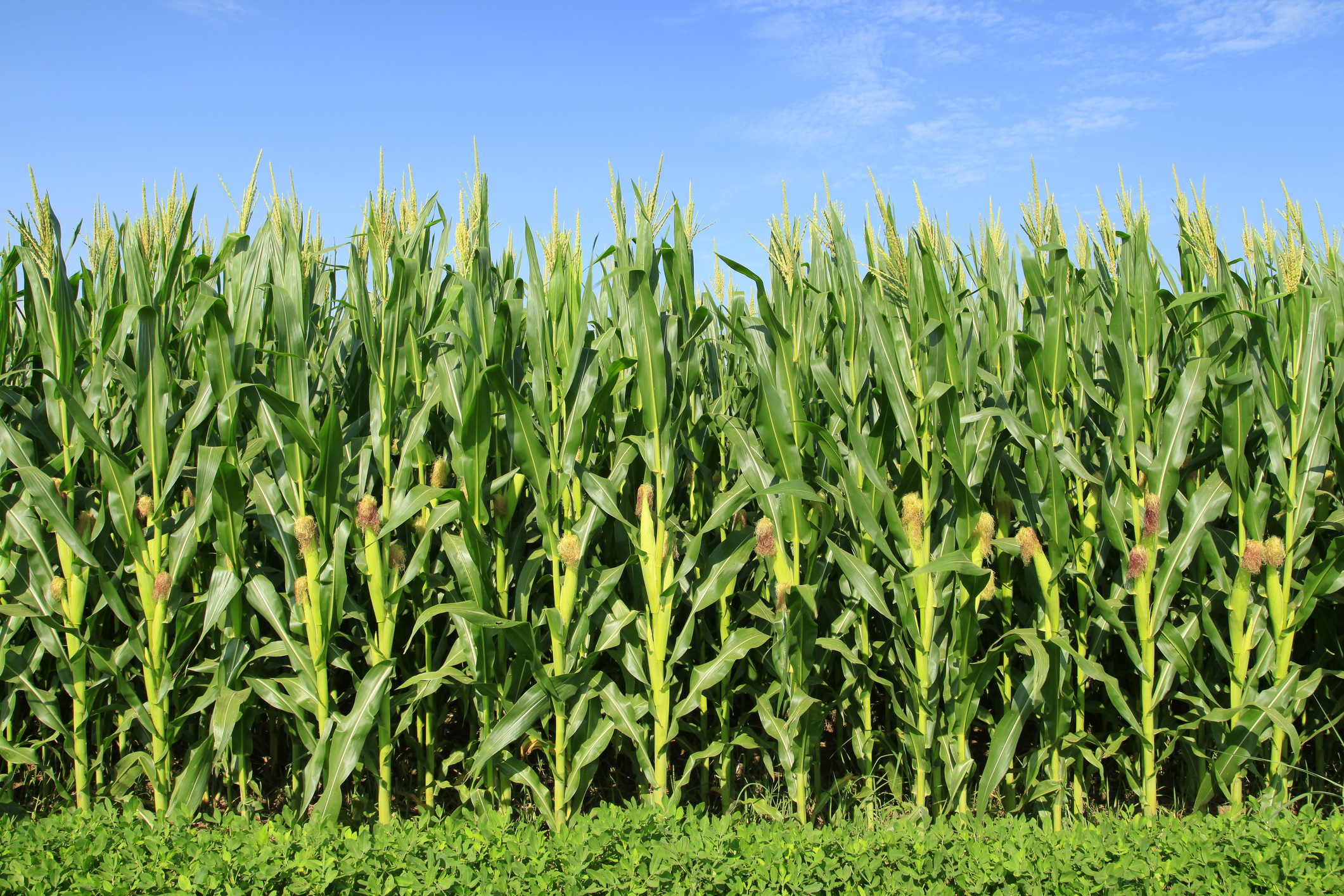
Corn, grain sorghum and cotton growers urged to plan carefully as herbicide options narrow with crop growth
Heavy rains and fast-growing crops are tightening the window for effective herbicide applications in Kansas corn, grain sorghum and cotton this summer, according to Kansas State University weed specialist Sarah Ganske.
Ganske said many corn fields are now beyond the height where some of the most commonly used herbicides can be applied safely, forcing growers to re-think their late-season weed control plans.
“Atrazine is no longer an option once corn reaches about 12 inches,” Ganske said, noting that many pre-mix products also drop off the list at that point. “As we think about some of this larger corn, we still have a few options for post-emergent weed control, but the window is getting narrow.”
For bigger corn, Ganske said Diflex, a dicamba formulation, has one of the largest application windows, with a cutoff at V10 growth stage. Laudis, an HPPD group 27 “bleacher” herbicide, can be used up to V9.
Several other products generally have a cutoff at V8, or about 30 inches tall.
“Most of our crops are going to be past that, based on what I’m seeing driving around,” Ganske said. “So we’re really looking at applications of Diflex at this point.”
She added that HPPD herbicides like Laudis often perform better when paired with a Group 5 herbicide such as atrazine, but atrazine itself is limited by the 12-inch height restriction. That makes timing and product choice critical.
Ganske also urged producers to consider drop nozzles for later applications in taller corn.
“They can be a huge pain in the neck in terms of the time it takes to get that sprayer set up,” she said. “But I would encourage folks to think about the crop safety risks and getting the product through the canopy where we actually need it, instead of just a ‘revenge spray’ on weeds that escaped earlier applications.”
Grain Sorghum
In grain sorghum, Ganske said she expects her annual calls from growers whose early residual herbicides have “run out” before planting, leaving fields with heavy infestations of Palmer amaranth and other weeds.
She said products containing Sharpen or Reviton ahead of the planter can help clean up fields, but growers must pay close attention to plant-back intervals, which can range from zero days to three months depending on rate and product. She also reminded growers to:
- Follow up with a planting-time residual (for example, applying a Group 15 product such as Dual, even if Outlook was used earlier).
- Watch maximum annual application rates when multiple products or premixes were used in early burndown programs.
When sorghum emerges before the planned preemergence herbicide is applied, “the short story is this has taken away a lot of our options,” Ganske said. Group 15 herbicides can still be applied over the top, but postemergence broadleaf options are limited and often carry crop injury risks.
Cotton
In cotton, Ganske highlighted a growing interest in non-glyphosate tolerant varieties, including some Phytogen transgenic cottons that stack 2,4-D and glufosinate resistance without glyphosate tolerance.
That approach, she says, can help manage herbicide-resistant pigweeds but leaves a gap in grass control, traditionally a strength of glyphosate.
“In those systems, the easy button for grasses is our Group 1 herbicides,” she said, citing Select, Assure II and related generics as key tools. Liberty (glufosinate) can provide some grass activity but not enough on its own.
Ganske also warned that glyphosate had previously helped with yellow nutsedge in some systems. Alternatives include Dual or other S-metolachlor formulations for suppression, and certain ALS-inhibiting herbicides such as Staple and Envoke, though those come with crop rotation intervals.
For growers planting non-glyphosate tolerant cotton, Ganske said glyphosate drift remains a concern, much like 2,4-D drift onto susceptible varieties.
“Glyphosate drift is a real risk,” she said. “If you have glyphosate tolerant cotton and your neighbor doesn’t, choose spray days when the wind is blowing away from that sensitive crop. It comes down to being a good neighbor and recognizing the risk when you choose your herbicide-tolerant traits.”
More information on crop production and other agricultural practices is available at local extension offices in Kansas.
Trade names used in this article are for identification purposes only and do not imply an endorsement of a particular product by Kansas State University, nor does exclusion imply non-approval.
PHOTO: corn field (Photo: iStock – zhengzaishuru)