Iowa State University Extension and Outreach specialists offer tomato care guidance
Home gardeners across Iowa are reporting a wide range of tomato issues this summer. While many gardeners first suspect disease, several of the most common problems are physiological disorders triggered by fluctuating weather, uneven moisture and environmental stress.
“Many of the tomato problems gardeners are seeing are tied to growing conditions rather than diseases or insects,” said Chelsea Harbach, director of diagnostics and plant health specialist at Iowa State University’s Plant and Insect Diagnostic Clinic.
Aaron Steil, consumer horticulture specialist with ISU Extension and Outreach, added that periods of heavy rain, hot temperatures and inconsistent soil moisture can all affect fruit quality and development.
Blossom end rot appears early
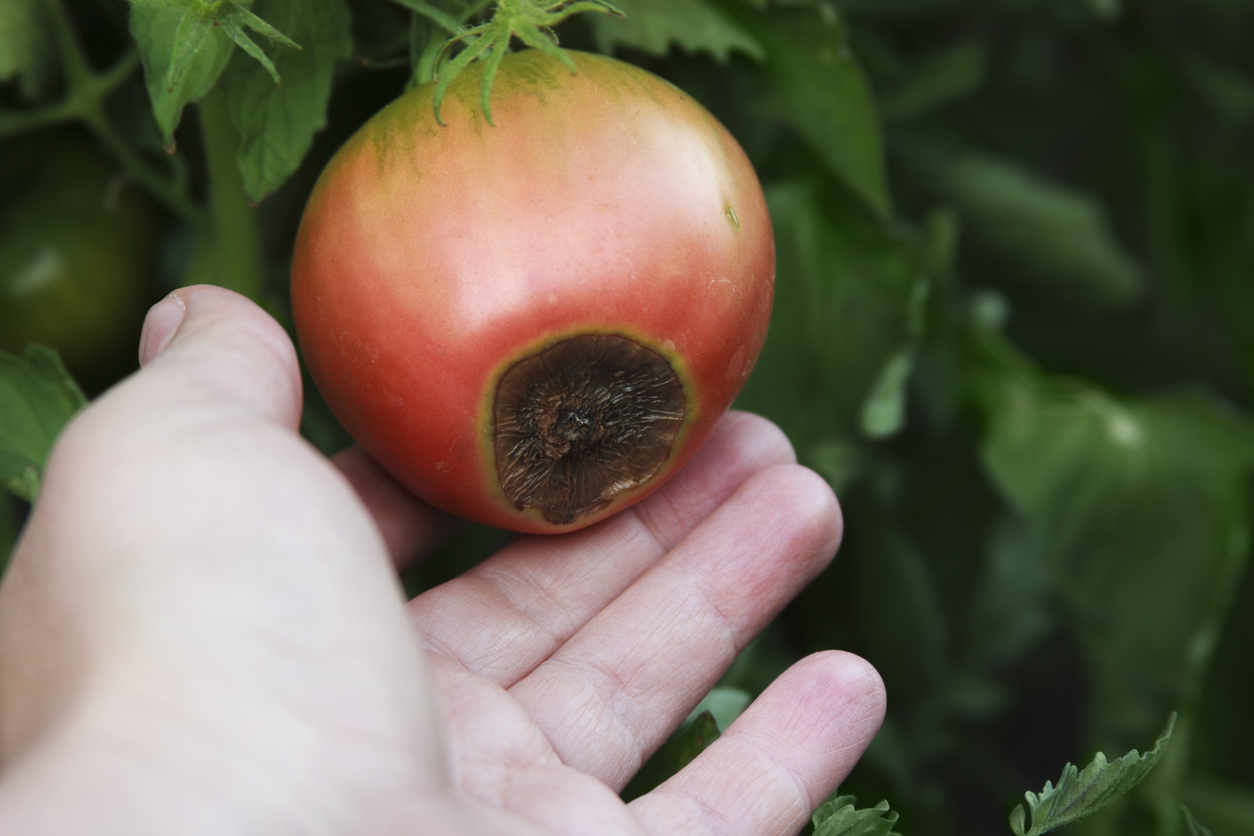
One of the most common complaints this season has been blossom end rot. The disorder appears as a brown or black sunken area on the end opposite the stem (blossom end) of developing fruit.
“Blossom end rot is caused by a calcium deficiency within the fruit, but in Iowa soils, the underlying issue is usually inconsistent soil moisture, not a lack of calcium in the soil,” said Steil. Wide swings between wet and dry conditions can limit calcium movement into developing tomatoes.
Gardeners can reduce problems by watering deeply during dry periods, applying mulch and avoiding excessive fertilizer applications. “Consistent moisture is the best prevention,” said Harbach. “Adding calcium products rarely addresses the problem completely.”
Cracking follows rainfall
Heavy summer rains have also led to widespread fruit cracking. Cracks typically form near the stem and may radiate outward or circle the fruit stem.
“When tomatoes suddenly take up lots of water after a dry spell, the fruit expands faster than the skin can stretch,” Steil explained. Large-fruited beefsteak tomatoes are especially susceptible, though some varieties have better crack resistance than others.
Mulching and providing even moisture throughout the season helps reduce cracking, according to Steil.
Sunscald damages exposed fruit
Periods of intense heat and strong sunlight have caused sunscald in some gardens. The disorder appears as pale white or yellow patches on fruit exposed to direct sun.
“Tomato fruit naturally relies on the plant’s foliage for protection,” Steil said. “When fruit suddenly becomes exposed because of disease, storm damage or heavy pruning, sunscald can develop quickly.”
As damage progresses, the affected area may become sunken and vulnerable to decay. Harbach noted that gardeners can reduce sunscald by maintaining healthy foliage and avoiding excessive pruning.
Heat impacts fruit set
Many gardeners noticed flowers dropping from plants earlier this season without producing tomatoes. “Tomatoes are sensitive to temperature extremes during flowering,” Steil said. “Very hot days and nights can interfere with pollination and reduce fruit set.”
Blossom drop is particularly likely when night temperatures stay above 75ºF. “The good news is that plants often begin setting fruit again when temperatures moderate,” he said. “Providing adequate moisture during dry weather helps plants cope with stress.”
Weather fuels disease
This season’s wet spring and stretches of hot, humid weather have also contributed to tomato diseases in many home gardens. Warm, wet conditions favor common problems such as Septoria leaf spot, early blight and bacterial spot, while prolonged leaf wetness can help other fungal and bacterial diseases become established.
“When leaves stay wet for long periods and humidity remains high, disease problems can spread quickly,” Harbach said. “Good sanitation, mulching, watering at the base of plants and providing adequate spacing and air circulation can go a long way toward reducing disease pressure in the garden.”
Consistency is best
Despite the variety of symptoms appearing this season, many of the solutions are the same.
“Tomatoes perform best when they receive consistent care,” said Steil. “Regular watering, mulch, balanced fertilization, good air circulation and proper training all help reduce stress-related disorders.”
For related content and more information, visit:
- Managing Tomato Diseases, Disorders, and Pests
- Tomato Diseases and Disorders
- Growing Tomatoes in the Home Garden
- Yard and Garden: Iowa State University Extension and Outreach
PHOTO: Blossom end rot on the red tomato. (iStock-#1331361696 │ Mila Usmanova)