Corn silage remains a staple for many dairy and beef producers, and August is when harvest is in full swing in many High Plains states.
Gail Carpenter, an Iowa State University assistant professor of Extension and outreach who studies animal nutrition, said corn silage is a great source of fiber and roughage the rumen needs.
Silage producers have benefited from gains in corn genetics while maintaining fiber, she said, adding that corn silage is a great feed.
Corn silage provides the physically effective fiber, and the scratch factor animals need, plus digestible fiber for energy. The feed provides starch for quick energy.
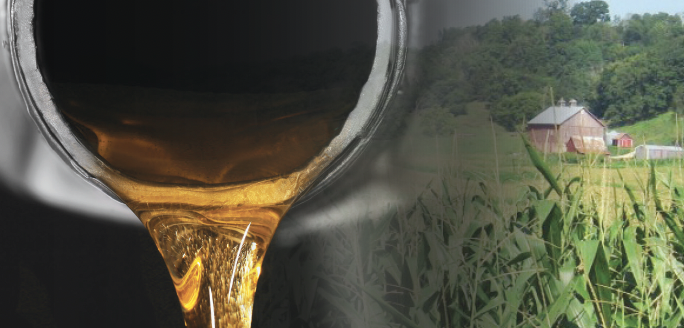
“Corn silage has been the cornerstone of our dairy rations,” Carpenter said, adding that over time there has been greater emphasis on managing the feed source, particularly for the harvest and storage segments. (Photo above courtesy of AdobeStock.)
“We can harvest corn silage once a year and that’s it,” she said. “You don’t get a chance to redo it. That’s going to be your feed for hopefully the next 16 months.”

Attention to detail during harvest can help ensure producers do not lose feed to spoilage, she said. From a dairy perspective, producers emphasize the importance of having high-quality corn silage. She has also seen that mindset change when corn prices rise, and producers cannot afford to lose any starch because that means having to buy more corn for the ration.
“If you can have both the quantity and the inventory, it makes your nutritionist’s job so much easier because it really gives them a lot of flexibility to build a cost-effective ration,” Carpenter said.
When first harvested, corn silage is typically put in bunk and stored for several months to maximize its value. In effect, the summer harvest should provide enough inventory to last until Christmas the following year.
In a dairy operation, added costs will hurt the bottom line and affect milk quality.Dairy operations prefer corn silage because it uses the grain and stalk as a feed source, Carpenter said.
Producers face higher operating costs, disease and environmental challenges, which means following best practices becomes even more important. The storage bunk needs to be covered as quickly as possible, she said.
Weather conditions are a factor.
“When it is particularly dry, you might find that you should chop it a little bit shorter,” Carpenter said. “If you combine dry corn silage with long particle size, it’s going to be a fluffier feed and it’s not going to pack as well.”
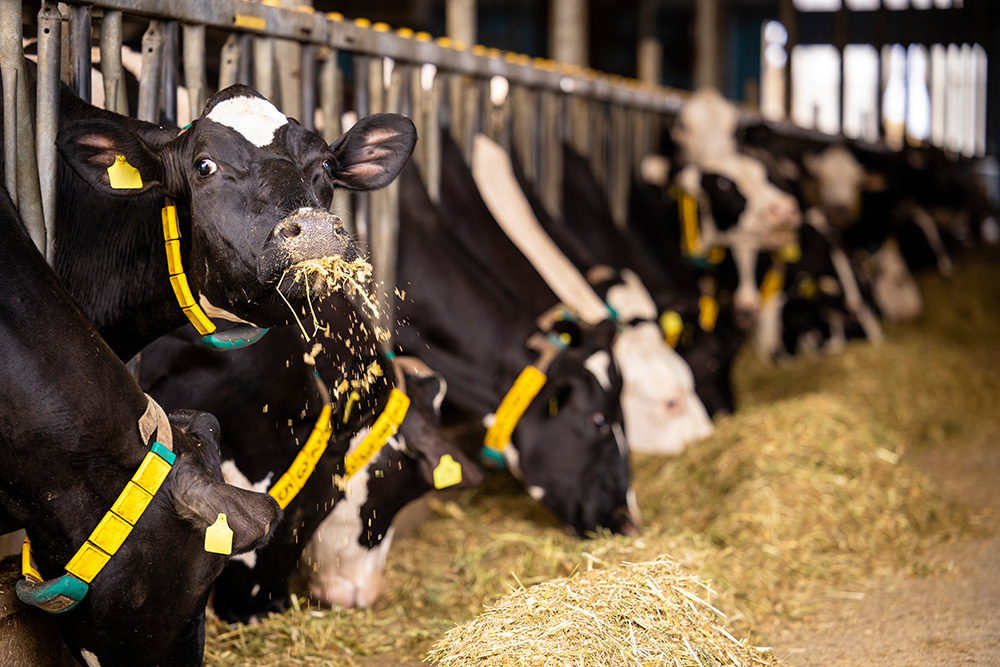
Conventional wisdom is the particle size should be shorter than the width of a cow’s muzzle, which is about 4 inches, she said. Later research, including by Carpenter, shows that even if the feed is an inch in vertical length, the cows can still get effective fiber and still chew their cud.
“They’re still getting their scratch factor and all the physical benefits of that fiber at a shorter chop length,” she said.
The research can help producers not only with their harvest process but also economically. Producers may also want to add hay to the feed as an effective fiber source.
“It’s easier to manage short particle length in corn silage than it is to manage moldy silage,” she said. “In drought years, when you’re going to have less biomass being harvested, you’re going to have drier feed.”
There is no silver bullet to fix drought conditions, but paying attention to even the smallest details becomes necessary.
Inoculants may also need to be added to the silage to boost the cattle’s diet, she said.
Successful tips
Successful operations, Carpenter said, put “people first.” Carpenter and other contributors stress the importance of education. Whether it involves the field, packing, covering, chopping, or safety, employees need to understand they all have a role.
Managers need to appreciate their employees, she said, adding that when it comes to harvesting corn silage, time is of the essence to capture the quality of the nutrients. Often that means long hours, but she reminds managers that when they push employees too hard, they put them at risk for serious injuries and jeopardize their health. Pushing equipment too hard can lead to unexpected breakdowns, and that adds to maintenance costs.
Employee safety is crucial; she reiterated. That includes ample hydration, regular meals, and allowing time for breaks. “If somebody needs to take a break have your plan set up so that you can put somebody else in place,” she said. “We spend a lot of time talking about the corn silage, the equipment and all that goes into it, but it’s human beings that are actually doing the work so make sure you are taking care of those human beings.”
Planning ahead
Carpenter said reviewing results within a team setting can make a big difference.
That team can include the veterinarian, nutritionist, agronomist, and other key members of the operation to evaluate the process and results. The nutritionist should have test results from the silage after fermentation to share with the group.
“Once you’re through that busy season, make sure that you all sit down together and go over what we think that silage is going to look like,” Carpenter said.
She advocates reviewing the results within a reasonable time frame because waiting until the following summer is too late to remember all the details needed to harvest high-quality corn silage and ensure an ample inventory. That puts the team and consultants on the same page.
“I can speak from experience that those people you’re hiring as consultants want to be in the room with you when you’re making those decisions,” Carpenter said. “It makes their life a lot easier in the long run, and it makes your life a lot easier because they’re actually know what you’re thinking.”
Setting goals for the following year is important, she said, so working with a seed dealer, agronomist and technical services team helps producers select the right hybrid for next spring. Carpenter said each dairy or beef operation has unique goals. It also is important to communicate with harvesting teams, particularly if the operation outsources the work to custom-cutting crews.
“Packing is huge,” Carpenter said. “You can’t go back and fix packing later, it has to be done then, and it may take more logistics, especially if you’re using a custom crew.”
Planning ahead may also include looking at alternatives. While central Iowa has enjoyed a wet summer, other parts of the High Plains are facing heat and drought that can stress even irrigated corn, she said.
Carpenter said dairy and beef operations that rely on corn silage may want to consider growing other forages to supplement the corn silage. She has been encouraged by values that sorghum forages are starting to show.
If producers think they may be facing a difficult growing season, it could be wise to incorporate alternative forages into their mix to diversify their supply, she said. In some cases, even irrigators are facing limited water supplies that can stress the silage supply.
“That protects you from putting all of your eggs in one basket,” Carpenter said. “As much as I like corn silage because it is hard to beat, having some additional diversity in our forage operation has some advantages as well.”
One last reminder she gives producers is that cutting corners is not a good strategy.
Carpenter’s series is available for free at https://www.extension.iastate.edu/news/new-comprehensive-resources-guide-dairy-producers-field-feed-bunk-optimized-corn-silage.
Dave Bergmeier can be reached at 620-227-1822 or [email protected].