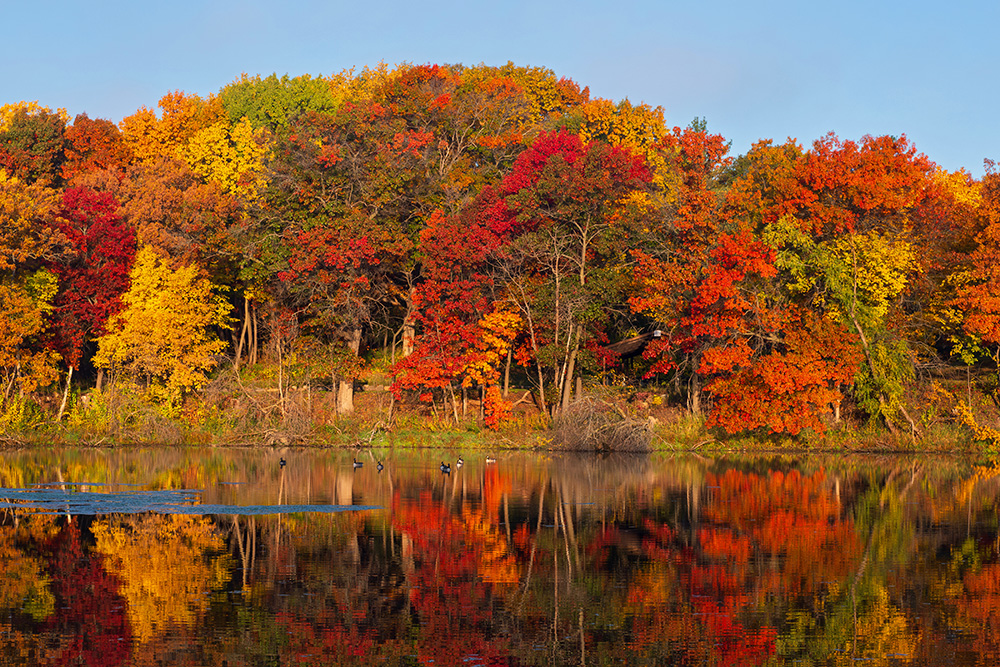
It is safe to say that fall is here! This year has been a wonderful one for enjoying fall color across Nebraska’s landscapes. The reds, oranges, yellows, and purples are beautiful to see, but have you ever wondered what causes these colors? And what makes some years more colorful than others? The answer is rooted in science.
The Science
The science behind leaves is as complex as it is interesting. The colors we see in leaves come from substances called pigments. During the growing season, the green pigment chlorophyll is responsible for capturing sunlight and helping plants produce the energy they need to grow.
Other pigments are also present in leaves throughout the growing season, but the abundant green chlorophyll masks many of these colors. As the days become shorter and temperatures cool in the fall, chlorophyll production slows and eventually stops. As the chlorophyll breaks down, the hidden colors begin to show.
Carotenoids, which include carotene and xanthophyll, produce yellow and orange colors. These pigments are present in leaves throughout the growing season, but their colors become more visible as the green chlorophyll disappears.
Red and purple colors come from pigments called anthocyanins. Unlike yellow and orange pigments, anthocyanins are produced in leaves during the fall. Their production is influenced by the amount of sugar in the leaves, sunlight, and other environmental conditions.
What Makes a Colorful Fall?
Jack Frost often gets all the credit for our fall color display, but he has less to do with it than you might think. Fall color is influenced by a plant’s genetics and the environmental conditions it experiences.
Weather plays an important role. Clear, sunny days followed by cool nights and relatively dry conditions often produce the best fall colors. These conditions can encourage the development of bright red and purple pigments while allowing yellow and orange colors to shine.
The location of a leaf can also influence its color. Have you ever noticed green ash trees with yellow leaves on one side and green leaves on the other? This two-tone appearance can occur because outer branches receive more sunlight, while inner branches remain shaded. Leaves exposed to sunlight may change color at a different rate than those growing in the shade.
Unfortunately, severe weather can shorten the fall color display. Strong winds, heavy rainfall, and freezing temperatures can damage leaf tissue and cause leaves to drop before they reach their full color potential.
Why Are My Evergreens Turning Yellow?
Fall color is not limited to deciduous trees. Evergreen trees also change color in the fall, and some yellowing is completely normal.
This process is called natural needle drop. Pine and spruce trees do not keep all their needles forever. As older needles reach the end of their lifespan, they turn yellow or brown and eventually fall from the tree. These older needles are usually found closer to the inside of the tree or along the trunk.
Pine trees typically retain their needles for two to three years or longer, depending on the species. Spruce trees generally hold their needles longer, often around five to seven years. White pines are especially easy to observe during natural needle drop because their older needles can turn yellow before falling.
However, excessive needle loss or yellowing throughout the tree may indicate a problem. Stress from drought, herbicide injury, root damage, insects, or diseases can increase needle drop. If you notice unusual needle loss, look at the overall health of the tree and consider whether it has experienced any recent stress.
Add Fall Color to Your Landscape
If you want to enjoy more fall color in your own landscape, consider adding trees and shrubs selected for their autumn foliage. Different plants offer different colors, so you can create a colorful display by choosing a variety of species.
For orange foliage, consider sugar maple, serviceberry, some crabapple varieties, and oakleaf hydrangea.
For red foliage, look at white oak, red oak, scarlet oak, red maple, and some flowering pear varieties. Ohio buckeye and burning bush can also develop red fall color. Keep in mind that some flowering pears are becoming invasive in many areas and is not recommended for Nebraska landscapes.
For yellow foliage, consider Kentucky coffeetree, cottonwood, elm, quaking aspen, and some maple species.
Purple fall color can be more difficult to find, but gray dogwood and some viburnum species may provide purple or reddish-purple foliage.
Ash trees can also offer attractive fall color, but planting new ash trees is not recommended because of the threat posed by emerald ash borer, an invasive insect that is established in Nebraska.
When choosing plants, remember to consider more than fall color. Select trees and shrubs that are suited to your growing conditions and offer other benefits, such as spring flowers, summer shade, attractive bark, or wildlife habitat. A landscape with a variety of plants can provide interest throughout the year.
So, embrace fall! Take a walk, enjoy the changing leaves, and appreciate the science behind the colors. Then settle in with a pumpkin latte and enjoy one of nature’s most beautiful displays before winter arrives.
Elizabeth Exstrom is a Horticulture Extension Educator with Nebraska Extension in Hall County. For research-based gardening information, contact Elizabeth at [email protected], visit huskerhort.com, or follow HuskerHort on Facebook and Twitter.
PHOTO: Autumn morning. (Adobe Stock-#765950126 │ Ferrer Photography)