USDA reports 61 New World screwworm cases in 30-day period
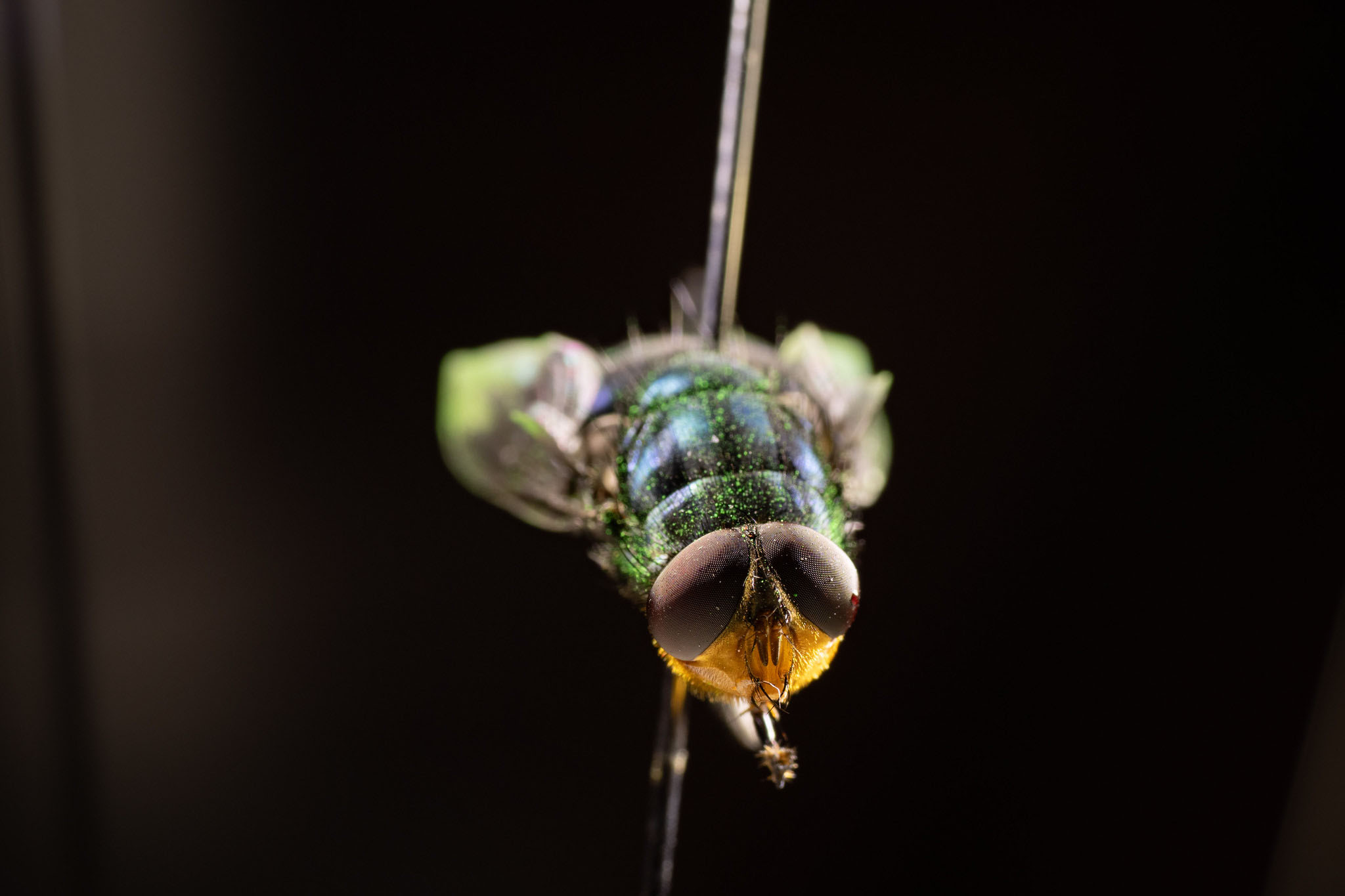
(Photo by Lance Cheung via USDA Flickr.)
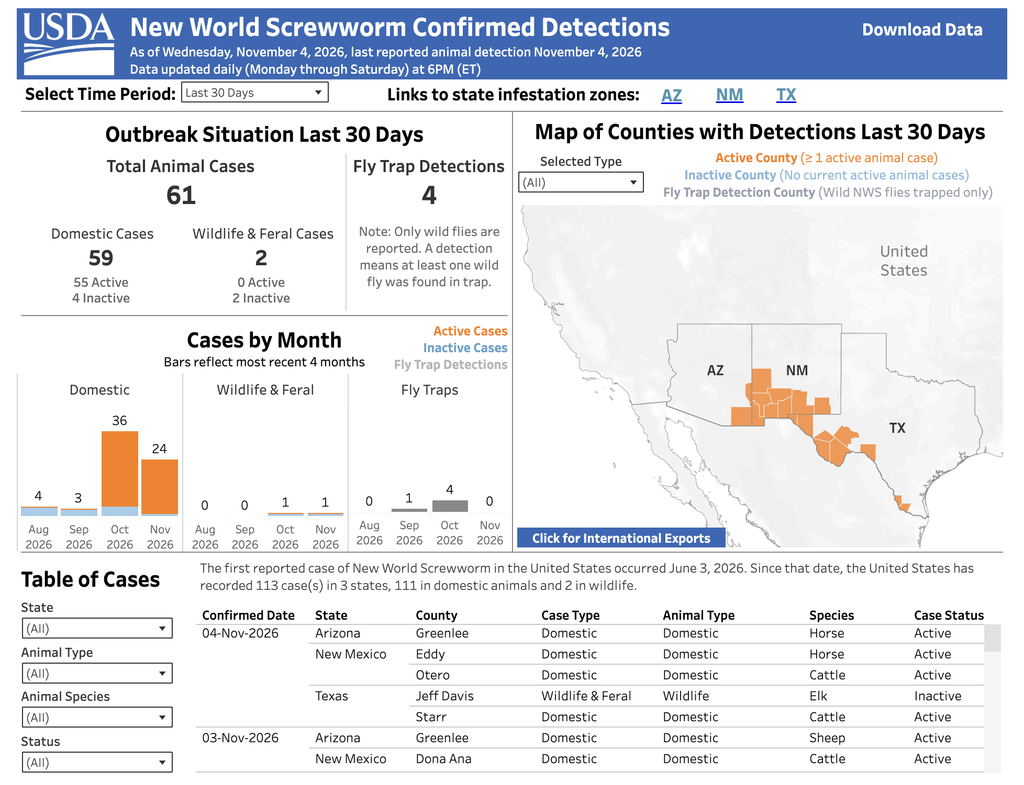
New World screwworm detections in the United States have increased in the Southwest over the past month, with 61 animal cases reported during the 30-day period ending Nov. 4, according to the U.S. Department of Agriculture.
The latest USDA data show 113 confirmed animal cases across Texas, New Mexico and Arizona since the first reported U.S. case June 3. Of those, 111 have involved domestic animals, and two have involved wildlife. The 61 cases reported during the most recent 30-day period account for more than half of the total detections recorded since June.
Of the 59 domestic cases reported during the 30-day period, 55 were classified as active and four as inactive. Both wildlife cases were classified as inactive. No active wildlife cases were reported in the latest update.
Monthly data show a substantial increase in domestic animal detections beginning in October. USDA reported four domestic cases in August, three in September, 36 in October and 24 in November through Nov. 4.
The Nov. 4 case report included domestic animal detections in Greenlee County, Arizona; Eddy and Otero counties, New Mexico; and Starr County, Texas. A wildlife case involving an Elk in Jeff Davis County, Texas, was also listed as inactive.
Additional domestic cases reported Nov. 3 included sheep in Greenlee County, Arizona, and cattle in Dona Ana County, New Mexico.
USDA’s dashboard distinguishes between active and inactive counties. Active counties have at least one current active animal case, while inactive counties have no current active animal cases.
The agency also tracks wild NWS flies captured in traps separately from confirmed animal cases. A fly trap detection indicates at least one wild fly was found in a trap and does not represent an additional confirmed animal case.
USDA updates its NWS detection data daily, Monday through Saturday via the screwworm.gov website.
Lacey Vilhauer can be reached at 620-227-1871 or [email protected].