Ag lawmakers: Farmers feel pinch of tariffs

Ag lawmakers know that tariffs are weighing heavily on the minds of farmers as low grain prices, and three members of the Kansas delegation noted that opening new markets are needed.
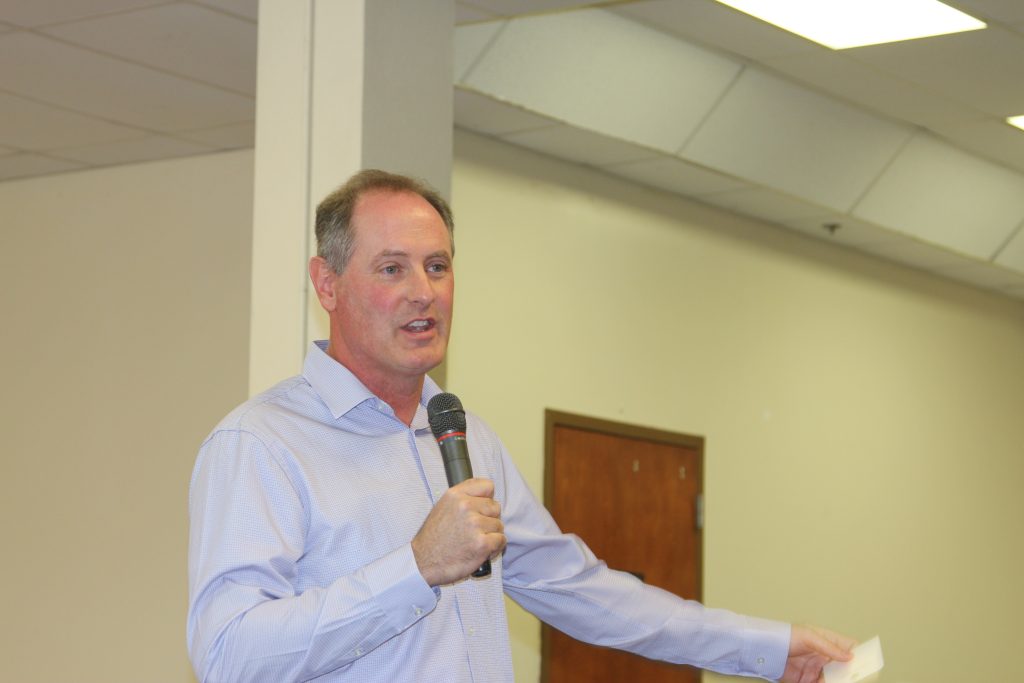
U.S. Sens. Jerry Moran (pictured above) and Roger Marshall and Rep. Tracey Mann, all Republicans, headlined the Kansas Farm Bureau’s Agricultural Leadership Breakfast at the state fair on Sept. 6 in Hutchinson. They all said that when visiting with farmers and ranchers the top concern is low prices for corn, soybeans, wheat, and sorghum. They were supportive of President Donald Trump’s use of tariffs as a mechanism to end trade barriers, but also acknowledged the downward pressure the policy has had on grain prices since January.
“Everybody in agriculture has experienced the consequences of tariffs and non-tariff barriers toward getting our commodities into other people’s palates,” Moran said about global trade and Trump has brought a complex economic matter to the forefront.
With low prices it is incumbent upon negotiators to reach an agreement that brings down barriers that hurt U.S. farmers and ranchers and happen quickly enough “that we can get some certainty back into our markets so that grain can be exported again,” he said.
Approach is right
Moran, a member of the Senate Agriculture, Nutrition and Forestry Committee, and the Appropriations Committee, said no matter where he goes farmers voice their concern particularly with a large harvest expected this fall. As a member of the Senate Intelligence Committee, he also recognizes the Chinese Community Party and other countries like Iran and Russia makes him restless, too.
China reacted to tariffs implemented by Trump by stopping purchases of U.S. grain and that has put downward pressure on prices farmers receive for corn, soybean and sorghum, he said.
He said Congress beginning in late 2024 has provided aid to farmers and for weather-related disasters and low commodity prices. Producers are able to go to the U.S. Department of Agriculture’s Farm Service Agency offices to complete paperwork. Farmers want markets to reward them for their grain and not government checks, he said.
Moran said he has visited with USDA officials about relief options that could include aid from the Commodity Credit Corporation, which was used during the first Trump administration.
Mann knows first hand
Mann, a member of the House Agriculture Committee who grew up on a farm in Gove County where his dad and brother continue to have an operation, said when farmers already know their input costs and with low prices, “it doesn’t work unless we’re able to crush it on yields.” Favorable growing conditions in many parts of Kansas are going to put those producers in a good situation yield-wise.
The opportunity to raise grain prices has to come from exports and higher domestic use, he said.
He has supported President Donald Trump’s use of tariffs to remove trade barriers but recognized it has pinched crop producers.
“We have to get these deals done quickly and get to a better place,” Mann said.
Value-added opportunities
Mann has advocated for year-round E15 fuel that could send certainty to the marketplace.
One plus has been that demand for meat products has never been better and beef numbers are at record low and that adds up to high prices, Mann said.
Marshall, a member of the Senate Agriculture Committee, said corn, soybeans and wheat are entering into various markets, but not at a high enough level to move the needle on prices. Feeding corn to beef or milk adds value plus there are opportunities to turn corn, soybeans and sorghum into ethanol or biofuels.
The U.S. will export an estimated 2.8 billion bushels of corn this year, but producers also face foreign competitors like Brazil, he said, and is a country that will continue to be a force in agricultural markets.
Soybean exports are likely to be up slightly over last year and that comes as China is not importing U.S. soybeans. One commodity is really feeling the pinch this year.
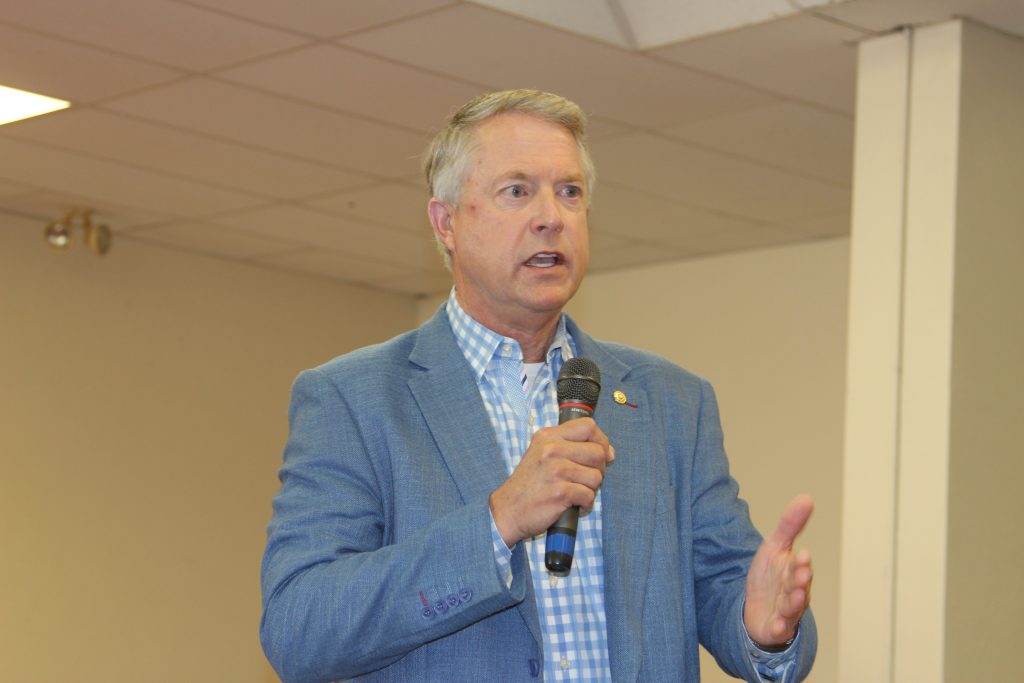
“Sorghum is all about the trade issue,” Marshall said, adding the industry may have grown overly dependent on the China market.
“If you are making a business plan, counting on China it’s going to be up and down. It’s going to be a roller-coaster,” he said.
He has long been concerned about the theft of intellectual property, illegal production of fentanyl and the use of slave labor all of which has ties to China.
“I wished I could say different, but if you are counting on China to save your bacon, I would not do it,” he said.
Building upon relationships
Marshall said hopes that building relationships with familiar customers, like Mexico, pays, plus he believes there are opportunities to export ethanol to Britain, the European Union and India should be explored. “If China comes back that’s great, but I’m not going to count on that.”
What he is counting on trade agreements to Japan and Southeast Asia where consumers want high quality beef that can only be raised in the United States.
Marshall believes the 45Z tax credit that encourages the production of clean transportation fuel also will add value to grain. One good outcome is turning soybeans and corn into sustainable jet fuel and that is good for the environment.
Mann said the One Big Beautiful Bill Act that was signed by President Trump in July prevented record high tax increases in January with provisions long supported by many farmers that kept the estate tax exemption at about $14 million for an individual and about $28 million for a couple with provisions to index for inflation and stepped-up basis.
It also provided certainly of Section 199 in the IRS tax code.
The OBBBA also provided funding for crop insurance and strengthened reference prices, plus doubled the budget for market expansion, he said.
While he called OBBBA “Farm Bill 1.0,” Mann said there is more work to be done to finish what he termed “Farm Bill 2.0 also called the Skinny Farm Bill” that needs to address general conservation programs plus Conservation Reserve Program and Environmental Quality Incentives Program that are important to First District constituents. A five-year farm bill is necessary to provide certainty.
When that will be passed remains an unknown as Mann knows that first Congress faces a Sept. 30 deadline for funding the government or face a shutdown.
Marshall also expects a continued resolution to fund government services.
Mann also appreciates what the Trump administration is doing to reduce unnecessary regulations that creates uncertainty. He also noted Waters of the United States Rule is expected to be streamlined and delisting the lesser prairie-chicken on the endangered species list.
Dave Bergmeier can be reached at 620-227-1822 or [email protected].
Related coverage and resources
- Related on HPJ: Rollins gets look at Kansas agriculture
- Related on HPJ: Senate reopening bill also expands ag measures
- Outside resource: USDA Foreign Agricultural Service