Holiday game nights help families build skills that AI can’t match
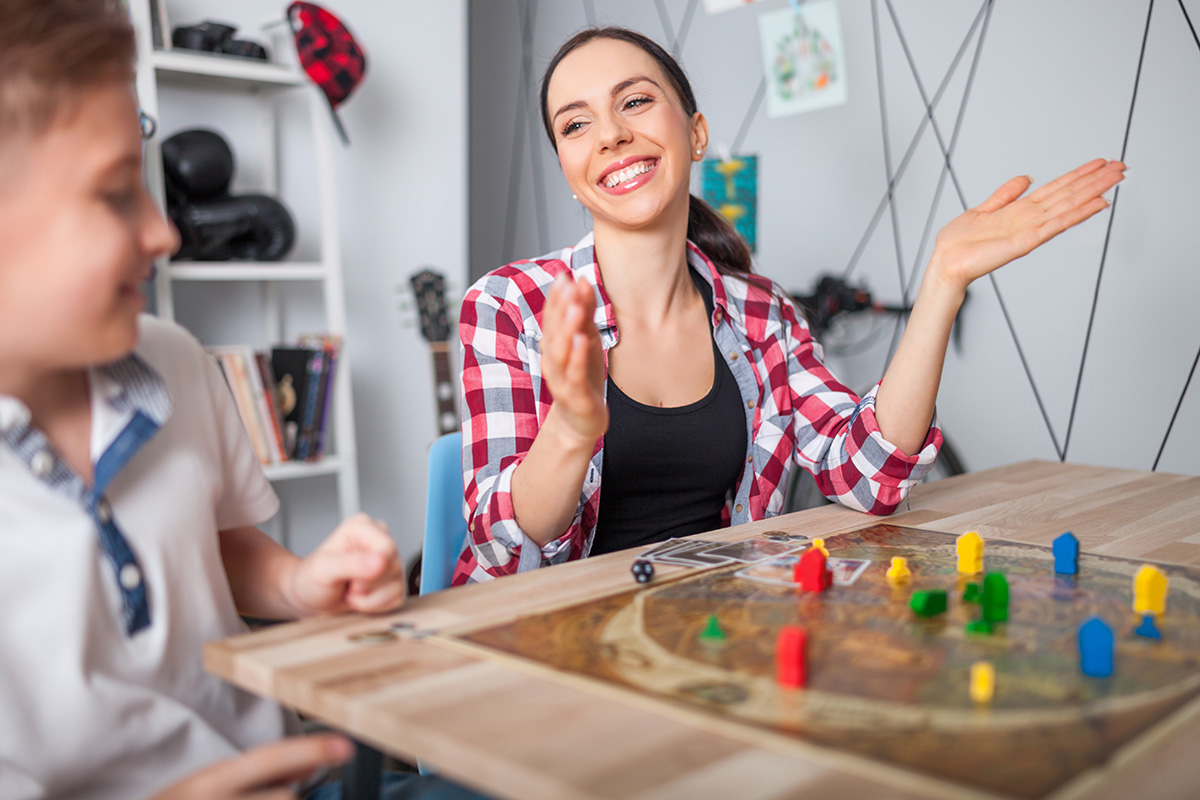
Board games build character and relationships, says extension agent
As the holiday season brings families together, educators say a simple tradition — gathering around a board game — may offer benefits that outlast festive meals and wrapped gifts.
Liz Brunscheen-Cartagena, a family life and resource management agent with K-State Extension’s office in Sedgwick County, says board games help strengthen soft skills that experts believe will become even more essential as artificial intelligence grows more capable.
While analysts predict AI could match humans in many technical tasks by 2030, skills rooted in human connection — communication, emotional awareness and collaboration — remain uniquely our own, she says.
“Board games naturally build the abilities that shape character and relationships,” Brunscheen-Cartagena said. “Children learn to read social cues, take turns and express ideas respectfully. Teens gain patience, strategic thinking and resilience. Adults often rediscover the joy of slowing down and being fully present.”
Listen to an interview by Jeff Wichman with Liz Brunscheen-Cartagena on the weekly radio program, Sound Living, produced by K-State Extension.
These soft skills include self-control, self-esteem, verbal and nonverbal communication, creativity and flexible thinking. Such abilities, Brunscheen-Cartagena notes, contribute to mental health, academic success and strong family relationships.
Brunscheen-Cartagena has spent more than a decade promoting those benefits through Bonding thru Board Games, a program she developed and shared across the K-State Extension system. The initiative became an Extension Signature Program, meaning any agent in Kansas may implement it in their community.
Over the past year, extension agents and program managers used the program to reach new audiences statewide. By creating welcoming spaces for families to play together, agents encouraged parents and children to connect intentionally while practicing communication and problem-solving.
Brunscheen-Cartagena said the program reached 988 participants in settings ranging from elementary and high school family nights to ESOL summer programs, libraries, churches, 4-H events and resource fairs. Sessions also served adults with disabilities and families involved with community support services.
She notes that partnerships are key to the program’s success. Collaborations with Parents as Teachers, foster care support providers and other family-focused groups helped agents connect with parents, educators and youth. Community partners also provided gathering spaces, volunteers, materials and incentives that encouraged families to continue playing — and practicing soft skills — at home.
Brunscheen-Cartagena notes that families have responded enthusiastically to the low-stress, low-tech format. For some, game nights offered a break from screens. For others, they sparked new routines, leading to weekly or monthly game nights long after the holidays ended.
She hopes more families will embrace the tradition this season.
“As AI becomes more woven into daily life, nurturing human-centered skills becomes even more important,” she wrote. “Board games preserve the magic of being together — something no technology can recreate.”
She encourages families to share laughter, create memories and make time for one another. Starting with a board game, she said, can set the tone for a new year filled with connection and joy.
More information on family programs available in Kansas is available at K-State Extension offices statewide.
PHOTO: Mother and son playing modern board game. (Adobe Stock │ #207964263 – leszekglasner)