Mushrush Ranch embraces Halter innovation
From the beginning, the invention of barbed wire was about more than just fencing. It led to major changes not only to the West’s ranching practices and landscape, but to Western and global diets and (eventually) warfare.
Today’s virtual fencing revolution promises to bring even more far-reaching changes to ranching and farming, as tools that were originally seen as replacing physical fences are being used in innovative ways to manage pastures and ecosystems as well as herds.

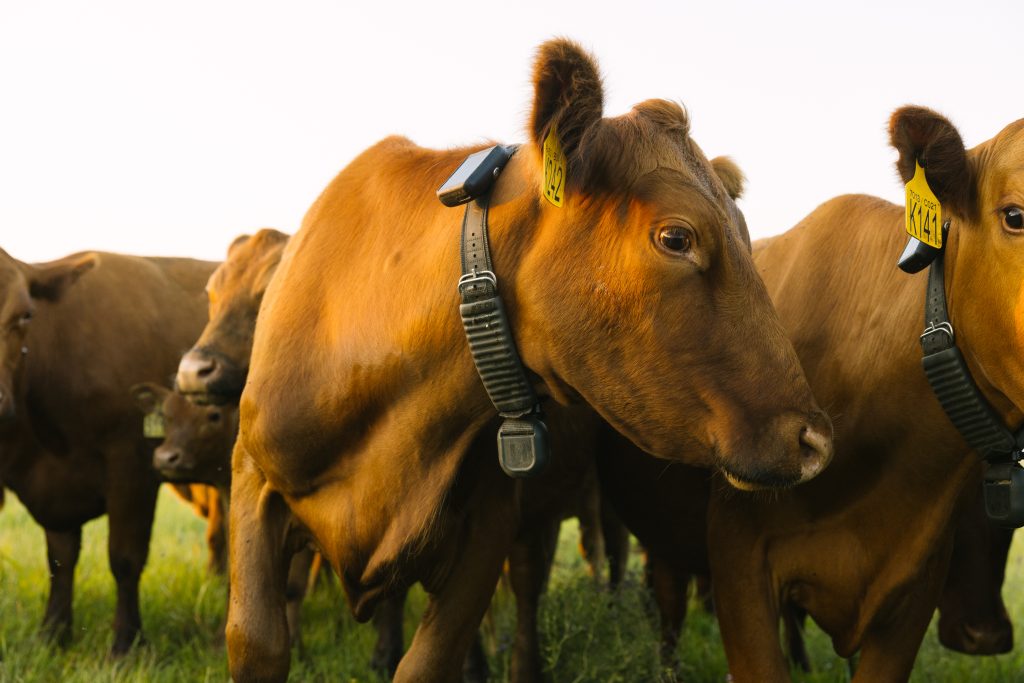
Halter, founded by entrepreneur Craig Piggott in New Zealand, has been operating in the United States market since 2024. But in that short time, it has already become one of the Big Four virtual fencing companies. Halter is known for its proprietary, specially designed, solar-powered, GPS-guided ergonomic collars that have been field-tested in New Zealand since 2016. It has sold more than a million of its cow collars to date, and its system has installed 66,000 miles of virtual fencing since 2024 in the U.S. alone.
In the U.S., Halter has been getting as much attention from the technology press as the ag press lately—even though Piggott is on record saying he doesn’t think of Halter as an ag tech company, but as a technology platform improving how land and livestock are managed.
Success story
Mushrush Ranch raises premium-genetics Red Angus beef cattle in the Flint Hills of Kansas, selling about 200 bulls each in two auctions at the end of March and October. It also sells heifers and sperm. Mushrush manages its herds using innovative Halter geo-fencing.
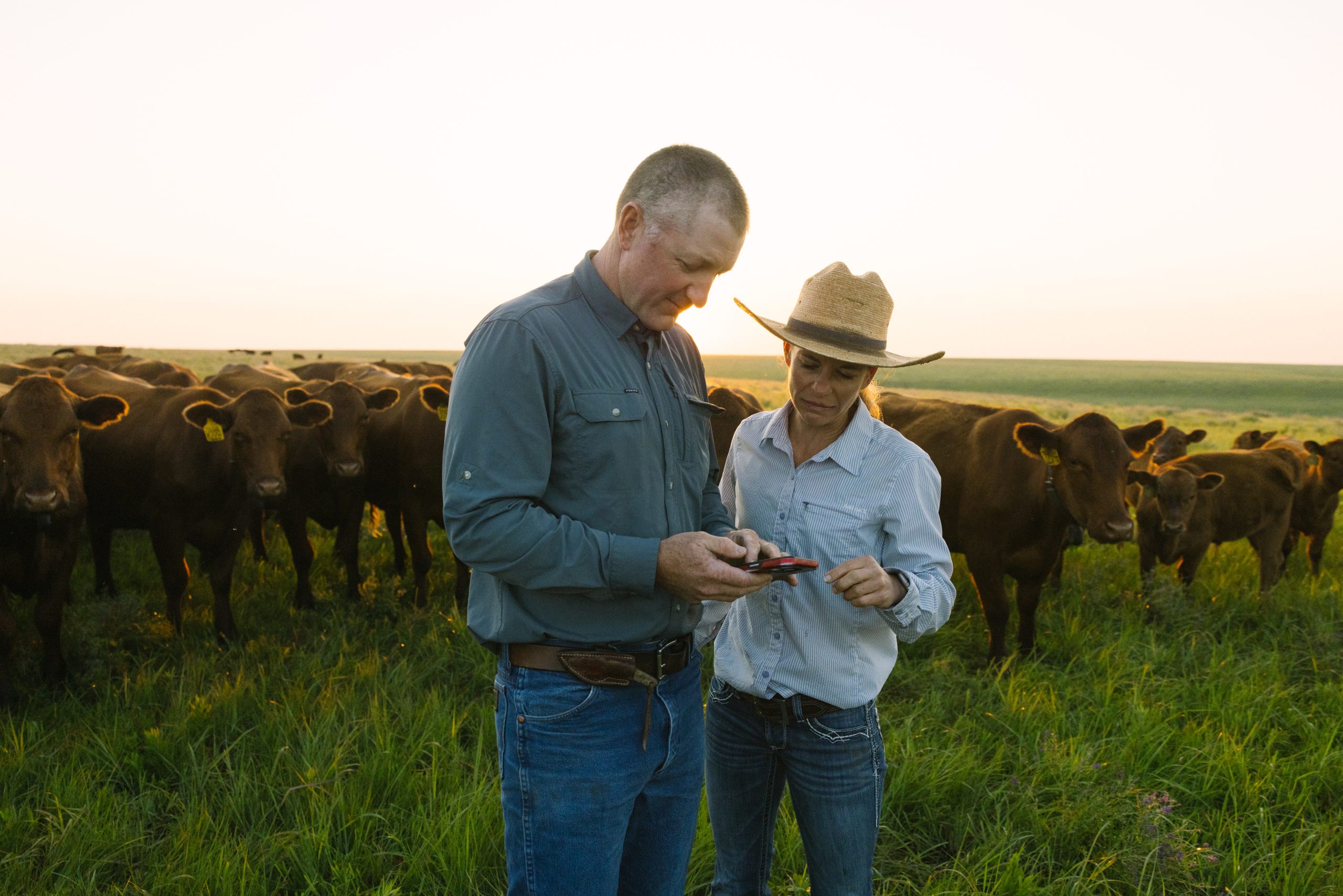
Daniel Mushrush (pictured at top with his wife, Christine, in the courtesy photo.) switched his cows to Halter’s collars and systems after an unsatisfying experience with another virtual fencing company. “You can make the cows go where you want them to, from your phone,” Mushrush said. The collars can nudge the cows via vibrations, sounds or mild electric pulses, gently guiding the cows to specific areas of the pasture without internal fences.
Halter’s proprietary “Cowgorithm” continuously trains itself from about 6,000 data points per cow transmitted from the collars each day, continuously learning about each animal’s behavior. Using the app, customers can custom-design specific zones or corridors in a pasture that guide the cows to avoid over-grazing and manage grazing rotations. They can separate the herd by age group—2-year-olds from 3-year olds, for instance.
“You can guide your herd’s grazing to maximize and preserve the grasses,” Mushrush said.
Halter’s system is ideal for his topography in the Flint Hills, where it’s challenging to install electric fence posts in rocky ground, he said. The system does require towers, with the spacing and number of towers determined by the property’s specific elevation and topography.
“We have four towers, and are in a sweet spot in Kansas,” Mushrush said. The reduction of physical infrastructure is a bonus, he said, in an area swept by frequent wildfires.
Saving on physical fencing is only one of the ways that the system recoups time and money, Mushrush told High Plains Journal. “The labor savings are huge, even though they are hard to quantify,” he said. “You can group the cows in a certain corner of the 20-acre pasture and instead of driving several ATVs for three or four hours to find them, you can go right to them. You can cut out 20 miles a day driving on an ATV, saving not just hours, but fuel as well.”
Mushrush breeds “easy-calving” heifers that can give birth and recover by themselves with minimal human aid or supervision. “When you see that one cow on your app wandering off by itself, you know she’s about to calve.”
It’s the time savings that he appreciates the most. “The ultimate resource all farmers and ranchers have is hours in the day,” he said. “We all underpay ourselves, so anything that helps us maximize the hours we spend is a net win. I can get up at 4 or 5 a.m. and move cattle around from my kitchen table instead of going outside.”
In Mushrush’s view, the geofencing revolution is as significant for today as barbed wire was in the 19th century. “Let technology help you out. The row crop guys had their moment with precision ag about 20 years ago. This time it’s our turn.”
David Murray can be reached at [email protected].