Camp introduces importance of rangeland to youth
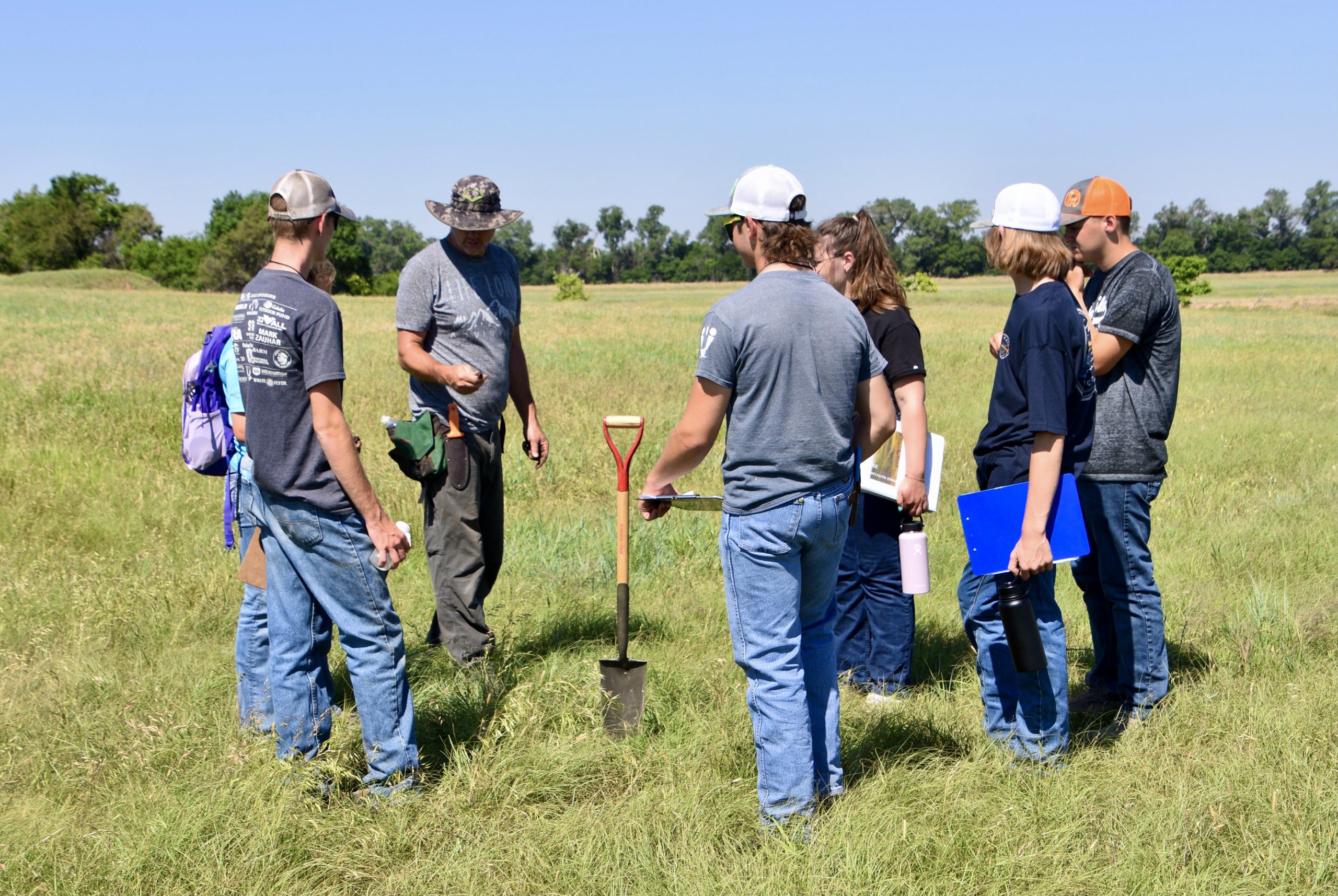
“I enjoy going outside and looking at the plants and trying to identify things,” one camper said. “So I thought it would be a good opportunity to come and learn some more.”
By the time students are in the middle of their high school career, many might know what they want to pursue in college or have a favorite subject that could lead to their dream job down the road.
In Kansas, a student who enjoys the outdoors, agriculture or range management, might want to check out the Kansas Range Youth Camp. Sponsored primarily by the Kansas Section of the Society for Range Management, this could be a possibility for students with a keen eye for rangeland.
“Any student with an interest in the outdoors benefits, but the camp tends to attract students interested in agriculture, environmental science, biology, wildlife, or conservation,” Ethan Walker, grassland specialist with Kansas Natural Resources and Conservation Service said. “You don’t have to know anything in advance—the camp meets students where they are.”
Many who attend consider careers later on with NRCS, Kansas Department of Wildlife and Parks, Extension, agronomy, or ranch management.
Walker said students don’t need a background or even be familiar with pasture or range management.
“Many students come in with very little background, while others have grown up around ranching,” he said. “The camp is designed for all experience levels. Instructors break down concepts and teach them in ways that are approachable and hands‑on.”
At range camp students will learn about native grasses and forbs in Kansas, soil health principles, grazing management and stocking rates, rangeland ecology and plant communities, wildlife relationships, prescribed fire basics, and how NRCS and range professionals work with producers. However, the outdoors teaches them so much more.
“We keep things engaging by spending as much time as possible outside. Students learn by doing—plant walks, soil demonstrations, grazing calculations, and team activities,” Walker said. “The instructors also come from a mix of NRCS, university, and industry backgrounds, so students get multiple perspectives.”
Many walk away with a stronger understanding of Kansas rangelands and new skills in plant identification and grazing management. Walker said they also gain confidence by working outdoors and making management decisions, as well as connections with NRCS, K-State, conservation professionals, and other students during their time at camp.
“(They also get) a clearer sense of potential college or career paths,” he said. “Many students say the camp is their first ‘real-world’ look at natural resource management.”
Incoming sophomores, juniors and seniors can register through the Kansas Grazing Lands Coalition website, KGLC.org, Facebook, or through their local county conservation district office.
“We encourage interested students to contact their local conservation district for possible scholarship opportunities,” he said. “Registration typically closes in late May or early June, but spots sometimes fill earlier, so we encourage students to sign up as soon as possible.”
Camp in 2026 is set for near Kingman, Kansas, and Walker said locations are selected based on criteria.
“Locations are chosen based on available facilities and the quality of nearby rangeland for field activities,” he said. “The committee looks for a venue with good lodging, dining, and meeting space, along with access to native range where students can do plant ID and grazing exercises.”
Previous camps have been held in places like Rock Spring 4-H Camp, near Junction City, Camp Menoscah, near Murdoc, Kansas, and White Memorial Camp, near Council Grove, Kansas.
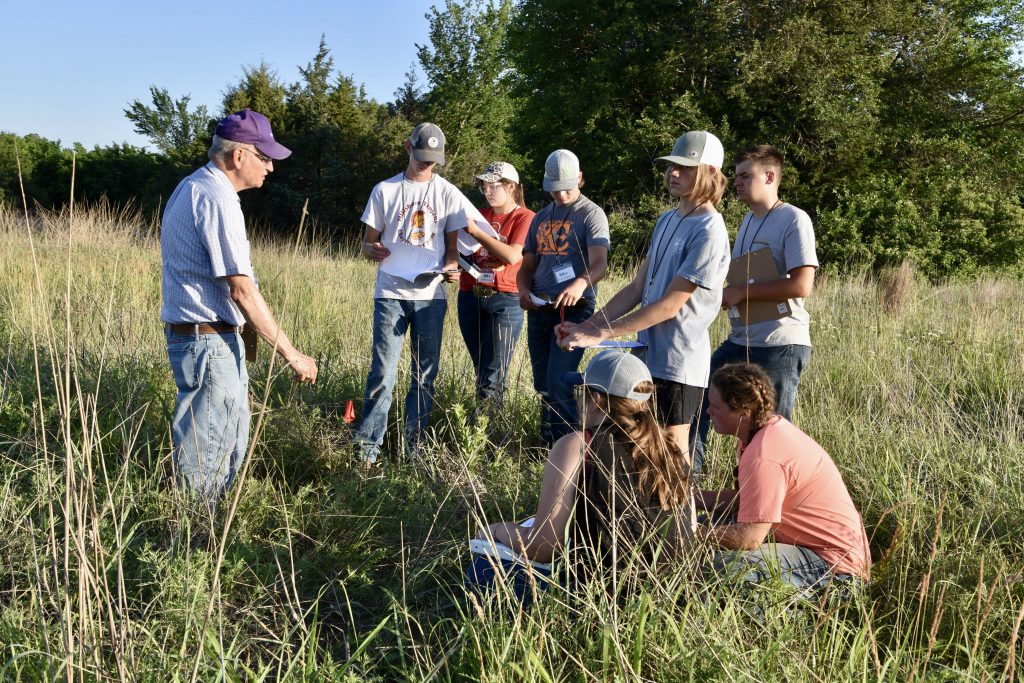
The Kansas Range Youth Camp has been held for the last six decades, Walker said and originally aimed to help high school students understand the value of Kansas rangelands and the role they play in agriculture, wildlife and natural resources.
“The first camps were held in the early 1960s, hosted at various 4‑H camps and church camps across the state,” he said. “Over the years, the camp has expanded its curriculum from basic plant identification and grazing concepts to a much more complete view of rangeland ecology.”
Walker said today the camp includes all aspects a range manager needs to know—plant identification, grazing management, soils, wildlife habitat, prescribed fire and hands on field activities.
“With the increasing use of technology, we are utilizing tools like the Rangeland Analyses Platform into the camp curriculum,” he said.
The camp has continued all these years for several reasons, Walker believes.
“The camp continues because the topics it covers—soils, water, grazing, wildlife, and stewardship—remain essential to Kansas agriculture,” he said. “It’s also successful because it’s very hands‑on. Students get in the field, work with real range managers and NRCS specialists, and see concepts applied in real life.”
The Kansas Section of the Society for Range Management and KGLC take great pride in continuing the legacy of the camp for those students interested in range management. Many former campers have gone on to careers in agriculture, natural resources, or biology. Walker said this helps keep the support for the camp strong year after year.
“Kansas grasslands are one of the last remaining natural ecosystems in the world which are at risk of conversion,” he said. “Continuing the camp allows generations of Kansans either rural or urban to gain a true understanding of grassland ecology and the importance it has on the local economy.”
For more information about KGLC and the range camps visit www.kglc.org.
Kylene Scott can be reached at 620-227-1804 or [email protected].